Prolotherapy Injections: What to Expect Before, During, and After
Explore the clinic directoryIn this article
Prolotherapy injections place a 12.5 to 25% dextrose solution with a local anesthetic into a weak ligament, tendon or joint capsule, usually over 3 to 6 sessions spaced 2 to 6 weeks apart, with 2 to 3 days of soreness after each. Prolotherapy is not stem cell therapy: it injects no cells and works by provoking a controlled inflammatory repair response, while stem cell injections use cells from your bone marrow or fat, and the FDA has approved no stem cell product for joint, tendon or back pain.
At a Glance
- What it is: A regenerative injection technique using dextrose (sugar water) solution to trigger the body’s natural healing cascade in damaged ligaments, tendons, and joints.
- How it works: The injection creates controlled micro-inflammation → attracts growth factors → stimulates collagen production → strengthens tissue.
- What to expect: 3-6 sessions, 2-6 weeks apart. Mild to moderate soreness for 2-3 days post-injection. Most improvement noticed after sessions 2-3.
- Best for: Chronic ligament laxity, joint instability, tendinopathy, SI joint pain, chronic low back pain, hypermobility-related pain.
- Cost: $200-$600 per session. Not typically covered by insurance.
If you have been dealing with a nagging joint or tendon injury that does not fully heal, the kind that gets better with rest but flares up the moment you return to activity, prolotherapy injections are worth discussing with a clinician. The aim is not to mask the pain the way cortisone does, but to restart a repair process your body did not finish on its own.
Prolotherapy has been used since the 1930s, and surgeon George Hackett gave it its name, short for proliferation therapy, in the 1950s. It remains less well known than newer regenerative treatments like PRP and stem cells. For some ligament and tendon problems it is a reasonable first regenerative injection to try: it costs less per session than PRP, it has a longer research record, and for some patients it is enough on its own.
It is also called regenerative injection therapy (RIT) or dextrose prolotherapy, and it is offered mainly by physiatrists, sports medicine physicians and osteopathic physicians (DOs), almost always as a cash-pay service. The prolotherapy treatment guide covers the solutions and techniques in more depth.
Key takeaways
- Prolotherapy uses no cells, while stem cell injections use bone marrow or fat-derived cells; according to the FDA (2020), its only approved stem cell products are cord blood cells for blood disorders.
- In a trial of 90 adults with knee osteoarthritis, Rabago and colleagues (Annals of Family Medicine, 2013) found dextrose prolotherapy improved pain and function more than saline or exercise at 52 weeks.
- A Cochrane review by Dagenais and colleagues (2007) found prolotherapy alone no better than control injections for chronic low back pain, with possible benefit when combined with exercise and manipulation.
- The 2019 American College of Rheumatology and Arthritis Foundation guideline recommends conditionally against prolotherapy and strongly against PRP and stem cell injections for knee and hip osteoarthritis.
- Soreness for 2 to 3 days is expected, and patients usually avoid NSAIDs such as ibuprofen for 5 to 7 days around each session.
What Happens During a Prolotherapy Session
Before the Injection
Your provider will take a detailed history and perform a physical exam to identify the specific structures causing your pain. Many prolotherapy practitioners use musculoskeletal ultrasound to guide injections for accuracy, which is preferable to blind injection, particularly for deeper structures.
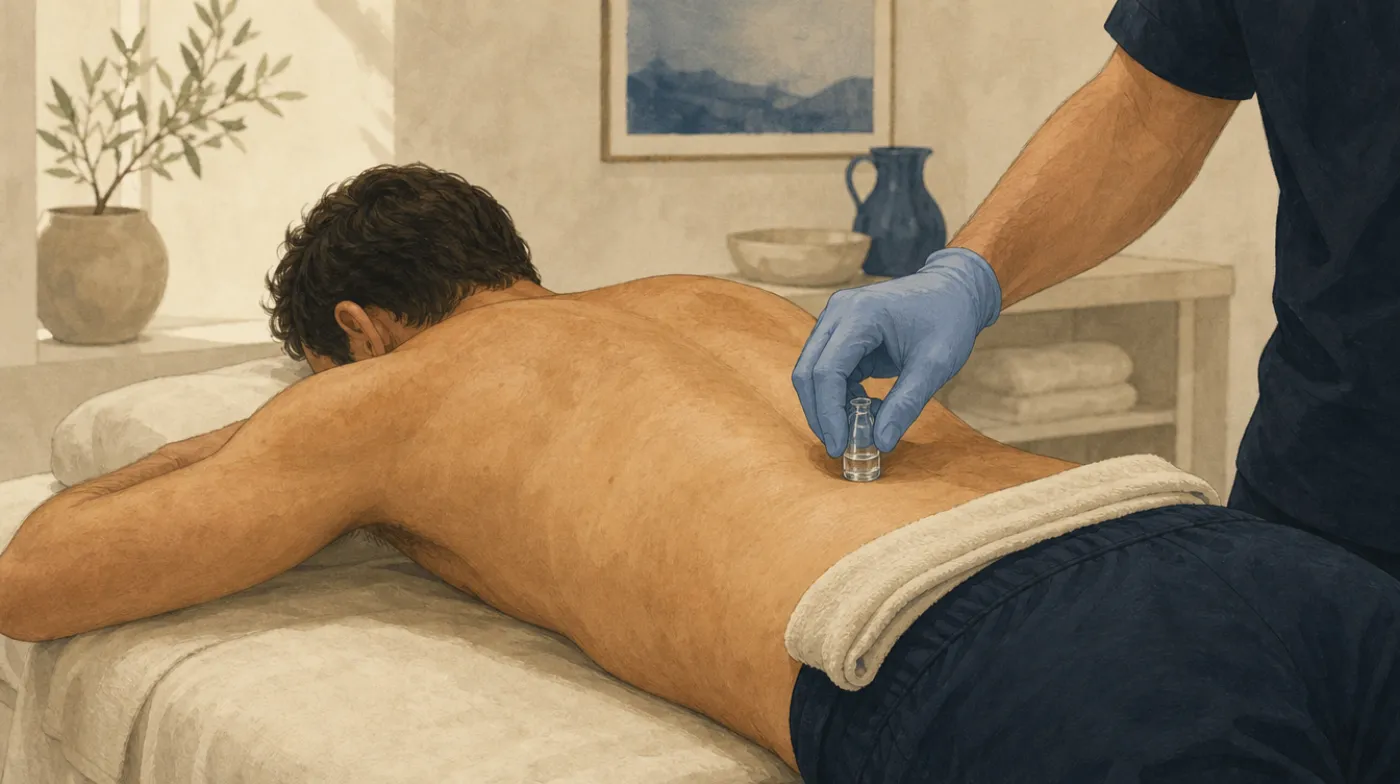
You will typically be asked to stop anti-inflammatory medications (NSAIDs like ibuprofen, naproxen) for 5-7 days before and after treatment. Anti-inflammatories directly counteract the controlled inflammation that makes prolotherapy work. Tylenol (acetaminophen) is fine: it controls pain without blocking inflammation.
The Injection Process
The injection solution is typically 12.5-25% dextrose (pharmaceutical-grade sugar water) mixed with a local anesthetic (lidocaine or procaine). Some practitioners add vitamin B12 or other nutrients to the solution.
The provider injects this solution directly into the damaged or lax tissue: at the point where ligament or tendon attaches to bone (the enthesis), into the joint capsule, or along the length of damaged tissue. Multiple injection points are common in a single session, and it is not unusual to receive 10-20+ small injections covering an entire joint complex.
The injection itself involves a brief sharp sensation at each point. Most providers use small-gauge needles (25-27 gauge) to minimize discomfort. The local anesthetic provides numbness within seconds. The entire session typically takes 15-30 minutes.
Key concept: The soreness IS the treatment working
After the anesthetic wears off (2-4 hours), you will feel sore, sometimes significantly. This is not a side effect; it is the intended mechanism. The dextrose solution triggers a controlled inflammatory response at the injection sites, which recruits growth factors and initiates tissue repair. Trying to suppress this inflammation with ice or NSAIDs undermines the entire purpose of the treatment.
After the Injection
Days 1-3: Expect soreness and mild swelling at injection sites. Pain is typically 4-6/10, manageable but noticeable. Use acetaminophen if needed. Heat (not ice) can be applied for comfort. Light movement is encouraged; avoid heavy exercise.
Days 4-7: Soreness diminishes significantly. Many patients feel similar to or slightly better than pre-treatment baseline.
Weeks 2-6: The healing cascade is active: new collagen is being deposited, tissue is strengthening. You may notice gradual improvement in joint stability and reduced pain with activity.
Follow-up sessions: Most protocols involve 3-6 sessions spaced 2-6 weeks apart, depending on the condition and response. Each session builds on the previous one. It is common for the first session to provide modest relief while sessions 2-3 produce more noticeable improvement.
What are the risks of prolotherapy injections?
The common reactions are the ones described above: soreness, swelling, stiffness and occasional bruising at the injection sites for a few days. Less common risks include infection, nerve irritation and, with injections near the chest wall, a punctured lung. Ultrasound guidance and an experienced injector lower these risks.
What Prolotherapy Injections Treat Best
Prolotherapy is used mostly for ligaments or tendons that stay loose or painful after months of ordinary care. The most studied uses are knee osteoarthritis, chronic low back pain, sacroiliac (SI) joint pain and lateral epicondylitis, better known as tennis elbow. Evidence for jaw pain from temporomandibular joint disorder and for hypermobility is earlier and smaller.
| Condition | Evidence Level | Typical Response | Sessions Needed |
|---|---|---|---|
| Chronic low back pain | Mixed (Cochrane review, 2007) | Benefit mainly when combined with exercise and manipulation | 4-6 sessions |
| Knee osteoarthritis | Promising (multiple RCTs) | Reduces pain and improves function | 3-5 sessions |
| Lateral epicondylitis (tennis elbow) | Promising | Good response rates | 3-4 sessions |
| SI joint dysfunction | Promising | Stabilizes joint, reduces pain | 3-5 sessions |
| Chronic ankle instability | Promising | Tightens lax ligaments | 3-4 sessions |
| Hypermobility / EDS joint pain | Clinical experience (limited RCTs) | Reduces subluxations, improves stability | Ongoing (periodic) |
| Rotator cuff tendinopathy | Promising | Pain reduction, improved ROM | 3-5 sessions |
| TMJ dysfunction | Early | Reduces clicking, pain with chewing | 2-4 sessions |
Session counts are typical clinic protocols, not trial results. Prolotherapy is a weaker fit for bone-on-bone arthritis, rheumatoid arthritis and widespread pain without a clear injured structure.
Prolotherapy vs Other Injection Therapies
| Factor | Prolotherapy | PRP | Cortisone |
|---|---|---|---|
| Mechanism | Controlled inflammation → healing | Concentrated growth factors | Suppresses inflammation |
| Cost per session | $200-$600 | $500-$2,000 | $100-$300 |
| Sessions needed | 3-6 | 1-3 | 1 (repeat every 3-4 months max) |
| Regenerative? | Yes (collagen production) | Yes (growth factor delivery) | No (can degrade tissue long-term) |
| Best for | Ligament laxity, joint instability | Tendinopathy, cartilage issues | Acute inflammation, bursitis |
| Insurance coverage | Rarely | Rarely | Usually covered |
PRP (platelet-rich plasma) concentrates your own platelets and is the option most often weighed against prolotherapy. The PRP treatment guide explains how it is prepared, and our side-by-side look at prolotherapy and PRP walks through the evidence by condition.
Prolotherapy vs Stem Cell Therapy: What Is the Difference?
Prolotherapy and stem cell therapy are separate treatments, often offered by the same regenerative clinics. Prolotherapy injects dextrose to provoke a short inflammatory repair response. Stem cell therapy injects cells, most often bone marrow aspirate concentrate (BMAC) from the hip bone or stromal vascular fraction from abdominal fat, intended to calm inflammation and support repair.
| Factor | Prolotherapy | Stem cell therapy |
|---|---|---|
| What is injected | 12.5 to 25% dextrose with lidocaine or procaine | Your own bone marrow or fat cells, or donor cord or amniotic products |
| Harvest needed | No | Yes for your own cells, from the hip bone or by mini liposuction |
| Visit and recovery | 15 to 30 minute session, 2 to 3 days of soreness | Longer procedure, soreness at harvest and injection sites |
| Number of treatments | Usually 3 to 6 sessions | Usually one procedure, sometimes repeated |
| FDA status | Dextrose is an approved drug used off label as an injectant | No stem cell product is FDA approved for joint, tendon or back pain |
| Cost and insurance | $200 to $600 per session, rarely covered | Considerably higher per procedure, rarely covered |
According to the FDA consumer alert on regenerative medicine products (2020), the stem cell products it has approved are blood-forming cells from umbilical cord blood, used for disorders of the blood system. Donor cord and amniotic products sold for joint pain are a frequent subject of FDA warning letters. The stem cell therapy treatment guide covers these categories, and our explainer on which stem cell products the FDA has approved goes further.
Should you try prolotherapy before stem cell therapy?
Many sports medicine physicians and physiatrists start with the least invasive, least costly regenerative injection that fits, which for a loose ligament is often prolotherapy, and reserve stem cell injections for more advanced joint damage. No large trial compares the two head to head, so this order reflects clinical habit and cost rather than settled evidence. Some clinicians also combine dextrose around the ligaments with PRP or cells in the main lesion, an approach that is little studied.
If you are weighing the cell-based route, the national list of stem cell therapy clinics in the directory shows which practices offer it, and our comparison of PRP and stem cell therapy covers where each fits.
What Does the Research Say About Prolotherapy?
The research on prolotherapy is uneven: some conditions have small positive trials, others rest mainly on clinical experience.
- Knee osteoarthritis: In a blinded trial of 90 adults, Rabago and colleagues (Annals of Family Medicine, 2013) found that dextrose prolotherapy improved WOMAC pain, function and stiffness scores more than saline injections or at-home exercise at 52 weeks.
- Chronic low back pain: A Cochrane review by Dagenais and colleagues (2007) of five trials with 366 participants concluded that prolotherapy alone was not effective, and that it may help when combined with spinal manipulation, exercise and other care.
- Professional guidelines: The 2019 American College of Rheumatology and Arthritis Foundation osteoarthritis guideline (Kolasinski and colleagues) recommends conditionally against prolotherapy for knee and hip osteoarthritis, and strongly against PRP and stem cell injections, citing inconsistent results.
Put plainly, prolotherapy is supported by modest evidence for knee osteoarthritis and some tendon problems, and by weaker evidence for back pain without rehabilitation. Results vary from person to person.
How to Find a Prolotherapy Provider
A good starting point is a physician who examines the joint, names the structure they think is causing the pain, and uses ultrasound to guide the needle. Before booking, ask:
- Which ligament or tendon will be injected, and why?
- Are the injections ultrasound guided?
- Can I have a written plan with the expected sessions and cost of each?
- What physical therapy or strengthening should run alongside?
Many practices that offer prolotherapy also offer platelet injections, so the national list of PRP and regenerative injection clinics is a practical place to start. Listing order on Regenerated.com is not paid ranking. Featured slots are labeled and capped, Verified means the clinic completed credential checks rather than paid for placement, and the directory is free for patients. Inclusion in the directory is not an endorsement, and the guide to Featured, Verified and organic listings explains each label.
Frequently Asked Questions
How painful are prolotherapy injections?
Prolotherapy injections cause moderate discomfort, around 3 to 5 out of 10 at each injection point, eased by the local anesthetic in the solution. Afterward, expect 4 to 6 out of 10 soreness for 2 to 3 days as the inflammatory response starts. The procedure is less involved than PRP, which needs a blood draw, and the soreness afterward is comparable.
How long does it take for prolotherapy to work?
Most patients notice initial improvement after 2 to 3 sessions, roughly 4 to 12 weeks from the start. Fuller results typically develop over 3 to 6 months as new collagen matures and strengthens. Chronic low back pain or severe ligament laxity may need 6 or more sessions, and each session builds on the repair from the last.
Can I exercise after prolotherapy?
Yes, light walking and gentle movement are encouraged right away. Avoid intense exercise, heavy lifting and high-impact activity for 5 to 7 days after each session so the inflammatory healing process can proceed. After that window, return to activity gradually, ideally with a physical therapist or a strengthening plan. Your provider will give specific guidelines based on the treated area and how sore you are.
Does prolotherapy work for everyone?
No. Response rates in clinical studies range from 50 to 80% depending on the condition. Better responses are seen with clear ligament or tendon problems, localized pain, adequate nutrition and no ongoing overuse. Poorer responses are seen with severe osteoarthritis and bone-on-bone changes, active autoimmune inflammation, smoking, and expectations of a complete fix. A Cochrane review (2007) found little benefit for back pain when prolotherapy was used without exercise.
Is prolotherapy the same as stem cell therapy?
No. Prolotherapy injects a dextrose sugar solution with a local anesthetic and contains no cells. Stem cell therapy injects cells taken from your bone marrow or fat, or donor tissue products, and the FDA has approved no stem cell product for joint, tendon or back pain. Prolotherapy is the older, simpler and usually less costly option.
Is prolotherapy covered by insurance?
Usually not. Most US insurers, including Medicare, treat prolotherapy as investigational and do not pay for it, so patients typically pay $200 to $600 per session out of pocket. Some clinics accept HSA or FSA payments. Ask the clinic for a written estimate that covers the full series of sessions, not just the first visit.
Related Reading
- Prolotherapy: Complete Guide to Regenerative Injection Therapy: our detailed pillar page
- Joint Pain: Causes, Diagnosis, and Treatment: the full spectrum of joint pain management
- Stem Cell Therapy: when prolotherapy isn’t enough
- Shockwave Therapy: non-injection regenerative alternative
- EDS Diagnosis and Management: prolotherapy for hypermobility-related pain