EBOO Ozone Therapy: How It Works, Evidence, Costs and Comparisons
Explore the clinic directoryIn this article
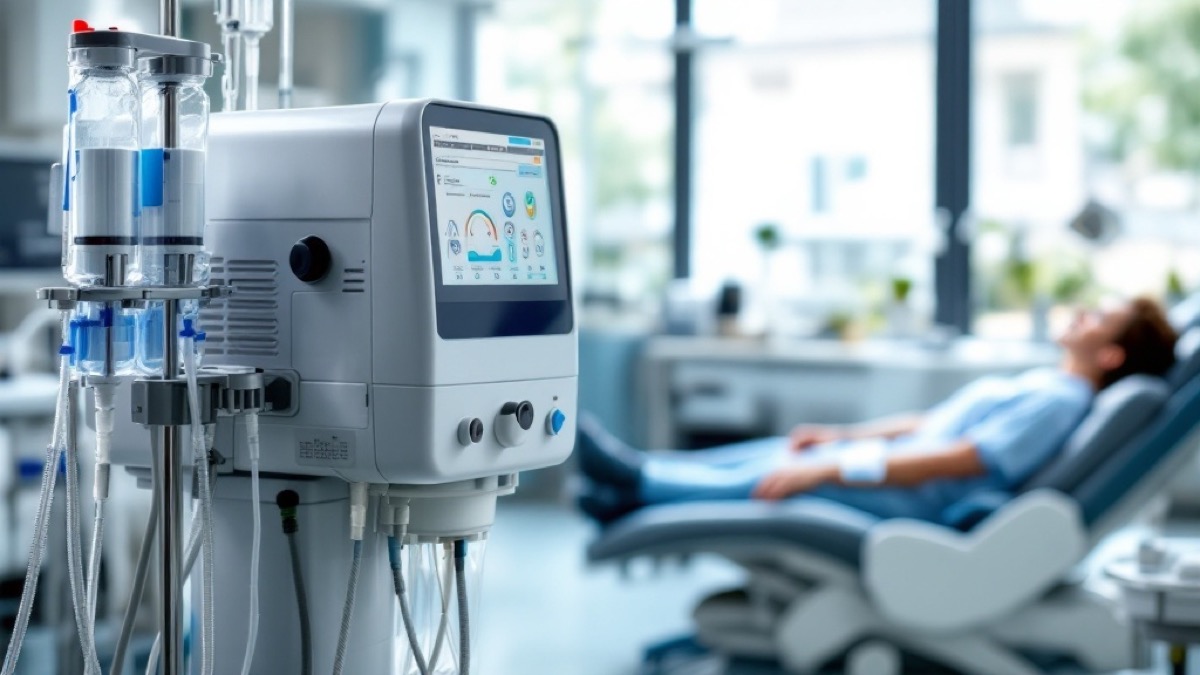
EBOO ozone therapy (Extracorporeal Blood Oxygenation and Ozonation) is the most intensive form of ozone blood therapy: your blood flows out of one arm, past ozone gas through a dialysis-style membrane filter, and back into the other arm in one continuous circuit. A session lasts 45 to 60 minutes, can process up to 4,800 mL of blood according to Di Paolo et al. (2005), and is typically priced at $900 to $1,500 in the US, paid out of pocket. Unlike standard ozone IV treatments that process a small batch of blood, EBOO runs your blood through a continuous circuit: out one arm, through a filtration and ozonation unit, and back in through the other arm.
Next step: EBOO is one ozone delivery path among several. Pair this article with the ozone guide, then look up clinics that list ozone therapy.
EBOO is also sold as EBO2 or ozone dialysis. Its clinical evidence rests mainly on one controlled trial of 28 patients with peripheral artery disease, it is not FDA approved for any condition, and insurance does not pay for it. For the wider picture of how ozone is used in medicine, including major autohemotherapy, rectal insufflation and joint injections, the ozone therapy treatment guide covers each route.
Key Takeaways
- EBOO, also called EBO2 or ozone dialysis, pumps blood through a continuous two-line circuit in which a semi-permeable polysulfone membrane exposes it to ozone and filters it at the same time, a method developed by Nicola Di Paolo and Velio Bocci in Italy.
- A session lasts 45 to 60 minutes, and Di Paolo et al. (2005) reported treating up to 4,800 mL of blood, compared with 100 to 250 mL in standard major autohemotherapy (MAH).
- The strongest clinical evidence is one controlled trial in 28 patients with peripheral artery disease, in which EBOO produced greater skin lesion regression than intravenous prostacyclin (Di Paolo et al., 2005).
- US clinics typically charge $900 to $1,500 per session, quoted treatment plans run 3 to 10 sessions, and insurance does not cover EBOO. Few US clinics offer true membrane-based EBOO.
- EBOO is not FDA approved and is considered experimental. Its published safety record is clean, but it comes almost entirely from one Italian research group.
What Is EBOO?
EBOO was developed in the late 1990s by Italian nephrologist Dr. Nicola Di Paolo and ozone therapy researcher Professor Velio Bocci. The original name reflected exactly what the procedure does: blood is oxygenated and ozonated outside the body (extracorporeally) through a specialized apparatus.1
You may also see EBOO written as EBO2 or referred to as “ozone dialysis.” These terms describe the same core technology: a continuous-flow system that uses semi-permeable membranes to expose blood to ozone while simultaneously filtering it.
The procedure was originally designed for patients with severe vascular disease who were not responding to conventional treatments. Over a ten-year development period, Di Paolo’s team refined the apparatus and tested it in clinical settings before publishing their findings.1
EBOO sits at the top of a family of ozone blood methods. Minor autohemotherapy reinjects a few milliliters of ozonated blood into muscle, major autohemotherapy (MAH) ozonates a single bag or bottle of blood and drips it back, and multi-pass or 10-pass ozone repeats that cycle many times in one sitting. EBOO is the only one of these that uses a membrane and a continuous circuit, which is why it borrows equipment and staff skills from hemodialysis.
How EBOO Works
EBOO uses principles borrowed from kidney dialysis, but instead of filtering waste through a dialysis solution, it exposes blood to ozone gas through a semi-permeable membrane.
The Circuit
Two IV lines are placed: one in each arm. Blood flows out from one arm, passes through the EBOO device, and returns through the other arm. The circuit is continuous, meaning blood is constantly flowing, unlike standard MAH where a fixed batch is drawn, ozonated, and returned.
The Membrane
Inside the device, blood passes along one side of a semi-permeable polysulfone membrane. Ozone gas flows along the other side. The membrane allows ozone molecules to contact the blood without the gas entering the bloodstream directly. This is a key safety feature. Direct injection of ozone gas into a vein is dangerous. The membrane prevents that.
A newer generation of EBOO devices uses countercurrent flow, where blood and ozone move in opposite directions along the membrane. Research published in 2022 found that this countercurrent design delivers at least 3 times more ozone uptake compared to other forms of blood ozone administration.2
Filtration
One feature that sets EBOO apart from other ozone therapies is the visible filtration effect. As blood passes through the membrane unit, certain waste products and inflammatory byproducts collect in a separate waste compartment. Patients and practitioners often observe this waste layer, which ranges from pale yellow to dark brown depending on the individual.
The filtration is visually striking, but the exact composition of what is being filtered and its clinical significance have not been rigorously characterized in peer-reviewed studies. A colored waste bag is not, on its own, evidence that a toxin or infection has been removed.
What Ozone Does in the Blood
Ozone does not circulate through the body after treatment. Velio Bocci’s research group described it reacting within seconds with antioxidants and fatty acids in plasma, forming hydrogen peroxide and lipid oxidation products. Those molecules are thought to act as short-lived signals that prompt the body’s own antioxidant and circulatory responses. This model explains why the dose of ozone matters: too little does nothing measurable, and too much damages red blood cells.
What a Session Looks Like
A typical EBOO session takes 60 to 90 minutes in the clinic, of which 45 to 60 minutes is time on the circuit. Here is a step-by-step walkthrough.
1. Pre-Treatment Assessment (10 minutes)
Vital signs are taken. If it is your first session, the practitioner will review your health history, medications, and check for contraindications. A G6PD test should have been performed before your first ozone treatment of any kind.
2. IV Placement (5-10 minutes)
Two IV lines are placed, typically one in each arm. Some clinics use the antecubital veins (inside of the elbows); others use hand veins. Heparin or another anticoagulant is administered to prevent clotting in the circuit.
3. Treatment (45-60 minutes)
The EBOO device is started. Blood begins flowing through the circuit at a controlled rate. The practitioner monitors flow rate, ozone concentration, and your vitals throughout. You sit or recline during the treatment. Most patients describe the sensation as similar to donating blood: no pain, just the feeling of the IV lines.
4. Completion (5-10 minutes)
The circuit is flushed with saline to return as much blood as possible. IV lines are removed. Total time in the clinic is approximately 60-90 minutes.
Who Runs the Session?
EBOO is ordered by a physician (MD or DO) or, in states where their scope of practice allows IV therapies, a licensed naturopathic doctor. Registered nurses or other trained staff usually place the lines and watch the machine. Because the circuit resembles hemodialysis, ask who on the team has dialysis or apheresis experience and who handles a clotted line or a drop in blood pressure.
EBOO vs. MAH vs. 10-Pass: How They Compare
All three are forms of ozone blood therapy, but they differ significantly in scale, equipment, and cost.
| Feature | MAH (Single-Pass) | 10-Pass | EBOO |
|---|---|---|---|
| Method | Batch (bottle/bag) | Pressurized repeat cycles | Continuous circuit + membrane |
| Blood Volume | 100-250 mL | ~2,000 mL | Up to 4,800 mL |
| Ozone Contact | Direct mixing | Direct mixing (pressurized) | Membrane-mediated |
| Filtration | None | None | Yes (semi-permeable membrane) |
| Session Duration | 30-60 min | 60-90 min | 45-60 min |
| IV Lines Required | 1 | 1 | 2 |
| Cost per Session | $200-$300 | $800-$1,500 | $900-$1,500 |
| Clinical Evidence | Moderate | Limited | Limited (1 controlled trial) |
EBOO processes the most blood per session, is the only method that filters blood, and needs two IV lines instead of one. MAH is the cheapest and the most studied of the three. 10-pass ozone overlaps with EBOO on price but mixes ozone directly into blood under pressure rather than across a membrane. The side-by-side comparison of EBOO and 10-pass ozone goes deeper on that choice, and the 10-pass ozone therapy explainer describes the pressurized method on its own.
“Over 1,200 EBOO treatments were performed in 82 patients, treating up to 4,800 mL of heparinized blood, without technical or clinical problems.”
Di Paolo et al., International Journal of Artificial Organs, 2005
What Does the Research Say?
The clinical evidence for EBOO is limited: one small controlled trial, a preliminary report and a device study, mostly from the same Italian group. Here are the key published studies.
Peripheral Artery Disease (Controlled Trial)
The strongest evidence comes from a controlled trial by Di Paolo et al. (2005). Twenty-eight patients with peripheral artery disease were randomized to receive either EBOO or intravenous prostacyclin (a standard pharmaceutical treatment). The EBOO group showed highly significant regression of skin lesions compared to the prostacyclin group. Pain, pruritus, heaviness in the legs, and overall well-being also improved significantly.3
This study was published in the International Journal of Artificial Organs and remains the only controlled trial of EBOO against an active pharmaceutical comparator.
Preliminary Clinical Data
Di Paolo’s earlier preliminary report (2000) described the initial development and testing of the EBOO apparatus. Patients with Madelung disease and atherosclerotic vasculopathy showed clinical improvement, and the researchers concluded that EBOO was “clinically valid, without side-effects and worthy of testing in various diseases.”1
Ozone Uptake Efficiency
A 2022 study in Medical Gas Research compared ozone delivery across different blood ozone methods. The researchers found that the countercurrent membrane design used in modern EBOO/ozone dialysis devices delivered at least 3 times more ozone to the blood than comparable single-pass or multi-pass methods.2
More ozone uptake is a measure of dose, not of benefit. The study did not test whether patients did better, and a larger dose also raises the stakes if the dose is wrong.
Gaps in the Evidence
Despite promising results, the evidence base has significant limitations:
- Only one controlled trial exists (28 patients, single condition)
- No large-scale randomized controlled trials have been published
- Most published data comes from a single research group in Italy
- The filtration component has not been independently characterized
- Long-term outcome data is lacking
EBOO is not FDA-approved for any condition. It is considered experimental.
What Conditions Is EBOO Used For?
Clinics offering EBOO typically market it for conditions that involve systemic inflammation, circulatory problems, or toxic burden. Common applications include:
- Chronic infections: Lyme disease, viral reactivations (EBV, CMV), chronic sinusitis
- Vascular conditions: Peripheral artery disease, diabetic microvascular complications
- Autoimmune conditions: Rheumatoid arthritis, multiple sclerosis, lupus
- Environmental illness: Mold toxicity, chemical sensitivities
- Post-viral syndromes: Long COVID, chronic fatigue syndrome
- General detoxification: Some practitioners position EBOO as a “blood cleansing” procedure
For most of these conditions, the evidence is based on clinical observation and the broader ozone therapy literature rather than EBOO-specific studies.
Peripheral artery disease is the only condition with controlled EBOO data. For Lyme disease, mold illness and long COVID, patients are relying on practitioner experience and small reports on other ozone methods, so it is reasonable to ask a clinic what result it expects, by when, and how it will measure it.
Side Effects and Safety
EBOO has a clean safety record in the published case series, with one caveat: nearly all of it comes from one research group. Di Paolo’s group performed over 1,200 treatments across 82 patients with no reported technical or clinical problems.3
What Are the Common Side Effects of EBOO?
Potential side effects are similar to other ozone blood therapies:
- Bruising at IV insertion sites
- Temporary fatigue or lightheadedness
- Herxheimer-type reactions (temporary worsening of symptoms as the body processes released toxins)
- Mild nausea in some patients
Risks Specific to the Extracorporeal Circuit
EBOO adds risks that single-bag ozone does not. The circuit needs heparin or another anticoagulant, which raises bleeding risk and matters for anyone already taking blood thinners. Two large-bore IV lines mean more chance of a failed line, a clot in the circuit, infection at the site or a fainting episode. These are the same issues dialysis units manage daily, which is why staff training matters as much as the machine. The broader IV ozone therapy side effects overview covers reactions seen across ozone blood methods.
Who Should Not Have EBOO?
The same contraindications that apply to MAH apply to EBOO: G6PD deficiency, uncontrolled hyperthyroidism, pregnancy, active hemorrhage, and severe cardiovascular instability.4
People with bleeding disorders, recent surgery, poor vein access or a history of heparin-induced thrombocytopenia need a specific conversation with the prescribing physician before any extracorporeal procedure.
Is EBOO FDA Approved?
EBOO is not FDA approved for any medical condition. The FDA’s device regulation on ozone, 21 CFR 801.415, states that ozone “is a toxic gas with no known useful medical application in specific, adjunctive, or preventive therapy.”
Physicians who offer EBOO in the US do so as an unapproved procedure under their own medical license, and state medical boards set the limits of that practice. This regulatory status is the main reason insurers do not pay for it. The explainer on ozone therapy and the FDA walks through the rule in more detail.
Cost and Access
EBOO sessions cost between $900 and $1,500 in the United States. Treatment plans typically involve 3-10 sessions, making the total cost $2,700 to $15,000. See the full EBOO pricing breakdown for package rates and regional ranges.
Insurance does not cover EBOO. It is an out-of-pocket expense at all clinics.
Access is limited compared to MAH. The equipment is significantly more expensive than a standard ozone generator and IV setup, and the procedure requires more training. The number of US clinics offering genuine EBOO (with the membrane-based extracorporeal circuit) is small and difficult to verify.
EBOO Cost per Session and per Course
| Item | Typical US range |
|---|---|
| EBOO, one session | $900 to $1,500 |
| EBOO, plan of 3 to 10 sessions | $2,700 to $15,000 |
| 10-pass ozone, one session | $800 to $1,500 |
| MAH, one session | $200 to $300 |
EBOO costs more than MAH because each session uses a single-use membrane filter and tubing set, needs two IV lines and anticoagulation, and ties up trained staff for the full circuit time. Ask whether the quote includes the first visit, G6PD and other lab tests, and any IV vitamins added after the session. The ozone therapy cost overview compares these prices with other ozone routes.
Be Cautious About “EBOO” Marketing
Some clinics market high-dose MAH or 10-pass treatments as “EBOO” or “EBOO-like.” True EBOO requires a membrane-based extracorporeal circuit with two IV lines. If a clinic uses a single IV line and a glass bottle or syringe, that is MAH, not EBOO, regardless of what they call it.
Ask directly: “Does this procedure use a semi-permeable membrane and two IV lines?” If the answer is no, you are getting a different (and usually less expensive) treatment.
Who Is a Good Candidate for EBOO?
EBOO is typically recommended for patients who:
- Have already tried standard MAH and want a more intensive approach
- Are dealing with chronic, complex conditions (Lyme, mold illness, autoimmune disease)
- Have the budget for a more expensive treatment
- Are medically stable enough for the procedure (healthy veins, no contraindications)
It is not usually the first-line ozone therapy a new patient receives. Most practitioners start with MAH and escalate to EBOO or 10-pass based on treatment response.
How to Find a Clinic That Offers True EBOO
The national directory of ozone therapy clinics lists clinics that offer ozone treatment, and only some of them run a membrane-based EBOO circuit. Use the list to build a shortlist, then call and ask about the equipment, the two IV lines, who supervises the circuit and what the per-session price includes. State pages such as ozone therapy clinics in California and ozone therapy clinics in New York narrow the search by location.
Listing order on Regenerated.com is not a paid ranking. Featured slots are labeled and capped, Verified means the clinic completed credential checks rather than paid for placement, and the directory is free for patients to use. Inclusion in the directory is not an endorsement of any clinic or treatment. The guide to Featured, Verified and organic listings explains each label.
The Bottom Line
EBOO is the most intensive form of ozone blood therapy currently available. It treats the largest volume of blood, uses membrane-based filtration, and has a clean safety record across published studies. The evidence is limited: early results in peripheral artery disease are encouraging, but they come from one small trial and one research group.
The main drawbacks are cost, limited availability, and a thin evidence base compared to standard MAH. If you are considering EBOO, make sure the clinic uses genuine extracorporeal membrane technology and that the practitioner has specific EBOO training.
For a broader overview of all ozone treatment methods, see our complete guide to ozone therapy.
Frequently asked questions
What is EBOO ozone therapy?
EBOO ozone therapy, short for Extracorporeal Blood Oxygenation and Ozonation, is a procedure that circulates blood out of one arm, through a dialysis-style membrane where it is exposed to ozone and filtered, and back into the other arm. It was developed in Italy by Nicola Di Paolo and Velio Bocci. A session lasts 45 to 60 minutes and can process up to 4,800 mL of blood. It is also called EBO2 or ozone dialysis.
How much does EBOO cost?
EBOO typically costs $900 to $1,500 per session in the United States. Clinics usually quote plans of 3 to 10 sessions, which puts a full course at roughly $2,700 to $15,000. Insurance does not cover EBOO because it is not FDA approved, so the full cost is paid out of pocket. Ask whether the quote includes the consultation, G6PD and other lab tests, and any add-on IV treatments.
What are the side effects of EBOO therapy?
The most common side effects of EBOO are bruising at the two IV sites, temporary fatigue or lightheadedness, mild nausea and a short-lived flare of existing symptoms. Because the circuit needs heparin, bleeding risk rises during and shortly after treatment. Published series from Di Paolo’s group reported over 1,200 treatments without technical or clinical problems, but independent safety data are scarce. People with G6PD deficiency, pregnancy or active bleeding should not have it.
Is EBOO better than 10-pass ozone therapy?
No study has compared EBOO and 10-pass ozone head to head on patient outcomes. EBOO processes more blood, filters it through a membrane and delivered more ozone per session in a 2022 Medical Gas Research study, while 10-pass ozone needs only one IV line. Prices overlap at roughly $800 to $1,500 per session. The right choice depends on the condition, vein access and the experience of the team running the equipment.
Is EBOO FDA approved?
EBOO is not FDA approved for any condition and is considered experimental in the United States. The FDA’s device regulation at 21 CFR 801.415 describes ozone as a toxic gas with no known useful medical application in therapy. Physicians who offer EBOO do so as an unapproved procedure under their own license, which is also why health insurance plans do not pay for it.
How many EBOO sessions do you need?
There is no established number of EBOO sessions for any condition. Clinics commonly propose plans of 3 to 10 sessions, often after a trial of standard MAH, and adjust based on how a patient responds. No published study has tested how many sessions work best for Lyme disease, mold illness or long COVID. Ask the clinic what change it expects and when it will reassess.
Sources
- Di Paolo N, Bocci V, Garosi G, et al. “Extracorporeal Blood Oxygenation and Ozonation (EBOO) in Man. Preliminary Report.” Int J Artif Organs. 2000;23(2):131-141. doi:10.1177/039139880002300212
- Smith NL, Wilson AL, Gandhi J, et al. “Ozone dialysis delivers three or more times the ozone than other forms of ozone blood treatment.” Med Gas Res. 2022;12(4):156-161. doi:10.4103/2045-9912.337993
- Di Paolo N, Bocci V, Salvo DP, et al. “Extracorporeal Blood Oxygenation and Ozonation (EBOO): A Controlled Trial in Patients with Peripheral Artery Disease.” Int J Artif Organs. 2005;28(10):1039-1050. doi:10.1177/039139880502801012
- Viebahn-Hansler R, Leon Fernandez OS, Fahmy Z. “The Potential Toxicity of Ozone: Side Effects and Contraindications of Ozonetherapy.” Ozone: Science & Engineering. 2012;34(3):210-221.