Ozone Therapy Machine: Types, Specs, Costs and How to Choose
Explore the clinic directoryIn this article
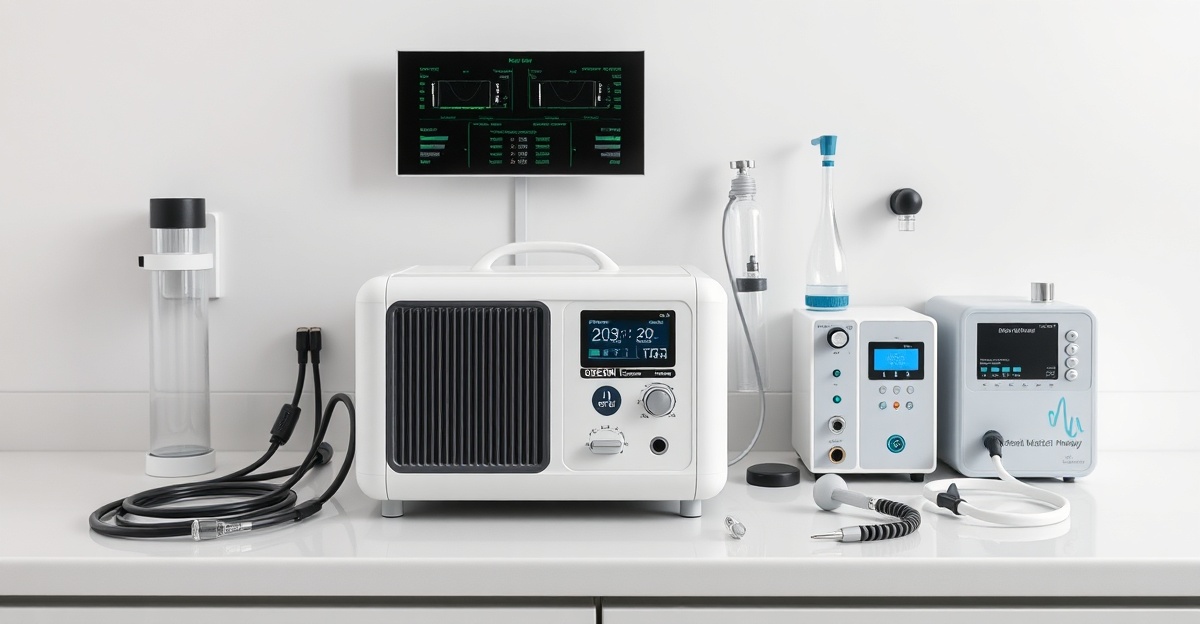
An ozone therapy machine converts medical-grade oxygen into a precise oxygen-ozone gas mixture using cold corona discharge. Prices run from compact home units under $1,000 to clinical systems above $25,000. The right choice depends on how you plan to use it, the concentration range you need, and whether you are a home user or a practitioner. The single non-negotiable is a pure oxygen source, since room-air generators produce toxic nitrogen oxides.
This guide covers how ozone generators work, the types available, the specifications that matter, costs, regulatory status, and what you need beyond the machine itself.
Key Takeaways
- All medical ozone generators use cold corona discharge to split oxygen and form ozone.
- The specs that matter most: concentration range (mcg/mL), concentration accuracy, flow rate, oxygen-source compatibility, and ozone-resistant materials.
- Home units cost $500 to $3,000; clinical-grade machines cost $5,000 to $25,000.
- The machine must be fed medical or industrial oxygen at 99.5%+ purity from a tank, never room air or a standard oxygen concentrator.
- The FDA has not approved ozone generators for medical use in the US, and 21 CFR 801.415 states ozone has “no known useful medical application” in therapy.
How does an ozone therapy machine work?
Every medical ozone generator uses the same core process: cold corona discharge. Corona-discharge ozone generation dates to the late 1800s and remains the standard for producing therapeutic-grade ozone.1
Medical-grade oxygen flows through a chamber holding two electrodes separated by a dielectric, typically quartz glass. A high-voltage field splits some oxygen (O2) molecules into single atoms, which recombine with intact O2 to form ozone (O3). The output is a gas mixture of roughly 95% to 99.5% oxygen and 0.5% to 5% ozone, depending on the setting.
The word “cold” matters. Medical generators keep the discharge chamber cool so heat does not degrade the ozone and shift the output concentration. Cheaper generators that run hot produce inconsistent concentrations, which is a safety problem for any therapeutic use.2 Input is pure oxygen at 99.5%+ purity; output is an oxygen-ozone mixture at a controlled concentration. Therapeutic concentrations for most ozone therapy applications fall between 5 and 80 mcg/mL.
What types of ozone therapy machines are there?
Ozone generators split into two categories: home-use and clinical-grade. The gap is not just price. It is precision, durability, concentration range, and which applications each machine can support.
Home-use ozone generators
These are built for individuals self-administering ozone at home: rectal insufflation, ear insufflation, ozone water, ozonated oil, and similar. They typically offer:
- Concentration range: 10 to 85 mcg/mL
- Flow rate: 0.125 to 1.0 L/min
- Single-chamber corona discharge
- Manual or dial-based concentration adjustment
- Weight: 2 to 8 lbs
- Price: $500 to $3,000
Home machines are not suitable for IV ozone procedures like major autohemotherapy (MAH) or EBOO. Those need clinical-grade equipment, sterile supplies, and a trained practitioner.
Clinical-grade ozone generators
These are built for medical and dental offices. They offer higher precision, wider concentration ranges, and professional features:
- Concentration range: 1 to 100+ mcg/mL
- Flow rate: 0.25 to 3.0+ L/min
- Dual- or multi-chamber corona discharge
- Digital concentration display with real-time monitoring
- Built-in ozone destruct unit
- Weight: 10 to 30 lbs
- Price: $5,000 to $25,000
Home-Use vs Clinical-Grade Ozone Generators
| Feature | Home-Use | Clinical-Grade |
|---|---|---|
| Concentration Range | 10-85 mcg/mL | 1-100+ mcg/mL |
| Flow Rate | Up to 1 L/min | Up to 3+ L/min |
| Precision | Dial-based (approx 10-15%) | Digital (5% or better) |
| IV Therapy Capable | No | Yes |
| Ozone Destruct | Sometimes included | Always included |
| Warranty | 1-3 years | 2-5 years |
| Price Range | $500-$3,000 | $5,000-$25,000 |
What specs matter when buying an ozone machine?
Whether you are buying a home unit or equipping a clinic, these are the specifications that matter most.
1. Concentration range
Different applications need different concentrations. Rectal insufflation typically uses 20 to 35 mcg/mL, MAH blood therapy 20 to 70 mcg/mL, and some dental applications above 80 mcg/mL. Make sure the machine covers your range.
2. Concentration accuracy
This is arguably the most important spec. A machine that claims 40 mcg/mL but delivers 55 could expose tissue to more ozone than intended. Look for generators with less than 10% error in stated output.2 Higher-end machines use built-in UV photometry to measure output in real time. Budget machines rely on flow charts, which is less precise but acceptable for non-IV use.
3. Oxygen source compatibility
Medical ozone must be generated from pure oxygen, not room air. Room air contains nitrogen, which forms toxic nitrogen oxides under corona discharge. This is why industrial ozone generators for water or odor treatment are unsuitable for therapeutic use. Your machine should run on either:
- Medical-grade oxygen tanks: 99.5%+ pure O2 from medical gas suppliers (best option)
- Industrial oxygen tanks: 99.5%+ pure O2 from welding suppliers (acceptable, often cheaper)
Standard oxygen concentrators produce only 90% to 95% oxygen. Most ozone experts do not recommend them as a primary source because the 5% to 10% of other gases affects output consistency and purity.3
4. Ozone-resistant materials
Ozone is highly reactive and degrades rubber, many plastics, and some metals on contact. Every component touching the gas must be ozone-resistant:
- Electrodes: medical-grade titanium
- Discharge tube: quartz or borosilicate glass
- Tubing: silicone or PTFE (Teflon), never latex, PVC, or rubber
- Fittings: stainless steel, PVDF, or Kynar
If a machine uses non-resistant materials, those parts degrade and shed particles into the gas stream, a common problem with cheap imports. The ISCO3 Madrid Declaration states that all parts exposed to ozone must be made from ozone-resistant materials to avoid erosion or off-gassing into the oxygen-ozone stream.3
5. Flow rate
Flow rate sets how quickly ozone is produced and delivered. Home insufflation needs 0.125 to 0.5 L/min; clinical procedures may need 0.5 to 2.0 L/min or more. Note that concentration and flow rate are inversely related on most machines: a unit rated at 80 mcg/mL at 0.25 L/min may deliver only 40 mcg/mL at 1.0 L/min.
6. Safety features
- Ozone destruct unit: a catalytic converter that breaks down excess ozone before it enters the room, protecting patient and practitioner from inhaling ozone gas
- Automatic shutoff: cuts power on overheating, electrical faults, or loss of oxygen supply
- Leak-proof connections: luer-lock or compression fittings that prevent gas leaks
How much does an ozone therapy machine cost?
An ozone generator alone is not a complete setup. Total cost depends on the machine plus the oxygen source, tubing, ozone destruct, and application-specific supplies. Home setups run from about $700 to $3,800; a full clinical practice setup runs $6,000 to $28,000.
| Setup Type | Equipment Cost | Supplies Cost | Total Estimate |
|---|---|---|---|
| Basic Home (insufflation only) | $500-$1,500 | $200-$400 | $700-$1,900 |
| Advanced Home (multi-application) | $1,500-$3,000 | $400-$800 | $1,900-$3,800 |
| Clinical (full practice setup) | $5,000-$25,000 | $1,000-$3,000 | $6,000-$28,000 |
What else you need beyond the machine
Required for all applications:
- Oxygen source: a medical or industrial oxygen tank (a small “E” cylinder for home, a larger “H” cylinder for clinics), plus a CGA-540 regulator with a low-flow meter
- Ozone-resistant tubing: silicone in the correct diameter for your machine’s output port
- Ozone destruct unit: if not built in, an external catalytic destruct ($30 to $100)
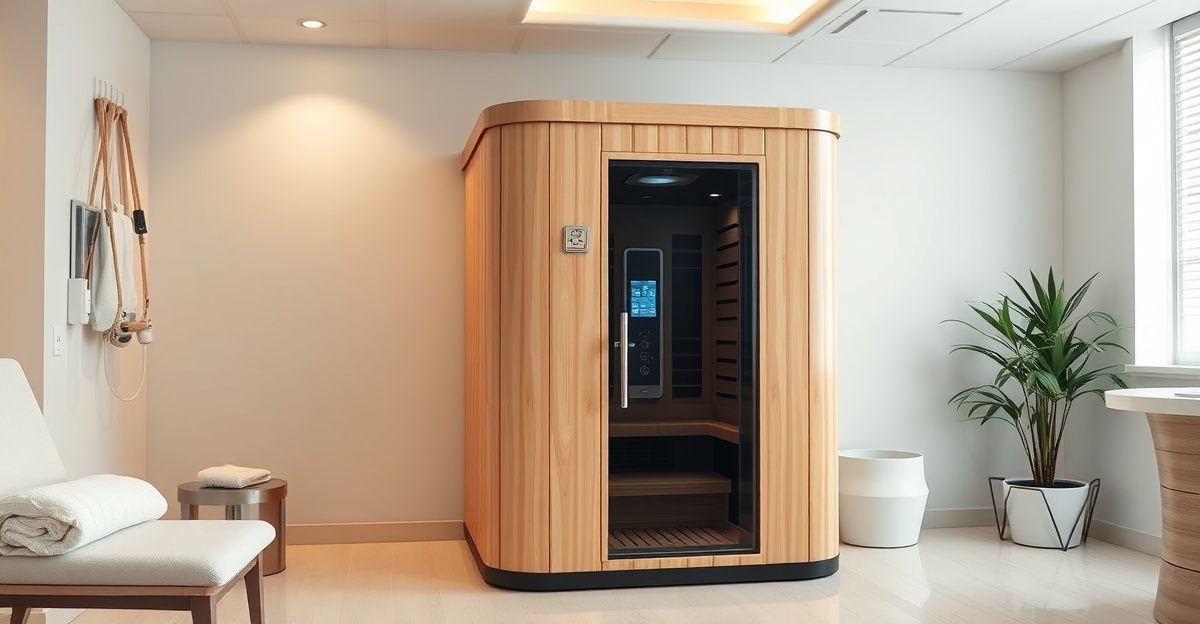
Application-specific supplies include catheter bag sets for rectal insufflation ($10 to $20 per set), a glass container with a diffuser stone for ozone water, ozone-resistant bags for limb bagging, and a sauna cabinet with an ozone port for ozone sauna ($300 to $2,000). For procedure-specific dosing, see our ozone therapy protocols guide, and for a sense of clinical pricing, our 10-pass ozone therapy cost breakdown.
What manufacturers are reputable?
Several companies have established track records. This is not an endorsement or product review; these are manufacturers frequently referenced in ozone clinical literature and professional communities. Verify current pricing and certifications directly, as specs change.
- Promolife (USA): machines for home and clinical use, made in the USA with ozone-compatible materials, CE approved. Home units start around $1,200; clinical units $5,000 to $12,000.
- Longevity Resources (Canada): operating for decades, focused on high-concentration, high-precision generators. The EXT120 is a common clinical choice.
- Medozons (Russia/International): clinical-grade generators used widely in European and Asian settings. The MEDOZONS-BM offers digital concentration control and built-in photometry; roughly $8,000 to $20,000.
- Herrmann Apparatebau (Germany): a long-standing German medical ozone manufacturer whose devices are standard in many European clinics and referenced in published research.
- SimplyO3 (USA): budget-friendly for home users, basic but reliable for insufflation and topical use, starting around $500.
Are ozone therapy machines FDA approved?
No. The FDA has not approved ozone generators for medical use in the United States. Under 21 CFR 801.415, the agency’s position is that “ozone is a toxic gas with no known useful medical application in specific, adjunctive, or preventive therapy.”4
In practice, this means:
- Ozone generators cannot be marketed as medical devices in the US.
- Manufacturers cannot make specific health claims about their machines.
- Practitioners who use ozone do so under their own license and discretion.
- Insurance does not cover ozone therapy or ozone equipment.
Regulations differ abroad. Germany, Italy, Spain, and other countries recognize ozone therapy as a legitimate medical practice, and generators are regulated accordingly, with CE marking a common certification. Despite the FDA position, ozone therapy is legal for practitioners to administer in most US states, and generators are legal to buy for personal use. Before buying, review general ozone therapy safety guidance.
What mistakes should you avoid?
- Using an industrial ozone generator: these run on room air and produce toxic nitrogen oxides. They are for water treatment, not therapy. Never use one on the body.
- Using a standard oxygen concentrator: most deliver only 90% to 95% oxygen. Use a tank at 99.5%+ purity.
- Breathing ozone gas directly: ozone is a lung irritant and should never be inhaled directly. Breathing through ozonated oil with a bubbler is a different technique.
- Using non-resistant tubing: latex, PVC, and rubber degrade under ozone. Use only silicone or PTFE.
- Buying on price alone: a $200 machine from an unknown maker with no material certification is a health risk, not a bargain.
The bottom line
An ozone therapy machine has one job: convert pure oxygen into a controlled oxygen-ozone mixture. The technology is well understood and more than a century old. What separates a good machine from a bad one is precision, material quality, and safety features.
For home use, a reputable machine in the $800 to $2,500 range from an established manufacturer covers most non-IV applications. For clinical use, expect $5,000 to $15,000 for a generator that supports the full range of procedures. Whatever you buy, start with the right oxygen source, use ozone-resistant materials throughout, and never skip the ozone destruct unit.
Sources
- Elvis AM, Ekta JS. Ozone therapy: a clinical review. J Nat Sci Biol Med. 2011;2(1):66-70. doi:10.4103/0976-9668.82319
- Medozons Ltd. Medical ozone generators of the Medozons series: technical specifications. Medozons.com. Accessed August 2026. (Manufacturer technical documentation; cited for device specifications only.)
- International Scientific Committee of Ozone Therapy (ISCO3). Madrid Declaration on Ozone Therapy. 2nd ed. ISCO3; 2015.
- U.S. Food and Drug Administration. Code of Federal Regulations Title 21, Part 801.415: Maximum acceptable level of ozone. eCFR. Accessed August 2026.