How Many People Have Died in a Hyperbaric Chamber? Complete Safety Data (2026)
Explore the clinic directoryIn this article
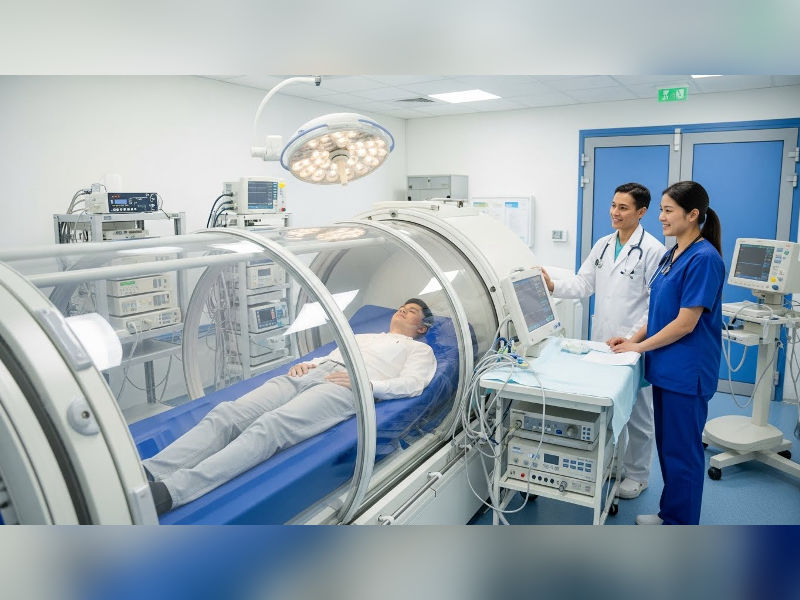
At least 77 people died in 35 hyperbaric chamber fires worldwide between 1923 and 1996, the most-cited peer-reviewed count of hyperbaric chamber deaths (Sheffield and Desautels, 1997). Broader databases that add non-fire accidents and other chamber types report up to 135 deaths, and later fires killed 11 people in Milan in 1997 and four people in the United States in 2009 and 2025.
Key takeaways
- Sheffield and Desautels (1997) documented 77 deaths in 35 hyperbaric chamber fires over 73 years, from 1923 to 1996, and 82 deaths in 39 fires once the Apollo command module and hypobaric chambers are counted.
- The UHMS Chamber Experience and Mishap Database, which counts fire and non-fire incidents in all chamber types, reports 135 deaths in 113 incidents through the late 1990s.
- According to Sheffield and Desautels (1997), every fatal chamber fire occurred in an atmosphere above 28% oxygen with burnable material inside, and air-filled chambers produced the only survivors.
- The most recent US deaths were a 5-year-old boy in Troy, Michigan, in January 2025 and a 43-year-old physical therapist in Lake Havasu City, Arizona, in July 2025; the FDA issued a fire-risk letter to health care providers in August 2025.
- In 1,529,859 HBOT treatments at US wound-care centers from 2012 to 2015, the adverse-event rate was 0.68% per treatment with zero deaths (Jokinen-Gordon et al., 2017).
The definitive academic analysis of hyperbaric chamber fires, covering 73 years from 1923 to 1996, documented 77 human fatalities in 35 hyperbaric chamber fires worldwide (Sheffield and Desautels, 1997).1 Every fatal fire happened in an oxygen-enriched atmosphere above 28%. Chambers pressurized with air produced the only survivors. Broader databases that count non-fire incidents and all chamber types report higher totals, which this page reconciles below.
How many people have died in hyperbaric chambers?
There is no single worldwide death toll, because different sources count different things. The most-cited peer-reviewed figure is 77 deaths in 35 hyperbaric chamber fires (1923 to 1996). Widen the scope to include the pressurized Apollo module and hypobaric chambers, or to count non-fire incidents, and the number rises. The table below shows why the totals differ.
Reconciling the death-count figures
| Source | Years | Scope | Fires / incidents | Deaths |
|---|---|---|---|---|
| Sheffield & Desautels 1997 (headline) | 1923 to 1996 | Hyperbaric chamber fires only | 35 | 77 |
| Sheffield & Desautels 1997 (full paper) | 1923 to 1996 | Plus pressurized Apollo module and hypobaric chambers | 39 | 82 |
| UHMS Chamber Experience & Mishap Database2 | Through late 1990s | All chamber incident types, fire and non-fire | 113 | 135 |
The Sheffield and Desautels paper remains the foundation.1 Within its 73-year window it recorded, by chamber category:
| Category | Fires |
|---|---|
| Diving bells | 2 |
| Recompression / decompression chambers | 8 |
| Clinical hyperbaric chambers | 25 |
| Hyperbaric chamber fires (77 deaths) | 35 |
| Pressurized Apollo Command Module (3 deaths) | 1 |
| Hypobaric chambers (2 deaths) | 3 |
| Full-paper total | 39 fires, 82 deaths |
The paper does not break the 77 deaths down by chamber category, so no per-category death count is given here. One point the authors do make is important for US readers: within the 1923 to 1996 window, no fire fatalities were reported in the clinical hyperbaric chambers of North America.1 That record did not hold afterward. A 2009 Florida death and the two 2025 US deaths described below all occurred after the study closed.
Deaths in 35 hyperbaric chamber fires over 73 years (1923 to 1996), the most-cited peer-reviewed figure (Sheffield and Desautels)
Undersea and Hyperbaric Medicine, 1997
How many hyperbaric chamber deaths have happened in the US?
Four US hyperbaric chamber deaths are documented on this page, all after the Sheffield and Desautels study window closed in 1996. A boy and his grandmother died in a 2009 fire in Lauderdale-by-the-Sea, Florida. A 5-year-old died in Troy, Michigan, in January 2025, and a 43-year-old physical therapist died in Lake Havasu City, Arizona, in July 2025. Each death occurred in a fire, and none occurred in a hospital chamber.
Were there hyperbaric chamber deaths before 2025?
Yes. Before 2025, the peer-reviewed record already held 77 hyperbaric chamber fire deaths from 1923 to 1996, the 11 deaths in the 1997 Milan fire and the two deaths in the 2009 Florida fire. The 2025 deaths in Michigan and Arizona were the first US chamber fire deaths on this record since 2009.
What causes fatal hyperbaric chamber fires?
Sheffield and Desautels identified two conditions present in every fatal fire: an oxygen-enriched atmosphere above 28% oxygen, and abundant burnable material inside the chamber.1 Chambers pressurized with air (below 23.5% oxygen) produced the only survivors. This is why clinical hard chambers running 100% oxygen carry a fundamentally different fire risk than soft chambers operating on ambient air.
“Each fatal chamber fire has occurred in an enriched oxygen atmosphere (above 28% oxygen) and in the presence of abundant burnable material. Chambers pressurized with air had the only survivors.”
Sheffield and Desautels, Undersea and Hyperbaric Medicine, 1997
The ignition source changed over time. Before 1980, fires were principally caused by electrical malfunction. Since 1980, they have been caused mainly by prohibited sources of ignition that an occupant carried into the chamber.1 In other words, most modern chamber deaths trace to a preventable protocol failure, not an equipment defect.
What is the fire risk inside a hyperbaric chamber?
Hyperbaric chamber fire risk depends mainly on the oxygen level inside the chamber and on what goes in with the patient. Monoplace hard chambers, which hold one person, are usually pressurized with 100% oxygen, so a single spark can ignite clothing, hair products or bedding. Multiplace chambers are pressurized with air while patients breathe oxygen through a mask or hood, which keeps the room atmosphere closer to the air-filled conditions that Sheffield and Desautels linked to survival.1
Which hyperbaric chamber fire deaths are on record?
Individual fatal incidents span multiplace hospital chambers and unregulated clinics. The most severe recorded event was the 1997 Milan fire; the most recent were two US deaths in 2025.
| Date | Location | Deaths | Details |
|---|---|---|---|
| 1997 | Milan, Italy | 11 | Fire in a multiplace HBOT chamber (10 patients and 1 nurse) |
| 2009 | Lauderdale-by-the-Sea, Florida, USA | 2 | A boy and his grandmother, in a non-hospital chamber during off-label cerebral palsy treatment |
| January 31, 2025 | Oxford Center, Troy, Michigan, USA | 1 | Thomas Cooper, age 5; his mother was injured. Four people, including the CEO, were charged; a judge ordered them to stand trial in February 2026.9 |
| July 9, 2025 | Lake Havasu City, Arizona, USA | 1 | Walter Foxcroft, 43, a physical therapist, died in a flash fire inside a chamber at his own clinic |
For deeper US-specific incident data, see our hyperbaric chamber fire and safety incidents data.
Which hyperbaric chamber accidents are not fires?
Fire is the cause behind every fatal incident in the table above, but it is not the only kind of hyperbaric chamber accident. The UHMS Chamber Experience and Mishap Database counts non-fire incidents as well, which is one reason its total of 135 deaths is higher than the 77 fire deaths in the peer-reviewed study.2 Pressure-related injury to the ears and lungs, oxygen toxicity seizures and equipment failures are the main non-fire risks, and the side effects section below gives their rates.
What did the FDA warn about HBOT fires in 2025?
After the 2025 Michigan and Arizona deaths, the FDA issued a letter to health care providers in August 2025 warning about fire risks with HBOT devices, citing recent reports of fires that caused serious injuries and deaths.6 The letter reinforced the need to follow all instructions for safe use and to confirm that patients remove every prohibited item before entering a chamber.
How common are non-fatal HBOT side effects?
Deaths are the most extreme outcome but not the most common risk. In the largest safety analysis conducted, covering 1,529,859 HBOT treatments at Healogics wound-care centers from 2012 to 2015, the overall adverse-event rate was 0.68% per treatment, with zero deaths (Jokinen-Gordon et al., 2017).3
Adverse-event rate per treatment across 1.5 million HBOT sessions, with zero deaths in that dataset
Jokinen-Gordon et al., 2017
The most common adverse events are mild and reversible:
- Middle ear barotrauma: the most frequent event; most cases are mild and many resolve on their own (Voigt et al., 2025)4
- Ear pain or fullness: transient, from pressure equalization
- Oxygen toxicity seizure: rare at standard pressures (Hadanny et al., 2016)5
- Temporary visual changes (myopia): reversible over weeks after a course ends
For the full breakdown of rates, see our HBOT side effects statistics.
Is a hyperbaric chamber in the home a fire risk?
Most home hyperbaric chambers are soft, inflatable chambers that reach about 1.3 atmospheres absolute (ATA) using ordinary air, a setup often called mild hyperbaric oxygen therapy or mild HBOT. Air sits below the 23.5% oxygen level that Sheffield and Desautels associated with survival in chamber fires, so an air-only home chamber does not match the conditions present in the fatal fires on record.1
The risk changes when a home setup feeds concentrator oxygen into the chamber itself rather than to a mask, because that raises the oxygen level inside the enclosure. Phones, heated blankets, battery devices and petroleum-based lotions are the same ignition sources the 1997 study traced in modern fires. The comparison of mild HBOT and clinical HBOT and the guide to hard shell and soft shell chambers set out how the two settings differ in pressure, oxygen and supervision.
How do modern chambers prevent fire deaths?
NFPA 99 Chapter 14 requirements for accredited HBOT facilities directly target the causes Sheffield identified.7 A review of the chamber-fire literature reaches the same conclusion: fatal fires cluster where these controls are absent (Zielinski et al., 2023).8
- Fire suppression systems that activate within seconds
- Fire-rated construction materials
- 100% cotton or approved fabric only, no synthetics
- Screening for prohibited items before every session
- Continuous oxygen monitoring with automatic shutoff
- A designated on-site hyperbaric safety director
The pattern across fatal incidents is consistent: deaths occur when these protocols are absent, ignored, or bypassed. At facilities in full compliance with NFPA 99 and PVHO-1 standards, the fire-fatality risk is extraordinarily low.
How can patients check a hyperbaric facility's safety record?
A well run hyperbaric facility can explain its safety program in plain terms before the first session. The questions below map to the failures behind the deaths on record, and most facilities answer them readily.
- Ask whether the facility is accredited by the Undersea and Hyperbaric Medical Society (UHMS), which reviews staffing, equipment and emergency procedures.
- Ask who supervises each session. Hospital programs typically have a physician trained in undersea and hyperbaric medicine on call and a certified hyperbaric technologist (CHT) at the chamber.
- Ask how the facility screens for prohibited items, and expect to change into approved cotton garments.
- Ask whether the chamber meets the ASME PVHO-1 pressure vessel standard and the NFPA 99 Chapter 14 fire code.
- Ask what condition the treatment is for and whether that use is on the FDA cleared list or off label.
The directory of HBOT clinics lists hyperbaric providers by state, and listing order there is not paid ranking. Featured slots are labeled and capped, Verified means the clinic completed credential checks rather than paid for placement, and the directory is free for patients to use. Inclusion in the directory is not an endorsement, so the questions above still apply to every listing.
The hyperbaric oxygen therapy treatment guide covers how HBOT works and the conditions it is used for, including carbon monoxide poisoning, burns and diabetic wounds. Uses such as traumatic brain injury and long COVID remain off label, and the evidence for them is still limited. The overview of FDA cleared indications for HBOT separates the two groups.
Frequently asked questions
How many people have died in a hyperbaric chamber?
At least 77 people died in 35 hyperbaric chamber fires between 1923 and 1996, according to Sheffield and Desautels (1997), the most-cited peer-reviewed count. The UHMS mishap database, which also counts non-fire incidents and other chamber types, reports 135 deaths. Later fires killed 11 people in Milan in 1997, two in Florida in 2009, and two more in Michigan and Arizona in 2025.
What causes hyperbaric chamber deaths?
Hyperbaric chamber deaths on record were caused almost entirely by fire. Sheffield and Desautels (1997) found that every fatal chamber fire occurred in an atmosphere above 28% oxygen with burnable material inside. Before 1980 most fires started with electrical faults, and since 1980 most started with a prohibited item an occupant carried into the chamber, which makes item screening the most important single control.
Is hyperbaric oxygen therapy dangerous?
Hyperbaric oxygen therapy carries a low rate of serious harm when facilities follow fire codes and screening rules. In 1,529,859 treatments at US wound-care centers from 2012 to 2015, the adverse-event rate was 0.68% per treatment with zero deaths (Jokinen-Gordon et al., 2017). Middle ear barotrauma is the most frequent problem, and oxygen toxicity seizures are rare at standard treatment pressures.
Can a home hyperbaric chamber catch fire?
A home hyperbaric chamber can catch fire if an ignition source meets an oxygen-enriched atmosphere, though air-filled soft chambers do not match the conditions of the fatal fires on record. Sheffield and Desautels (1997) found that chambers pressurized with air produced the only survivors. Feeding concentrator oxygen into the enclosure, or bringing in phones, heaters or oily products, raises the risk.
Has anyone died in a hyperbaric chamber in the US?
Yes, four deaths in US hyperbaric chambers are documented here, all in fires after 1996. A boy and his grandmother died in Lauderdale-by-the-Sea, Florida, in 2009. Five-year-old Thomas Cooper died at a center in Troy, Michigan, in January 2025, and four people were charged. Physical therapist Walter Foxcroft, 43, died in Lake Havasu City, Arizona, in July 2025.
Sources
- Sheffield PJ, Desautels DA. Hyperbaric and hypobaric chamber fires: a 73-year analysis. Undersea Hyperb Med. 1997;24(3):153-164. PMID: 9308138
- Undersea and Hyperbaric Medical Society. Chamber Experience and Mishap Database report. uhms.org
- Jokinen-Gordon H, Barry RC, Watson B, Covington DS. A retrospective analysis of adverse events in hyperbaric oxygen therapy (2012-2015): lessons learned from 1.5 million treatments. Adv Skin Wound Care. 2017;30(3):125-129. DOI: 10.1097/01.ASW.0000508712.86959.c9 (PMID: 28198743)
- Voigt A et al. Systematic review of otologic adverse events in hyperbaric oxygen therapy. Undersea Hyperb Med. 2025. PMID: 41429031
- Hadanny A et al. The safety of hyperbaric oxygen treatment: retrospective analysis in 2,334 patients. Undersea Hyperb Med. 2016. PMID: 27265988
- U.S. Food and Drug Administration. Follow instructions for safe use of hyperbaric oxygen therapy devices: letter to health care providers. August 2025. fda.gov
- National Fire Protection Association. NFPA 99 Health Care Facilities Code, Chapter 14 (Hyperbaric Facilities). 2024 Edition.
- Zielinski E et al. Fire in the hyperbaric chamber: review of the literature. Polish Hyperbaric Research. 2023. DOI: 10.2478/phr-2023-0020
- Michigan Department of Attorney General. Four charged in connection to death of 5-year-old after hyperbaric chamber explosion at Oxford Center. March 11, 2025. michigan.gov