Therapeutic Plasma Exchange (TPE): Uses, Evidence, and the Longevity Question
Therapeutic Plasma Exchange (TPE): Uses, Evidence, and the Longevity Question
The short answer: Therapeutic plasma exchange removes a patient’s plasma and replaces it with albumin or donor plasma, filtering out harmful antibodies and inflammatory factors. It is proven, first-line care for several autoimmune and neurological diseases. Its use for anti-aging is experimental and not proven.
Next step: Browse the Directory for vetted clinics when you want clinic listings related to plasma exchange and adjacent care.
TPE, also called plasmapheresis, is one of the more misunderstood procedures in medicine. In a hospital it is standard-of-care treatment that saves lives. In a longevity clinic it is marketed as a way to turn back your biological clock. Both use the same machine, but the evidence behind them could not be further apart. This guide separates the two.
Key Takeaways
- What it is: A procedure that removes plasma and replaces it with albumin or donor plasma, clearing circulating antibodies and inflammatory proteins.
- Evidence grade, approved uses: Established. TPE is first-line therapy for conditions such as Guillain-Barre syndrome, myasthenia gravis, and thrombotic thrombocytopenic purpura (TTP).
- Evidence grade, longevity: Early / Insufficient. Anti-aging use rests on small studies and animal data. No trial has shown it extends human lifespan or healthspan.
- Verdict: Legitimate medical TPE and longevity-clinic “plasma rejuvenation” are not the same thing. Judge them on their own evidence.
- Risks are real: Catheter complications, citrate reactions with low calcium, and hypotension are the most common problems.
What is therapeutic plasma exchange?
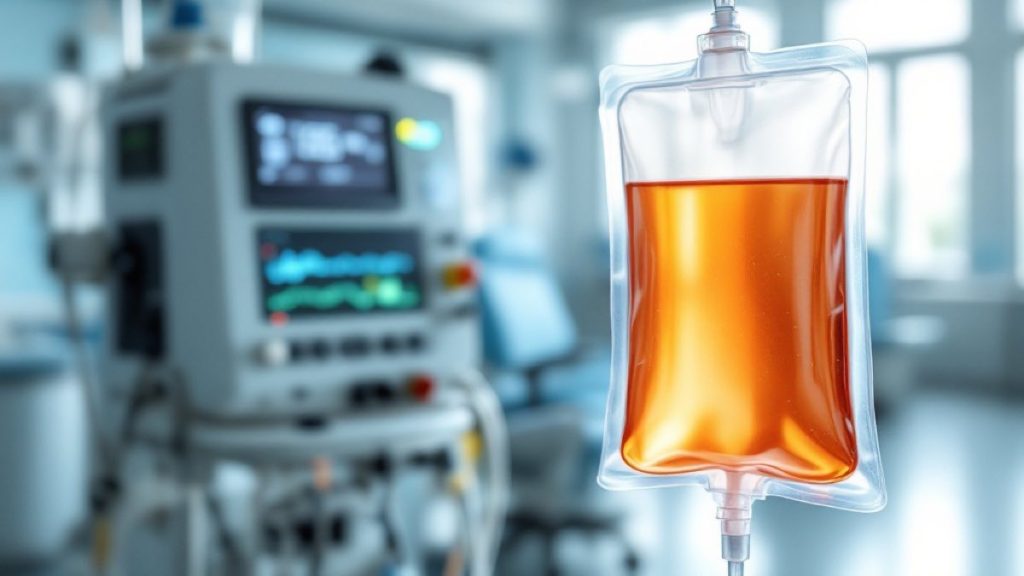
Therapeutic plasma exchange is an apheresis procedure that separates the liquid part of your blood (plasma) from the cells, discards the plasma, and returns the cells along with a replacement fluid. That replacement is usually human albumin solution, and sometimes fresh frozen donor plasma when clotting factors need to be restored. [1]
The logic is mechanical. Many diseases are driven by something dissolved in the plasma: an autoantibody attacking nerves, an immune complex, or a rogue protein. Medication can take days or weeks to lower those levels. TPE physically removes them in hours. A typical course runs five to seven sessions over one to two weeks, each processing roughly one to one and a half times the patient’s plasma volume. [1]
Which conditions is TPE proven to treat?
TPE is a recognized standard of care for a defined list of disorders. The American Society for Apheresis (ASFA) grades indications into four categories, where Category I means apheresis is accepted first-line therapy. Guillain-Barre syndrome, myasthenia gravis, and TTP all sit in Category I. [1]
These are not fringe uses. In severe myasthenia gravis and myasthenic crisis, TPE rapidly clears the antibodies that block nerve-to-muscle signaling. In Guillain-Barre syndrome it shortens the time to recovery. In TTP, plasma exchange transformed a condition that was once almost always fatal into one most patients survive. The evidence here is decades deep and reflected in international treatment guidelines. [1]
Established uses versus experimental uses
| Use | Example | Evidence grade |
|---|---|---|
| Neuromuscular autoimmune disease | Myasthenia gravis, Guillain-Barre syndrome | Established (ASFA Category I) |
| Blood disorder | Thrombotic thrombocytopenic purpura (TTP) | Established (ASFA Category I) |
| Other neurological / autoimmune | CIDP, some cases of MS relapse, autoimmune encephalitis | Established to accepted, condition-dependent |
| Neurodegeneration | Alzheimer’s disease (AMBAR trial) | Early / experimental |
| Anti-aging / “rejuvenation” | Plasma dilution for healthy older adults | Early / Insufficient |
Why do longevity clinics market plasma exchange for aging?
The anti-aging interest traces back to parabiosis experiments, where an old mouse and a young mouse are surgically joined and the older animal shows signs of rejuvenation across multiple tissues. For years the assumption was that “young blood” carried youthful factors. Then in 2020 researchers in the Conboy lab at UC Berkeley showed something more interesting: simply diluting an old mouse’s plasma with a saline-and-albumin solution, adding no young blood at all, produced similar rejuvenating effects. [4]
That reframed the idea. The benefit may come from removing accumulated harmful factors in aged blood rather than adding anything youthful. Because TPE already does exactly this kind of removal, it became the obvious human tool. A 2022 clinical study reported that a course of TPE shifted several aging biomarkers and, using epigenetic clocks, was associated with a reduction in estimated biological age of roughly one to three years. [5]
This is genuinely interesting science. It is also thin. The human study was small, measured surrogate markers rather than health outcomes, and has not been replicated at scale. No trial has shown that plasma exchange makes healthy people live longer or stay healthier for longer. When a clinic sells TPE as proven age reversal, it is running ahead of the evidence.
What did the Alzheimer’s AMBAR trial show?
The most serious clinical test of plasma exchange for a disease of aging is the AMBAR trial (Alzheimer’s Management By Albumin Replacement), sponsored by Grifols. It randomized 347 patients with mild-to-moderate Alzheimer’s across centers in Spain and the United States, using plasma exchange with albumin replacement (some arms adding immunoglobulin) against a sham procedure over 14 months. [3][6]
Results published in Alzheimer’s & Dementia in 2020 reported that treated patients declined more slowly on one of two co-primary endpoints, a measure of daily living activities, with signals in the moderate subgroup. [3] It was an encouraging result, not a cure, and it raised as many questions as it answered. AMBAR shows the approach is worth studying. It does not license the leap to “plasma exchange treats aging.”
What are the risks of TPE?
TPE is generally well tolerated in experienced centers, but it is an invasive procedure with real complications. The most frequent problems are: [2]
- Catheter-related: Large-bore vascular access can cause bleeding, clots, infection, or, with certain placements, a collapsed lung (pneumothorax).
- Citrate reactions: The anticoagulant used binds calcium, causing tingling, muscle cramps, and low calcium (hypocalcemia) that needs replacement.
- Hypotension: Rapid fluid shifts during the exchange can drop blood pressure.
- Allergic reactions: More likely when donor plasma is used as the replacement fluid, occasionally severe.
For a patient in myasthenic crisis, these risks are more than justified. For a healthy person paying out of pocket for speculative age reversal, the risk-benefit math is entirely different.
How much does TPE cost and who can access it?
When TPE is used for an approved indication, it is delivered in a hospital or specialized apheresis center and is typically covered by insurance. Access is a clinical decision made by a treating physician, usually a neurologist, hematologist, or nephrologist working with a transfusion medicine team.
The longevity market is a separate world. Private clinics offer plasma exchange as a cash-pay wellness service, often several thousand dollars per session and marketed as a package of multiple sessions. These are not covered by insurance and are not FDA-approved for anti-aging. Anyone considering this should treat it as an experimental purchase, not a proven treatment, and ask exactly what evidence the clinic is relying on.
Frequently asked questions
Is therapeutic plasma exchange the same as dialysis?
No. Dialysis filters small waste products and excess fluid, mainly for kidney failure. TPE removes the entire plasma component, including large proteins and antibodies, and replaces it with albumin or donor plasma. They use different machines and target different problems, though both circulate blood outside the body through tubing.
Can plasma exchange reverse aging?
Not in any proven sense. Animal studies and one small human study suggest plasma dilution can shift aging biomarkers, and estimated biological age dropped by roughly one to three years in that study. But no trial shows it extends lifespan or healthspan in people. For now the anti-aging use is experimental, not established.
Is TPE safe?
In experienced medical centers TPE is generally safe and well tolerated. The most common issues are catheter complications, citrate reactions that lower blood calcium, and temporary drops in blood pressure. Serious events are uncommon but possible. Safety depends heavily on the setting, the operators, and whether the procedure is clinically justified.
How many sessions of plasma exchange are needed?
For approved conditions, a standard course is usually five to seven exchanges over one to two weeks, adjusted to the disease and response. Some chronic conditions need periodic maintenance sessions. Longevity protocols vary widely between clinics and are not standardized, which itself signals how unsettled the anti-aging use remains.
Bottom Line
Evidence grade: Established for approved medical indications. Early / Insufficient for longevity.
Therapeutic plasma exchange is real, proven medicine for a specific set of autoimmune, neurological, and blood disorders, where it is first-line care and often lifesaving. If you have a Category I condition, this is a treatment backed by decades of evidence. If you are a healthy adult being sold plasma exchange as age reversal, understand that you are buying an experiment. The mouse data are intriguing, the human data are preliminary, and the marketing is far ahead of the science. The main limitations are small study sizes, reliance on biomarkers rather than health outcomes, lack of replication, and genuine procedural risk.
Related reading
References
- Sinha A, et al. Plasmapheresis. StatPearls. National Library of Medicine. https://www.ncbi.nlm.nih.gov/books/NBK560566/
- Complications of therapeutic plasma exchange in patients with neurological disorders. PMC. https://pmc.ncbi.nlm.nih.gov/articles/PMC7482663/
- Boada M, et al. A randomized, controlled clinical trial of plasma exchange with albumin replacement for Alzheimer’s disease: Primary results of the AMBAR Study. Alzheimer’s & Dementia. 2020. https://doi.org/10.1002/alz.12137
- Mehdipour M, et al. Plasma dilution improves cognition and attenuates neuroinflammation in old mice. PubMed. 2020. https://pubmed.ncbi.nlm.nih.gov/33191466/
- Kim D, Kiprov DD, Luellen C, et al. Old plasma dilution reduces human biological age: a clinical study. GeroScience. 2022. https://link.springer.com/article/10.1007/s11357-022-00645-w
- Boada M, et al. Plasma Exchange for Alzheimer’s Disease Management by Albumin Replacement (AMBAR) trial: Study design and progress. PubMed. 2019. https://pubmed.ncbi.nlm.nih.gov/30859122/
Medical disclaimer
This article is for general educational purposes only and is not medical advice. It does not replace consultation with a qualified healthcare professional. Therapeutic plasma exchange is an invasive procedure with real risks and should only be undertaken under the direction of a licensed physician. Do not start, stop, or change any treatment based on this content. If you are considering plasma exchange for any reason, discuss the specific evidence, risks, and alternatives with your doctor.