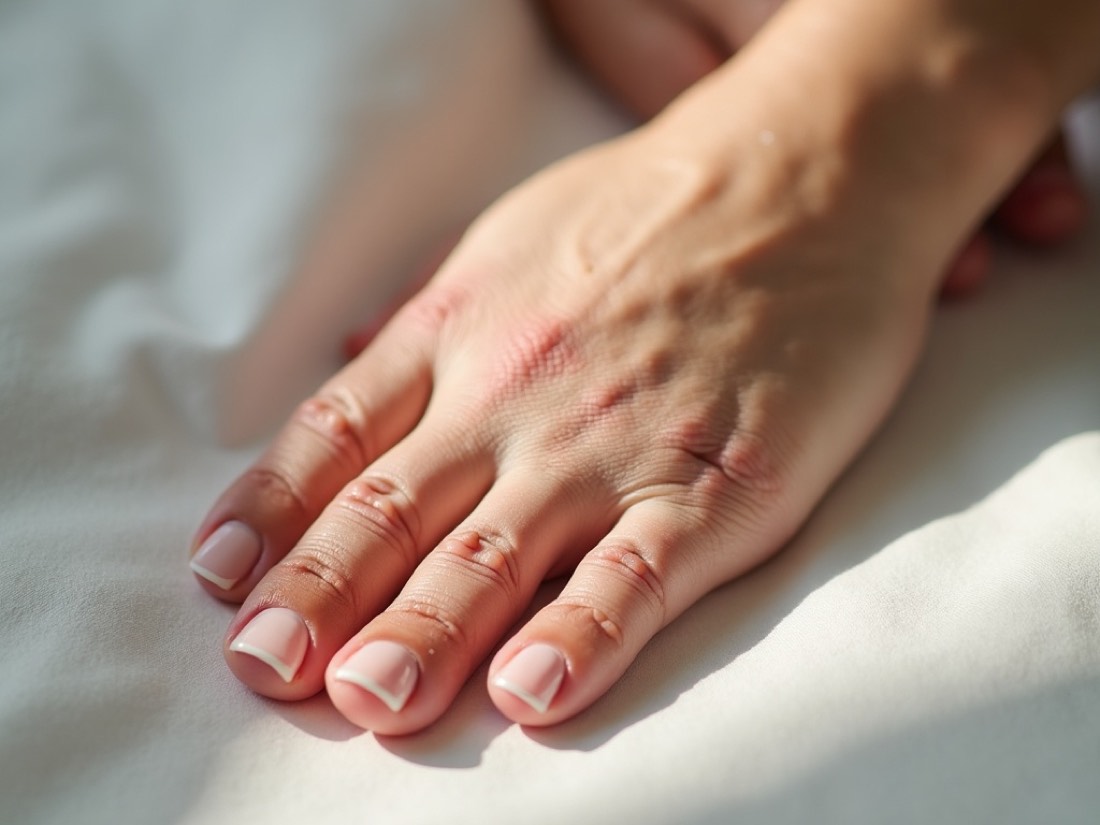
Nail psoriasis causes pitting, discoloration, and crumbling that is often mistaken for a fungal infection. Learn what to look for, how it connects to psoriatic arthritis, and what treatments actually work.
Eczema is a group of chronic inflammatory skin conditions, led by atopic dermatitis, caused by a weak skin barrier and an overactive immune response. It affects up to 25% of children and 7.3% of US adults and is managed with moisturizers, anti-inflammatory medicines and trigger control.
Nummular eczema produces distinctive coin-shaped patches that can be mistaken for ringworm or psoriasis. Here’s how to identify it, what causes it, and the best treatment strategies.
The right eczema cream pairs a fragrance-free moisturizer every day with an anti-inflammatory cream, usually a topical steroid matched to the body site, when atopic dermatitis flares. Here is how every type compares, from ointments to tapinarof.
Psoriasis at a Glance Affects: ~125 million people worldwide (~3% of the global population) Type: Chronic, immune-mediated inflammatory skin disease Most common form: Plaque psoriasis (80-90% of cases) Key driver: Overactive T-cells accelerate skin cell turnover from ~28 days to 3-4 days Genetic link: Over 80 gene loci identified; 30-40% of patients have a first-degree…
Acne treatment works best when it matches the acne type, from retinoids and benzoyl peroxide for mild acne to spironolactone for hormonal acne and isotretinoin for severe cystic acne, with gut, diet and scar care alongside.
Exosome therapy for hair loss is promising in the lab but premature in the clinic: human studies are small and early, and no exosome product is FDA approved for hair loss or any other use.
Hormonal acne is driven by androgens such as DHT, often amplified by insulin and IGF-1, and shows as deep jawline and chin breakouts. Spironolactone, combined pills, clascoterone and isotretinoin target it, with spironolactone beating placebo in the SAFA trial (BMJ, 2023).
At a Glance Psoriasis and eczema can look similar at a glance, but their underlying immune pathways, typical locations, and associated conditions are meaningfully different. Psoriasis is driven by Th17/Th1 immune activity and produces thick, silvery-scaled plaques; eczema is driven by Th2 immune skewing and produces oozing, crusting, intensely itchy skin. The distinction matters for…