EBOO vs 10-Pass Ozone Therapy: Differences, Costs, and Which Is Better
Explore the clinic directoryIn this article
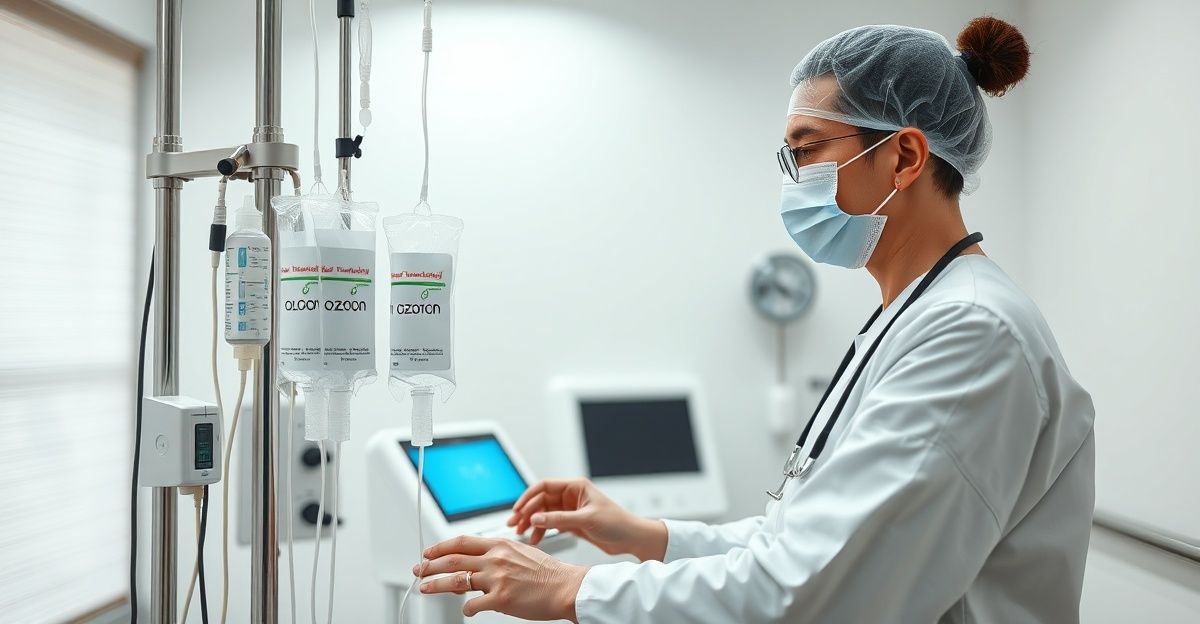
10-Pass ozone therapy draws about 200 mL of blood, mixes it with ozone under 0.8 to 1.0 bar of pressure and reinfuses it, repeating the cycle 10 times in one session, while EBOO (Extracorporeal Blood Oxygenation and Ozonation, also written EBO2) runs blood continuously through an external filter where it meets ozone before returning to the other arm. In practice, 10-Pass delivers the higher, pressurized ozone dose, EBOO adds a blood filtration step, and neither method has large randomized controlled trials behind it. The two are among the most intensive systemic ozone therapies offered in integrative clinics, and they are frequently confused with each other despite working through different mechanisms. 10-Pass is also called Multi-Pass or Hyperbaric Ozone. Both deliver significantly more ozone than standard Major Autohemotherapy (MAH), but they do so in different ways and are suited to different clinical situations.
The sections below compare EBOO and 10-Pass ozone therapy on mechanisms, session experience, costs, evidence quality, safety, and the conditions each approach is most often used for, then answer the questions patients ask before booking.
Key Takeaways
- EBOO filters and ozonates blood extracorporeally, combining ozone therapy with a blood filtration/detoxification component
- 10-Pass delivers ozone under pressure (0.8 to 1.0 bar) via repeated draw-ozonate-reinfuse cycles, maximizing ozone saturation of blood1
- EBOO sessions take 45 to 90 minutes and cost $800 to $2,000; 10-Pass sessions take 60 to 120 minutes and cost $800 to $1,500
- Neither has strong clinical evidence: both are based on clinical experience and mechanistic reasoning rather than large RCTs
- 10-Pass has more clinical literature and a longer track record; EBOO is newer with more theoretical appeal
- Some practitioners use both in sequence for severe or complex cases
What Is the Difference Between EBOO and 10-Pass Ozone?
The core difference is filtration versus pressure. EBOO passes a continuous stream of blood across a membrane filter that is flushed with an ozone and oxygen mixture, so the blood is ozonated and filtered at the same time. 10-Pass ozonates blood in batches of about 200 mL inside a glass bottle under 0.8 to 1.0 bar of pressure, which pushes more ozone into solution, and repeats that 10 times.1
Both are forms of systemic, blood-based medical ozone therapy, and both build on Major Autohemotherapy, the older method in which a single bag of blood is ozonated once and returned. A standard MAH session is the baseline that clinics use when they describe 10-Pass as a higher dose and EBOO as a higher volume treatment.
Neither method is approved by the US Food and Drug Administration for any condition, both are cash pay, and the published evidence for each consists mainly of case series, protocol descriptions and clinical experience rather than controlled trials.
How EBOO Works
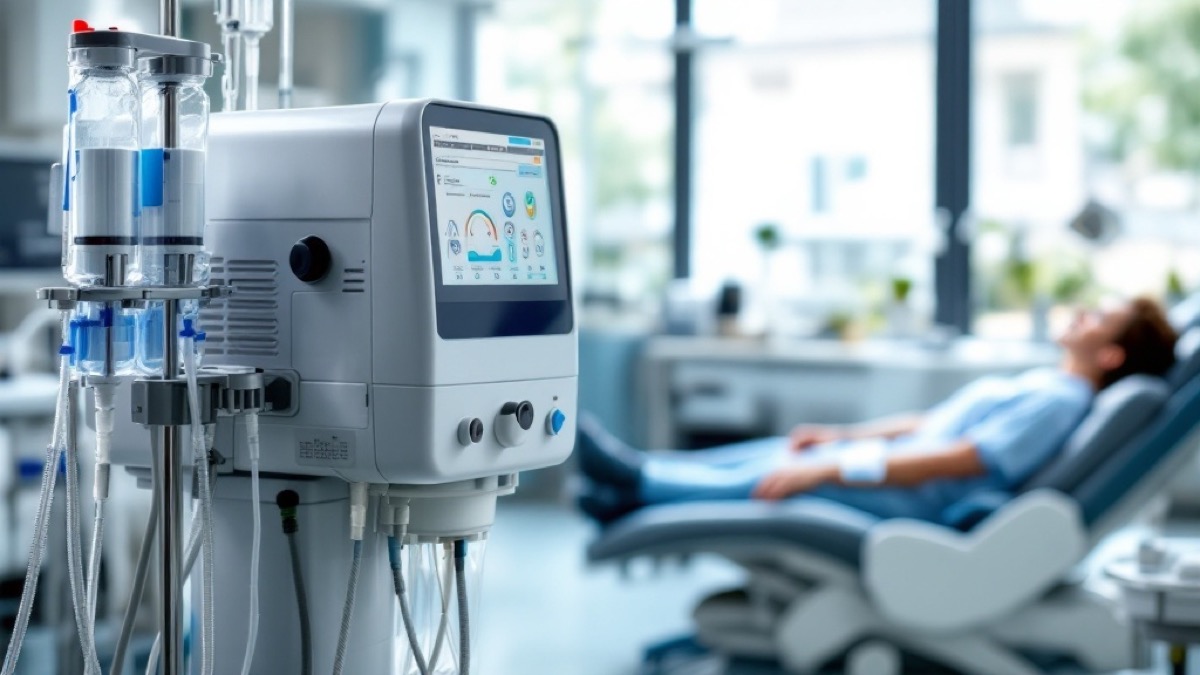
EBOO stands for Extracorporeal Blood Oxygenation and Ozonation. Think of it as a simplified dialysis-like procedure that adds ozone exposure to blood filtration.
The process:
- Blood is drawn from one arm via IV access
- It passes through an external circuit containing a specialized filter membrane
- Ozone/oxygen gas is introduced on one side of the membrane while blood flows on the other
- The membrane allows gas exchange: ozone contacts the blood while also filtering out certain waste products, fats, and inflammatory mediators
- The ozonated and filtered blood returns to the patient through the other arm
The dual action is what distinguishes EBOO from other ozone methods. It is not just ozone therapy. It is ozone therapy plus a filtration/detoxification step. Proponents argue this makes it particularly effective for conditions involving toxic burden, chronic infections, and metabolic dysfunction.2
You can see the filtration effect in real time: the blood going into the circuit appears dark, and the blood returning appears significantly brighter red (indicating improved oxygenation). The filter often collects visible yellow/brown waste material. While this visual effect is dramatic, it should be interpreted cautiously. Changes in blood color primarily reflect oxygenation status, and the filtered material has not been rigorously analyzed in published studies.
The filtration claim is also worth comparing with therapeutic plasma exchange, the conventional hospital apheresis procedure that removes plasma for specific indications. Plasma exchange has published guidelines and trial data for named diseases; the filtration step in EBOO has not been studied in the same way. A plain explainer on therapeutic plasma exchange covers how that procedure differs.
EBO2 vs EBOO: Are They the Same Thing?
EBO2 and EBOO are two abbreviations for the same family of procedure: extracorporeal blood oxygenation and ozonation, in which blood leaves the body, passes through a filter exposed to ozone and oxygen, and returns through a second line. Some clinics use EBO2 as the name of a particular system or protocol, and some use the two terms interchangeably.
Because the label does not tell you the protocol, the details that matter are the ones a clinic should be able to state: the type of filter, the ozone concentration, the blood flow rate, the total session length and who supervises the circuit. Two clinics that both call their treatment EBOO can run it quite differently.
How 10-Pass Ozone Works
10-Pass ozone therapy, developed by Dr. Johann Lahodny in Austria, uses a specialized hyperbaric ozone device that draws blood into a vacuum bottle, exposes it to ozone under positive pressure (0.8 to 1.0 bar), and reinfuses it. This cycle is repeated 10 times in a single session.1
The process:
- Approximately 200 mL of blood is drawn into a glass vacuum bottle
- Ozone is introduced under pressure, forcing more ozone into solution than atmospheric-pressure methods allow
- The ozonated blood is reinfused via gravity or mild pressure
- Steps 1-3 are repeated 9 more times
The key innovation is the hyperbaric ozone exposure. Henry’s Law dictates that gas solubility in liquid increases with pressure. By ozonating blood under pressure, 10-Pass dissolves significantly more ozone per volume of blood than standard MAH. Across 10 passes, the total ozone dose delivered is roughly 10 times what a single MAH session provides.3
Because each pass is a separate draw and reinfusion, the clinician can lower the ozone concentration or stop after fewer passes if a patient feels faint or unwell. That stepwise control is one reason practitioners describe 10-Pass as easier to titrate than a continuous circuit. Our longer guide to 10-Pass ozone therapy and how a session runs covers preparation and aftercare.
For more detail on 10-Pass, see our full guide: 10-Pass Ozone Therapy. For more on EBOO, see: EBOO Ozone Therapy.
“EBOO adds a filtration component that 10-Pass does not have. 10-Pass delivers a higher total ozone dose under pressure. They are complementary technologies, not competing ones.”
Clinical observation from integrative medicine practitioners
How Ozone Acts on Blood, and Why Dose Matters
Ozone does not circulate through the body as a gas. According to Sagai and Bocci (2011), ozone reacts within seconds with polyunsaturated fatty acids and antioxidants in plasma, producing hydrogen peroxide and lipid oxidation products that act as short-lived signaling messengers.6 Those messengers are thought to trigger an adaptive antioxidant response, including activation of the Nrf2 pathway.
Bocci and colleagues (2009) called this the ozone paradox: ozone is a toxic oxidant, especially to the lungs, yet a measured dose given to blood outside the body may act as a mild, controlled stressor.7 The same work stresses a narrow therapeutic window, with too little ozone having no effect and too much damaging red blood cells. That window is why the concentration per pass, the total dose and G6PD screening matter more than the brand of device.
Head-to-Head Comparison
EBOO processes a larger volume of blood through a filter, while 10-Pass gives a higher ozone dose under pressure through a single IV line.
| Factor | EBOO | 10-Pass |
|---|---|---|
| Core mechanism | Ozone + blood filtration through membrane | Ozone under pressure, 10 repeated cycles |
| Ozone dose | Moderate (continuous exposure, but through membrane) | High (10x standard MAH dose, under pressure) |
| Filtration/detox | Yes (removes lipids, inflammatory mediators, waste) | No (pure ozone therapy) |
| Session time | 45 to 90 minutes | 60 to 120 minutes |
| IV access | Two arms (draw and return) | One arm |
| Cost per session | $800 to $2,000 | $800 to $1,500 |
| Blood volume processed | 1.5 to 3 liters (continuous flow) | ~2 liters (200 mL x 10 passes) |
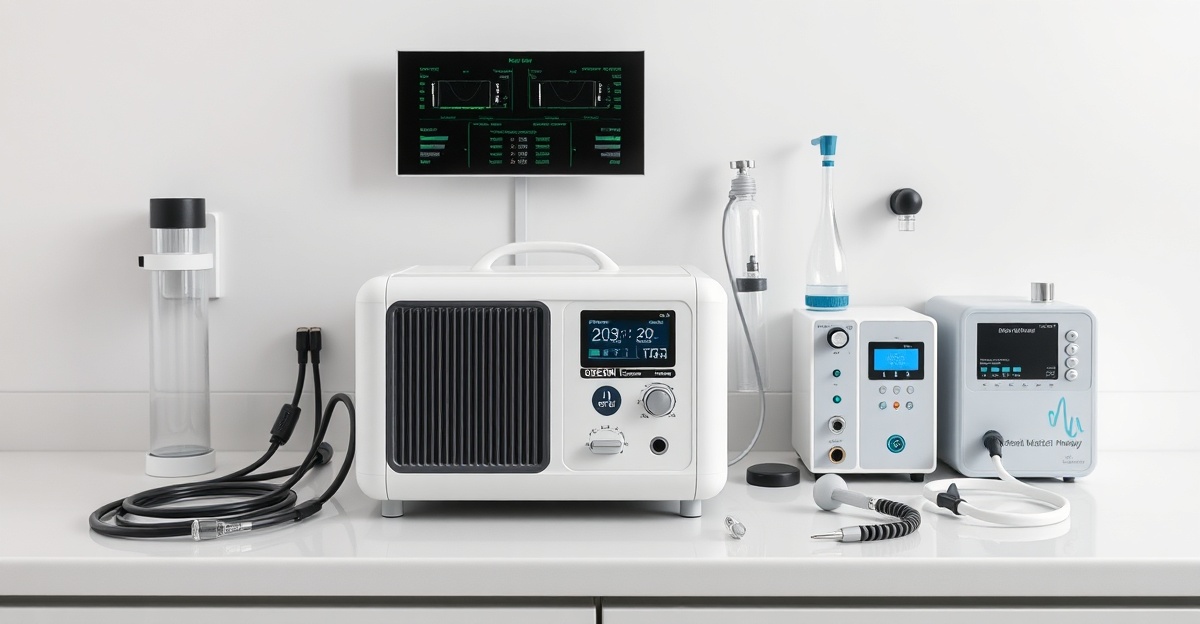
| Equipment | EBOO filter unit (various manufacturers) | Dedicated hyperbaric ozone device with glass vacuum bottles |
| Published studies | Very few (mostly case reports) | Several case series, small trials |
| Track record | Newer (~5-7 years in common use) | Longer (~10-15 years in use since Lahodny’s development) |
| Availability | Growing but still limited | More widely available |
Which Conditions Favor Which Approach?
Clinicians usually choose 10-Pass when the goal is the highest ozone dose, as with chronic infections, and EBOO when they want filtration as well, as with mold illness or high lipids. These pairings come from practitioner reasoning and clinical experience, not from trials that compared the two methods head to head.
| Condition/Goal | Better Option | Reasoning |
|---|---|---|
| Lyme disease | 10-Pass (then consider EBOO) | Higher ozone dose for antimicrobial effect; EBOO adds detox for Herxheimer management |
| Mold illness/CIRS | EBOO | Filtration component helps remove mycotoxins and inflammatory mediators |
| Chronic fatigue | Either (EBOO may have slight edge) | Both improve oxygenation; EBOO’s detox may address contributing toxic burden |
| Autoimmune conditions | 10-Pass (conservative dosing) | Better dose control with individual passes; can stop early if needed |
| High cholesterol/metabolic | EBOO | Filtration removes lipids and metabolic waste products |
| Viral infections (EBV, HSV) | 10-Pass | Maximum ozone dose for antiviral effect |
| Post-COVID/Long COVID | Both (combination ideal) | 10-Pass for immune modulation; EBOO for microclot/inflammatory mediator filtration |
| General wellness/optimization | 10-Pass (more cost-effective) | Higher ozone dose per dollar; filtration less necessary for healthy individuals |
Read the table as a map of how clinics reason, not a ranking of outcomes. The condition pages for Lyme disease, chronic fatigue syndrome and Long COVID summarize conventional care and its gaps. A separate review of ozone therapy for Lyme disease covers what the small studies in that area report.
Can You Do Both?
Yes. Some practitioners offer combined EBOO + 10-Pass protocols, typically scheduling them on different days within the same week. The rationale is that 10-Pass delivers maximum ozone dose while EBOO provides the filtration/detoxification component. Together, they address both the “treat” and “clean” aspects of systemic therapy.
Common combination protocols:
- Alternating: 10-Pass on Monday, EBOO on Thursday, for 4 to 6 weeks
- Sequential: EBOO first (filter blood), then 10-Pass 24 to 48 hours later (maximize ozone on cleaner blood)
- Front-loaded: Start with 3 to 4 EBOO sessions to detoxify, then switch to 10-Pass for maintenance
Combination protocols are expensive ($1,600 to $3,500 per week) and are typically reserved for complex, treatment-resistant cases like chronic Lyme disease, mold illness, or Long COVID.
No published study has compared a combined schedule with either method alone, so the sequencing above reflects clinic habit rather than tested protocol. Ask any clinic proposing a combination how it will judge whether the extra sessions are helping.
Evidence Quality: An Honest Assessment
Neither EBOO nor 10-Pass has strong clinical evidence. Here is a frank assessment of where the evidence stands for each:
10-Pass Evidence
- More published case series and clinical observations
- Dr. Lahodny and collaborators have published protocol descriptions and outcome data
- Used in European clinics for over a decade with documented safety
- No large RCTs
EBOO Evidence
- Very few published studies specific to the EBOO procedure
- Draws theoretical support from both ozone therapy literature and dialysis/apheresis literature
- Growing adoption in US integrative medicine clinics but limited published outcomes
- No RCTs
Both therapies exist in the same evidence tier: mechanistically plausible, supported by clinical experience, but unproven by the standards of conventional evidence-based medicine. Patients choosing either approach should understand they are opting for an experimental treatment.
The broader reviews of medical ozone, such as Smith and colleagues (2017) in Medical Gas Research and Elvis and Ekta (2011), describe mechanisms and clinical uses mostly for Major Autohemotherapy and local injections, not for 10-Pass or EBOO specifically.45
Is EBOO or 10-Pass Ozone FDA Approved?
No. The FDA has not approved ozone for any medical use, and its device regulation at 21 CFR 801.415 describes ozone as a toxic gas with no known useful medical application in specific, adjunctive or preventive therapy. US clinics offer both treatments off label under a physician’s judgment. The full regulatory picture is in whether ozone therapy is FDA approved.
10-Pass Ozone Therapy Reviews: What Patients Report
Patient reviews of 10-Pass ozone therapy most often describe more energy, clearer thinking or fewer infection flares in the days after a session, alongside fatigue, bruising at the IV site or a short “detox” style dip. EBOO reviews tend to mention the visible change in blood color and the filter residue. These are personal accounts, not measured outcomes.
Reviews cannot separate the effect of the treatment from the placebo response, from other therapies the patient was using at the same time, or from the natural ups and downs of a chronic illness. They are most useful for judging the practical side of a clinic: how well the staff place an IV, how a reaction was handled, and whether pricing matched the quote.
Questions worth asking any clinic before a first session:
- Who places the IV and who supervises the session, and what are their credentials?
- What ozone concentration is used per pass or per hour, and how is it adjusted?
- Do you test for G6PD deficiency and check blood counts before starting?
- How is the equipment maintained, and is the EBOO filter single use?
- What is your plan if I feel faint, my blood pressure drops or the circuit fails?
- How will we decide whether the treatment is helping, and when to stop?
Cost Comparison
A single EBOO session costs $800 to $2,000, and a single 10-Pass session costs $800 to $1,500. EBOO usually sits higher because each session uses a disposable filter circuit and needs two IV lines and longer staff attention.
| Scenario | EBOO Cost | 10-Pass Cost |
|---|---|---|
| Single session | $800 to $2,000 | $800 to $1,500 |
| 6-session course | $4,800 to $12,000 | $4,800 to $9,000 |
| Monthly maintenance (1/month) | $9,600 to $24,000/year | $9,600 to $18,000/year |
| Combined protocol (6 weeks) | $9,600 to $21,000 total | |
Neither is covered by health insurance in the United States.
Prices vary with the region, whether a physician is present for the whole session, and whether labs, IV supplies and a consultation are billed separately. Breakdowns of 10-Pass ozone therapy cost and EBOO pricing show what is usually bundled into a quote.
Safety
Both procedures require trained medical professionals and proper equipment:
- EBOO risks: Air embolism (if equipment malfunctions), hemolysis (if filter is damaged), infection (two IV sites), hypotension, hematoma at IV sites
- 10-Pass risks: Hemolysis (if ozone concentration too high), air embolism (rare with proper equipment), vasovagal reaction, bruising at IV site
- Shared contraindications: G6PD deficiency, active bleeding disorders, pregnancy, severe anemia
Both procedures are generally well tolerated by trained providers using properly maintained equipment. EBOO carries slightly more risk due to the complexity of the extracorporeal circuit and the need for two IV access points.
Ozone must never be inhaled, and both methods expose only blood outside the body to the gas. A fuller list of reactions and warning signs is in IV ozone therapy side effects.
Who Offers EBOO and 10-Pass, and How to Find a Clinic
EBOO and 10-Pass are offered mainly by integrative and functional medicine physicians (MDs and DOs), and in some states by naturopathic doctors whose scope of practice includes IV therapy. Registered nurses or nurse practitioners often place the IV lines and monitor the session under that clinician’s supervision. Fewer clinics offer EBOO than 10-Pass because the filter circuit needs extra equipment and training.
The national directory of ozone therapy clinics lists practices by state and city, and each profile shows which ozone methods a clinic offers. Listing order is not paid ranking, Featured slots are labeled and capped, Verified means a clinic completed credential checks rather than paid for placement, and Regenerated.com is free for patients. Inclusion in the directory is not an endorsement. The guide to Featured, Verified and organic listings explains each label.
The Bottom Line
EBOO and 10-Pass are different tools for different jobs. 10-Pass is the better choice when the primary goal is maximum ozone delivery for conditions like chronic infections, immune modulation, or general optimization. EBOO is the better choice when blood filtration and detoxification are priorities, such as mold illness, toxic burden, or metabolic conditions.
For complex, multi-system conditions (chronic Lyme, Long COVID, CIRS), combining both approaches may offer the most comprehensive treatment, though at significant cost and without strong evidence to guide optimal protocols. Both remain experimental, and patients should make decisions based on their specific clinical situation, provider experience, and financial capacity.
Put simply, 10-Pass ozone gives a higher pressurized dose through one IV line at $800 to $1,500 a session, and EBOO adds filtration through two lines at $800 to $2,000. For background on every route of delivery, from MAH to local injections, the ozone therapy treatment guide is the place to start.
Frequently Asked Questions
Is EBOO or 10-Pass ozone better?
Neither is better across the board. 10-Pass ozone delivers a higher, pressurized ozone dose in 10 cycles through one IV line, which clinicians favor for chronic infections and when they want close dose control. EBOO adds blood filtration through a two-line circuit, which clinicians favor for mold illness, high lipids or a heavy inflammatory load. No trial has compared the two directly, so the choice rests on the goal, the clinician’s experience and the budget.
How much does 10-Pass ozone therapy cost compared with EBOO?
A single 10-Pass ozone session costs $800 to $1,500 and a single EBOO session costs $800 to $2,000, according to the ranges in the cost table above. A six-session course runs $4,800 to $9,000 for 10-Pass and $4,800 to $12,000 for EBOO. Health insurance in the United States does not cover either treatment, and some clinics bill labs, consultations and supplies separately, so ask for an itemized quote.
Is EBO2 the same as EBOO?
Yes, EBO2 and EBOO describe the same type of procedure: extracorporeal blood oxygenation and ozonation, where blood flows out of one arm, through a filter exposed to ozone and oxygen, and back into the other arm. Some clinics use EBO2 for a particular system or protocol. The filter type, ozone concentration, flow rate and session length matter more than the name, so ask the clinic to state them.
Is 10-Pass ozone therapy safe?
10-Pass ozone is generally well tolerated when trained staff use properly maintained equipment, but it carries real risks. Reported problems include hemolysis if the ozone concentration is too high, fainting, bruising at the IV site and, rarely, gas embolism. People with G6PD deficiency, bleeding disorders, severe anemia or pregnancy should not have it. Screening blood tests before the first session and a clear plan for reactions are signs of a careful clinic.
Are 10-Pass ozone therapy reviews reliable?
10-Pass ozone therapy reviews are reliable for judging how a clinic runs, not for judging whether the treatment works. Patients often report more energy or fewer flares, but a review cannot rule out placebo, other treatments taken at the same time or a natural change in symptoms. Use reviews to check IV skill, communication, how reactions were handled and whether the final bill matched the quote, then weigh the published evidence separately.
Is ozone therapy FDA approved?
No, the FDA has not approved ozone therapy for any medical condition, and that includes both EBOO and 10-Pass. Federal regulation 21 CFR 801.415 describes ozone as a toxic gas with no known useful medical application. Licensed physicians in the United States still offer these treatments off label, which is why they are cash pay, why protocols differ from clinic to clinic, and why patients should ask exactly how dose and safety are managed.
Sources
- Lahodny J. “High-dose ozone therapy (OHT): Ten-pass ozone as a therapeutic method.” Zeitschrift fur Ganzheitliche Tiermedizin. 2014;28:45-50.
- Di Mauro R, et al. “EBOO therapy: a new approach in ozone treatment.” Journal of Ozone Therapy. 2019;3(4):1-6.
- Bocci V. “Ozone: A New Medical Drug.” 2nd ed. Springer; 2011.
- Smith NL, et al. “Ozone therapy: an overview of pharmacodynamics, current research, and clinical utility.” Medical Gas Research. 2017;7(3):212-219. doi:10.4103/2045-9912.215752
- Elvis AM, Ekta JS. “Ozone therapy: a clinical review.” Journal of Natural Science, Biology and Medicine. 2011;2(1):66-70. doi:10.4103/0976-9668.82319
- Sagai M, Bocci V. “Mechanisms of action involved in ozone therapy.” Medical Gas Research. 2011;1(1):29. doi:10.1186/2045-9912-1-29
- Bocci V, et al. “The ozone paradox: ozone is a strong oxidant as well as a medical drug.” Medicinal Research Reviews. 2009;29(4):646-682. doi:10.1002/med.20150