Menopause Insomnia: Why Sleep Falls Apart and How to Fix It
Explore the clinic directoryIn this article
Menopause insomnia is most effectively treated with cognitive behavioral therapy for insomnia (CBT-I), the first-line treatment recommended by the American College of Physicians (2016), combined with hormone therapy when night sweats are what keep waking you. Sleep problems affect 40 to 60% of women during perimenopause and menopause, and they usually respond to a plan that matches the treatment to the driver: falling progesterone, hot flashes, disrupted nighttime cortisol, or an overlooked condition such as sleep apnea.
No single pill or supplement ends menopausal sleeplessness for everyone. The women who sleep well again usually combine two or three approaches: a structured CBT-I program, a conversation with a clinician about menopausal hormone therapy (MHT, also called HRT) or a nonhormonal option for hot flashes, and a cooler, more consistent sleep routine. The sections below explain each driver, each treatment and the order to try them in.
At a Glance
- Sleep disruption affects 40-60% of women during perimenopause and menopause, making it one of the most common and debilitating symptoms of the menopausal transition.
- The primary drivers are declining progesterone (which promotes sleep), vasomotor symptoms (night sweats that fragment sleep), and cortisol dysregulation, and sleep apnea becomes more common after menopause.
- CBT-I (cognitive behavioral therapy for insomnia) is the first-line treatment recommended by the American College of Physicians (2016) and the American Academy of Sleep Medicine (2021), and the MsFLASH trial (2016) found it effective in menopausal women with hot flashes.
- HRT, particularly estradiol for night sweats and micronized progesterone taken at bedtime, can substantially improve sleep when hormonal decline is the primary driver, according to The Menopause Society (2022).
- Nonhormonal options exist for women who cannot take estrogen, including fezolinetant, which the FDA approved for moderate to severe hot flashes in 2023.
- Supplements like magnesium glycinate and low-dose melatonin can be useful adjuncts, but they work best alongside behavioral and hormonal strategies, and the evidence behind them is thinner.
Why Sleep Breaks Down During Menopause
If you used to sleep soundly and now find yourself staring at the ceiling at 3 AM, you are not alone. Sleep disruption during menopause is not a minor inconvenience. It is a physiological event driven by real hormonal changes that affect the architecture of sleep itself.
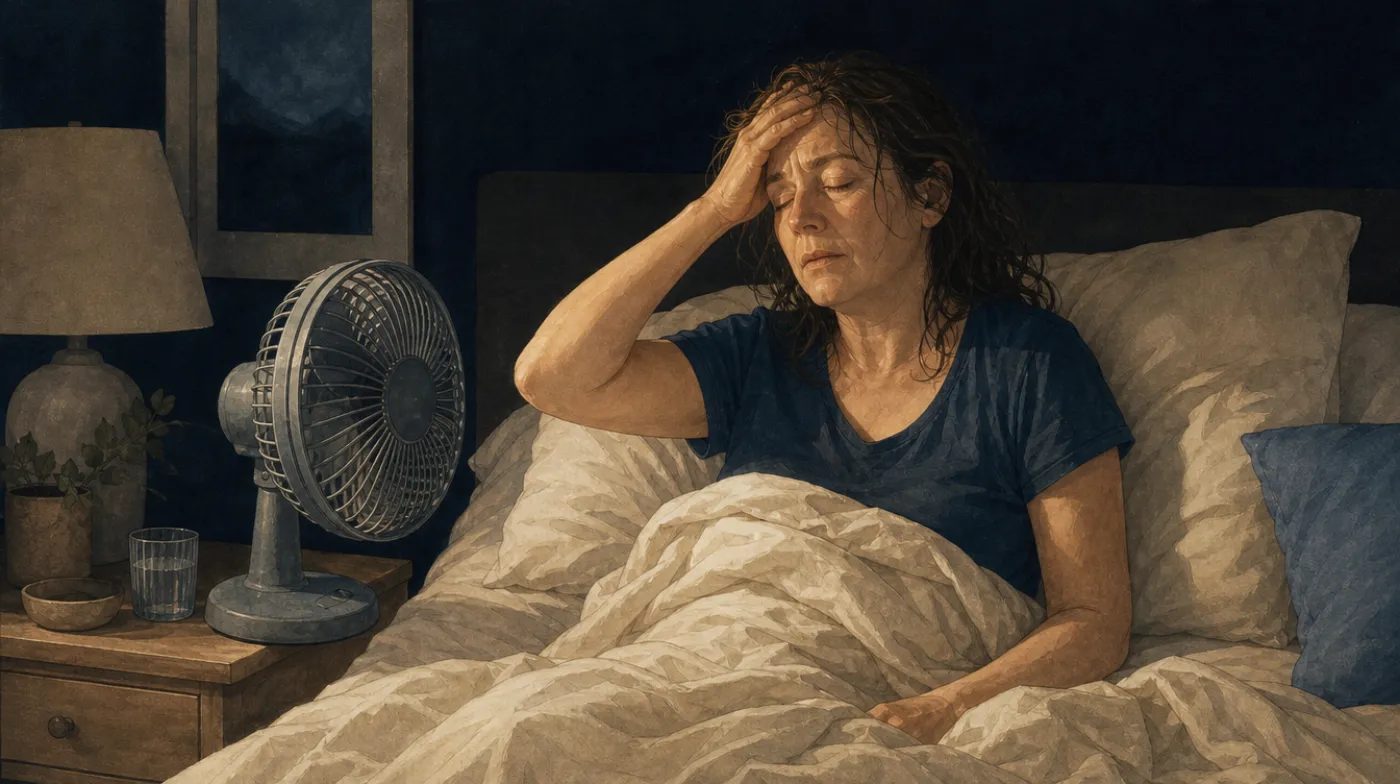
Understanding why this happens is the first step toward fixing it. There are three major mechanisms at work, and many women have more than one at the same time.
Progesterone Decline
Progesterone is often called the “calming hormone,” and for good reason. It enhances the activity of GABA, the brain’s primary inhibitory neurotransmitter. GABA slows neural firing, reduces anxiety, and promotes the transition from wakefulness to sleep. Progesterone is essentially nature’s sedative [1].
During perimenopause, progesterone is the first hormone to decline, often dropping years before estrogen levels change significantly. This early progesterone loss explains why sleep problems frequently appear before hot flashes and other classic perimenopause symptoms. Women who were previously excellent sleepers suddenly develop difficulty falling asleep, staying asleep, or both [2].
The effect is measurable in sleep studies. Postmenopausal women have reduced slow-wave sleep (the deepest, most restorative sleep stage) compared to premenopausal women, and this reduction correlates directly with progesterone levels [3].
Vasomotor Symptoms: Night Sweats and Hot Flashes
Night sweats are the most obvious sleep disruptor during menopause. A hot flash during sleep can raise skin temperature by several degrees, trigger sweating, and cause a sudden awakening. Many women report waking drenched, needing to change clothes or sheets, and then struggling to fall back asleep [4].
The thermoregulatory disruption goes deeper than just the surface sensation. Hot flashes are triggered by a narrowing of the thermoneutral zone in the hypothalamus, the brain region that regulates body temperature. This narrowing is driven by declining estrogen, which allows neurokinin B signaling through NK3 receptors in the hypothalamus to become overactive. Small fluctuations in core body temperature that would previously have gone unnoticed now trigger a full vasomotor response: blood vessels dilate, sweating begins, and the brain interprets this as a wake-up signal [5].
Women with severe vasomotor symptoms can experience 5-10 awakenings per night. Even when they fall back asleep relatively quickly, the repeated fragmentation prevents them from reaching and sustaining the deep sleep stages that are essential for physical recovery and cognitive function. The Study of Women’s Health Across the Nation (SWAN) found that frequent hot flashes and night sweats last a median of 7.4 years, which is why waiting them out is rarely a good sleep plan [25].
Cortisol Dysregulation
Healthy cortisol follows a predictable daily rhythm: it peaks in the early morning (helping you wake up) and drops to its lowest point around midnight (allowing sleep). Menopause disrupts this rhythm. Postmenopausal women tend to have elevated nighttime cortisol levels compared to premenopausal women, and this elevation interferes with sleep onset and maintenance [6].
The cortisol disruption is compounded by the fact that poor sleep itself raises cortisol, creating a vicious cycle. Sleep deprivation increases cortisol the next evening, which impairs sleep the following night, which raises cortisol further. Breaking this cycle requires addressing both the sleep disruption and the cortisol response simultaneously. Mood plays into the same loop: menopause anxiety and low mood both raise nighttime arousal and are common companions of chronic insomnia.
Types of Menopausal Sleep Problems
Menopausal insomnia is not one-size-fits-all. The pattern of sleep disruption often points toward the underlying driver, and naming your pattern makes the conversation with a clinician faster.
Difficulty Falling Asleep (Sleep-Onset Insomnia)
Sleep-onset insomnia means lying awake for 30 minutes or more after getting into bed. This pattern often reflects low progesterone (reduced GABA activity), elevated evening cortisol, or anxiety that has developed secondarily to sleep loss. The mind races, the body feels wired, and sleep feels impossible despite being exhausted.
Waking in the Middle of the Night (Sleep-Maintenance Insomnia)
Sleep-maintenance insomnia means falling asleep without difficulty but waking at 2 AM, 3 AM, or 4 AM and being unable to get back to sleep. This is the most common pattern in menopausal women. Night sweats are often the trigger, but some women wake without any obvious hot flash and simply cannot return to sleep. This pattern is associated with cortisol dysregulation and reduced slow-wave sleep [7].
Early Morning Awakening
Early morning awakening means waking at 4 or 5 AM feeling wired and unable to sleep more despite going to bed at a reasonable hour. This pattern overlaps with depressive features and cortisol abnormalities. It can also reflect a phase advance in the circadian clock, which becomes more common with age.
Unrefreshing Sleep
Unrefreshing sleep means sleeping through the night (or mostly through it) but waking exhausted, as though sleep provided no recovery. This often indicates reduced sleep quality, with less time spent in deep (N3) and REM stages. Sleep studies in menopausal women frequently show increased time in light (N1 and N2) sleep and fragmented transitions between stages [3]. Unrefreshing sleep with snoring or morning headaches is also a classic sign of sleep apnea, covered in the sleep study section below.
| Sleep pattern | Common drivers | First treatments to discuss |
|---|---|---|
| Trouble falling asleep | Low progesterone, evening cortisol, anxiety about sleep | CBT-I, bedtime micronized progesterone, a consistent wake time |
| Waking at 2 to 4 AM | Night sweats, cortisol dysregulation, alcohol | Estradiol or a nonhormonal hot flash treatment, CBT-I, a cooler bedroom |
| Waking at 4 or 5 AM | Depression, circadian phase advance | Screening for depression, CBT-I, timed light exposure |
| Unrefreshing sleep | Fragmented deep sleep, sleep apnea | A sleep study if apnea signs are present, then treatment of the driver |
What Is the Most Effective Treatment for Menopause Insomnia?
The most effective treatment for menopause insomnia is CBT-I, because it improves sleep in every pattern and keeps working after the program ends [8] [9]. When night sweats are the main reason you wake, menopausal hormone therapy is the most effective treatment for the hot flashes themselves, according to The Menopause Society’s 2022 position statement [22]. Most women do best with both, plus a short list of environmental changes.
The table below compares the main options by what they target and how strong the evidence is. Evidence strength refers to the quality of published trials, not to how much a single person will benefit.
| Treatment | What it targets | Evidence in menopause | Key considerations |
|---|---|---|---|
| CBT-I (6 to 8 sessions, in person, telehealth or digital) | Insomnia habits, sleep drive, worry about sleep | Strong: ACP 2016 and AASM 2021 guidelines, MsFLASH trial 2016 | Takes several weeks of effort; the first two weeks of sleep restriction can feel harder |
| Estradiol (patch, gel or pill) | Hot flashes and night sweats | Strong for night sweats: Cochrane review 2004, Menopause Society 2022 | Needs a progestogen if you have a uterus; not suitable after some cancers, clots or stroke |
| Oral micronized progesterone, 100 to 200 mg at bedtime | Sleep onset and deep sleep through allopregnanolone | Moderate: smaller trials | Sedating, so it is taken at night; can be used with or without estrogen |
| Fezolinetant (nonhormonal) | Hot flashes through NK3 receptor blockade | FDA approved 2023 for moderate to severe hot flashes | Requires liver blood tests before and during the first months |
| Low-dose SSRIs, SNRIs or gabapentin | Hot flashes, mood, and with gabapentin, night waking | Recommended by The Menopause Society 2023 | Side effects vary; gabapentin taken at bedtime can cause morning grogginess |
| Prescription sleep medicines (low-dose doxepin, orexin receptor antagonists, Z-drugs) | Sleep onset or sleep maintenance | Weak recommendations: AASM 2017 | Best as a short-term bridge alongside CBT-I; Z-drugs carry fall and dependence risk |
| Magnesium glycinate, low-dose melatonin, L-theanine, ashwagandha | Relaxation and sleep timing | Limited and mixed | Adjuncts only; quality of over-the-counter products varies |
Hormone and sleep treatments are usually managed by a gynecologist, a primary care physician, or a menopause or sleep specialist. Our menopause treatment guide covers the wider set of options, from hormone therapy to nonhormonal prescriptions, for symptoms beyond sleep.
What to Do With Extreme Insomnia During Menopause
Extreme menopause insomnia, meaning several nights a week of three to four hours of sleep or less for weeks at a time, calls for a medical appointment rather than another round of supplements. Severe sleep loss affects mood, driving safety, blood sugar and blood pressure, and the treatments that work fastest for it, such as hormone therapy, nonhormonal hot flash medicines and short-term sleep medicine, all need a prescriber. These steps put the most effective help first.
- Book a visit and bring two weeks of sleep notes. Record bedtime, wake time, night waking, night sweats, alcohol and caffeine. A sleep diary is the main tool clinicians use to tell sleep-onset, sleep-maintenance and early-waking insomnia apart.
- Ask directly about menopausal hormone therapy. For women under 60 or within 10 years of menopause onset without contraindications, The Menopause Society (2022) states that the benefit-risk ratio for treating bothersome hot flashes is favorable [22].
- Ask about a nonhormonal option if hormones are off the table. Fezolinetant, low-dose SSRIs or SNRIs, and gabapentin are recommended for hot flashes by The Menopause Society (2023) [23].
- Start CBT-I now rather than later. Telehealth and digital programs remove most of the wait, and CBT-I keeps working after the program ends [9] [20].
- Use a prescription sleep medicine only as a short bridge. A clinician may prescribe one for a few weeks while CBT-I and hormone treatment take effect [21].
- Rule out sleep apnea, thyroid disease and depression. Each one is common in midlife, each one causes insomnia, and each one has its own treatment.
When Severe Insomnia Needs Prompt Attention
See a clinician quickly if you are nodding off while driving, if insomnia comes with persistent low mood or loss of interest, or if you stop breathing or gasp during sleep. If sleeplessness comes with thoughts of self-harm, call or text 988, the Suicide and Crisis Lifeline, which is available around the clock in the United States.
CBT-I: The First-Line Treatment
Cognitive behavioral therapy for insomnia (CBT-I) is recommended as the first-line treatment for chronic insomnia by the American College of Physicians, and it is specifically effective in menopausal women [8]. The American Academy of Sleep Medicine (2021) gives multicomponent CBT-I a strong recommendation for chronic insomnia in adults [20].
CBT-I is not just “sleep hygiene tips.” It is a structured program, typically 6-8 sessions, that addresses both the behavioral habits and the cognitive patterns that perpetuate insomnia. The core components include:
Sleep Restriction
This sounds counterintuitive, but it is the most powerful component of CBT-I. You temporarily limit your time in bed to match the actual amount of sleep you are getting. If you are sleeping 5 hours but spending 8 hours in bed, you initially restrict your bed window to 5.5 hours. This builds sleep pressure (homeostatic sleep drive) and consolidates fragmented sleep into a single, more efficient block. The window is gradually expanded as sleep efficiency improves.
Stimulus Control
This breaks the association between the bed and wakefulness. The rules are straightforward: use the bed only for sleep and sex, go to bed only when sleepy, and leave the bedroom if you have not fallen asleep within 20 minutes. Return only when drowsy. This retrains the brain to associate the bed with sleep rather than frustration and wakefulness.
Cognitive Restructuring
Chronic insomnia generates catastrophic thinking about sleep (“If I don’t sleep tonight, I won’t function tomorrow,” “My health is being destroyed by this insomnia”). These thoughts increase arousal and anxiety, which makes sleep even less likely. CBT-I identifies and challenges these thought patterns, replacing them with more accurate and less activating beliefs.
A randomized controlled trial published in JAMA Internal Medicine found that CBT-I significantly reduced insomnia severity in peri- and postmenopausal women, with benefits maintained at 6-month follow-up. The improvements occurred regardless of whether women were experiencing hot flashes [9]. The trial, part of the NIH-funded MsFLASH network, delivered CBT-I by telephone, which shows the method does not depend on in-person visits (McCurry and colleagues, 2016).
CBT-I can be delivered in person, through telehealth, or via validated digital programs, including FDA-cleared prescription digital therapeutics and a free self-guided app developed by the US Department of Veterans Affairs.
Who Delivers CBT-I
CBT-I is delivered by psychologists, nurse practitioners, social workers and physicians trained in behavioral sleep medicine, often working within hospital sleep centers. The Society of Behavioral Sleep Medicine and the American Academy of Sleep Medicine both maintain provider directories. Our insomnia treatment guide explains how CBT-I compares with medication and other approaches for chronic insomnia at any age.
HRT for Sleep
When menopausal insomnia is driven primarily by vasomotor symptoms and hormonal decline, hormone replacement therapy can substantially improve sleep. Hormone therapy remains the most effective treatment for hot flashes and night sweats, according to The Menopause Society (2022), and it is the treatment most likely to stop sweat-driven awakenings [22].
Estrogen for Night Sweats
Estrogen therapy reduces the frequency and severity of hot flashes and night sweats by 75-80% on average [10]. For women whose sleep is fragmented primarily by vasomotor awakenings, this alone can restore sleep continuity. Transdermal estradiol (patches or gel) is generally preferred over oral formulations due to a more favorable safety profile regarding clotting risk.
Micronized Progesterone: The Sleep Hormone
Oral micronized progesterone (Prometrium) has a notable sedating effect that is separate from its role as a uterine-protective agent in HRT. It is metabolized to allopregnanolone, a potent GABA-A receptor agonist that promotes sleep onset and enhances slow-wave sleep [11].
This is why clinicians who prescribe HRT for menopausal insomnia often recommend taking micronized progesterone at bedtime. The sedating effect typically begins within 30-60 minutes. Some women notice improved sleep quality within the first few nights of starting progesterone, even before hot flashes have fully resolved.
The standard dose is 100-200 mg at bedtime. Women who still have a uterus need progesterone anyway to protect the endometrium when taking estrogen, so the sleep benefit is an added advantage. Women who have had a hysterectomy may still benefit from progesterone specifically for sleep, though this is an off-label use [12].
Low-Dose Progesterone Without Estrogen
Some women who cannot or prefer not to take estrogen still benefit from progesterone alone for sleep. Low-dose micronized progesterone (100 mg at bedtime) has shown benefit for sleep quality in perimenopausal and early postmenopausal women in clinical trials, though the evidence base is smaller than for combined HRT [13].
Who Is a Good Candidate for Hormone Therapy?
The best candidates for hormone therapy are women younger than 60 or within 10 years of menopause onset who have bothersome hot flashes and no contraindications, according to The Menopause Society’s 2022 hormone therapy position statement [22]. The same statement finds the balance less favorable when therapy starts after 60 or more than 10 years past menopause, because absolute risks of heart disease, stroke, blood clots and dementia rise. A history of breast cancer, stroke, blood clots or active liver disease usually rules estrogen out.
FDA-approved estradiol and micronized progesterone are widely available. Many functional and integrative clinics also offer compounded bioidentical hormones, usually as cash pay; compounded hormones are not FDA approved, so ask which product a clinic prescribes and why. Our hormone replacement therapy guide covers delivery forms, monitoring and risks, and the menopause HRT guide walks through starting doses and follow-up.
Nonhormonal Treatments for Night Sweats and Sleeplessness
Women who cannot or prefer not to take hormones have prescription options for both hot flashes and insomnia. The Menopause Society’s 2023 nonhormone therapy position statement recommends CBT, clinical hypnosis, SSRIs and SNRIs, gabapentin and fezolinetant for hot flashes, with the strongest level of evidence (Level I) [23].
Fezolinetant
Fezolinetant is an oral neurokinin 3 (NK3) receptor antagonist that the FDA approved in May 2023 for moderate to severe hot flashes caused by menopause [24]. It is not a hormone; it calms the hypothalamic temperature signaling described earlier. The FDA label requires liver blood tests before starting and every three months for the first nine months, because of a risk of liver injury.
SSRIs, SNRIs and Gabapentin
Low-dose paroxetine (7.5 mg) is FDA approved for moderate to severe hot flashes, and other SSRIs and SNRIs such as escitalopram and venlafaxine are used off label for the same purpose [23]. These are a reasonable choice when mood symptoms and hot flashes occur together. Gabapentin, an anticonvulsant used off label for hot flashes, is often taken at bedtime because its drowsiness can help sleep maintenance.
Prescription Sleep Medicines
The American Academy of Sleep Medicine (2017) issued weak recommendations for several insomnia drugs, including low-dose doxepin for sleep maintenance, the orexin receptor antagonist suvorexant, and the Z-drugs zolpidem and eszopiclone [21]. The same guideline suggests clinicians not use trazodone, diphenhydramine, melatonin or valerian for chronic insomnia. These medicines treat the symptom rather than the hormonal driver, so they work best as a short bridge while CBT-I or hot flash treatment takes effect.
Sleep Hygiene Strategies That Actually Matter
Sleep hygiene alone rarely fixes menopausal insomnia. But when combined with CBT-I and/or hormonal therapy, these strategies reduce the obstacles to good sleep.
Temperature Management
Menopausal women are exquisitely sensitive to bedroom temperature. Keep the room at 65-68 degrees Fahrenheit (18-20 Celsius). Use breathable bedding materials (cotton, bamboo, or moisture-wicking fabrics). Consider a cooling mattress pad or pillow. Some women find that a warm bath 90 minutes before bed paradoxically improves sleep onset by triggering a drop in core body temperature afterward, which is a signal for sleep [14].
Light Exposure Timing
Get bright light exposure (ideally sunlight) within the first hour of waking. This anchors your circadian clock and strengthens the cortisol morning peak, which in turn supports a clean cortisol drop at night. In the evening, dim lights 2 hours before bed and minimize blue light from screens. Blue light suppresses melatonin production and delays sleep onset.
Consistent Sleep-Wake Schedule
Waking at the same time every day (including weekends) is one of the most powerful circadian regulators. It is more impactful than a consistent bedtime. Sleeping in on weekends feels restorative but actually destabilizes the circadian rhythm and can worsen insomnia during the week.
Caffeine and Alcohol
Caffeine has a half-life of 5-7 hours. A coffee at 2 PM still has 50% of its caffeine circulating at 9 PM. During menopause, many women become more sensitive to caffeine’s effects on sleep. Consider limiting caffeine to before noon.
Alcohol is a sedative that initially promotes sleep onset but fragments sleep in the second half of the night by disrupting REM sleep and increasing awakenings. It also worsens hot flashes. Even one glass of wine at dinner can measurably reduce sleep quality in susceptible women [15].
Supplements for Menopausal Insomnia
Supplements for menopausal insomnia have smaller and less consistent evidence than CBT-I or hormone therapy. The Menopause Society (2023) does not recommend supplements or herbal remedies for hot flashes, and the American Academy of Sleep Medicine (2017) suggests against melatonin and valerian for chronic insomnia [21] [23]. Some women still find the options below helpful as adjuncts, and the doses that have been studied are listed with each one.
Magnesium Glycinate
Magnesium is involved in GABA receptor function and melatonin production. Many menopausal women are magnesium-deficient, and repletion alone can improve sleep. Magnesium glycinate (200-400 mg at bedtime) is preferred because the glycinate form has calming properties on its own and does not cause the GI side effects associated with magnesium citrate or oxide [16]. Our comparison of magnesium types explains how glycinate, citrate, threonate and oxide differ.
Melatonin
Melatonin production declines with age, and menopausal women produce less melatonin than age-matched men. Low-dose melatonin (0.3-1 mg) taken 30-60 minutes before the desired sleep time can help with sleep onset. The emphasis on “low-dose” is intentional. Most over-the-counter melatonin is dosed at 3-10 mg, which is supraphysiologic and can cause grogginess, vivid dreams, and paradoxical wakefulness. Start with 0.5 mg and increase only if needed [17].
L-Theanine
This amino acid from green tea promotes alpha brain wave activity, a relaxed-but-alert state that facilitates the transition to sleep. Doses of 200 mg at bedtime can reduce sleep latency (time to fall asleep) without causing daytime drowsiness. It works well as an adjunct to magnesium.
Ashwagandha
Ashwagandha (Withania somnifera) has adaptogenic properties and may help address the cortisol component of menopausal insomnia. A 2019 randomized controlled trial found that ashwagandha root extract (300 mg twice daily) significantly improved sleep quality and reduced sleep onset latency compared to placebo [18]. It is particularly useful when anxiety and elevated cortisol contribute to the sleep problem.
What to Skip
Valerian root has mixed evidence and frequently causes morning grogginess. Diphenhydramine (Benadryl) and other antihistamine sleep aids are not recommended for regular use due to anticholinergic side effects, next-day cognitive impairment, and tolerance development. Prescription benzodiazepines and Z-drugs (zolpidem, eszopiclone) carry dependence risk and are associated with falls and cognitive decline in older women.
Cooling Products: What Works?
The market for cooling sleep products has expanded rapidly, and some of these products can genuinely help menopausal women who struggle with temperature regulation at night. Evidence for them comes mostly from small studies and user reports rather than large trials, so they are best treated as comfort measures alongside medical treatment.
Cooling Mattress Pads and Toppers
Active cooling systems circulate temperature-controlled water or air through a mattress pad. These allow you to set your bed temperature precisely and can reduce the frequency of sweat-related awakenings. They are a significant expense, so it makes sense to try lower-cost cooling measures first and to check the return policy before buying.
Moisture-Wicking Sleepwear and Sheets
Bamboo, Tencel, and performance-fabric sleepwear can reduce the discomfort of night sweats by pulling moisture away from the skin. They do not prevent hot flashes, but they reduce the sensation of being drenched and the need to change clothes at 3 AM.
Cooling Pillows
Gel-infused or phase-change material pillows can help keep the head and neck cool, which is a common hot flash trigger zone. They are a relatively low-cost option to try before investing in a full cooling mattress system.
When to Get a Sleep Study
Not all menopausal sleep problems are insomnia. Obstructive sleep apnea (OSA) risk increases significantly after menopause. Estrogen and progesterone have protective effects on upper airway muscle tone, and their decline increases the likelihood of airway collapse during sleep [19].
Consider a sleep study (polysomnography or home sleep test) if you experience:
- Loud snoring (reported by a bed partner)
- Witnessed breathing pauses during sleep
- Waking with gasping, choking, or a dry mouth
- Excessive daytime sleepiness despite apparently adequate sleep duration
- Morning headaches
- Weight gain concentrated in the neck and upper body
The prevalence of OSA in postmenopausal women is 2-3 times higher than in premenopausal women [19]. It is frequently missed because the classic presentation (overweight male who snores) does not match how OSA often presents in women (insomnia, fatigue, mood changes, less prominent snoring). If your insomnia is not responding to CBT-I, HRT, or standard sleep strategies, undiagnosed sleep apnea is high on the list of explanations.
A sleep study is ordered by a primary care physician or a board-certified sleep medicine physician, and a positive result leads to treatment such as CPAP or an oral appliance. The sleep apnea treatment guide compares those options, and you can browse clinics offering sleep apnea treatment in the directory.
Who Treats Menopause Insomnia?
Menopause insomnia is treated by gynecologists, primary care physicians, menopause specialists and sleep medicine physicians, often working together. A Menopause Society Certified Practitioner (MSCP) has passed a competency exam in menopause care and can prescribe hormone or nonhormonal treatment. A sleep medicine physician handles sleep studies and complex insomnia, and a behavioral sleep medicine specialist delivers CBT-I. Our guide to finding a menopause specialist explains what each credential means.
If you want to compare providers near you, the directory of clinics offering hormone replacement therapy lists practices that prescribe menopausal hormone therapy, and many of them also manage sleep complaints. Regenerated.com is free for patients, and listing order is not paid ranking. Featured slots are labeled and capped, and Verified means the clinic completed credential checks, not that it spent more. Inclusion in the directory is not an endorsement, so ask any clinic which FDA-approved options it offers, whether it screens for sleep apnea, and whether it provides or refers for CBT-I.
Putting It All Together
Menopausal insomnia is a multi-factorial problem that usually requires a multi-factorial solution. A practical approach:
- Identify the primary driver. Is it night sweats waking you up? Difficulty falling asleep due to anxiety or racing mind? Early morning awakening? The pattern guides treatment selection.
- Start with CBT-I if you have chronic insomnia (3+ months). It works for all patterns and does not conflict with other treatments.
- Discuss HRT with your clinician, particularly if vasomotor symptoms are prominent. Micronized progesterone at bedtime specifically targets both the hormonal deficit and the sleep problem.
- Ask about nonhormonal prescriptions such as fezolinetant, low-dose SSRIs or SNRIs, or gabapentin if hormone therapy is not right for you.
- Optimize your sleep environment. Temperature management is the single most impactful environmental change for menopausal women.
- Add targeted supplements (magnesium glycinate, low-dose melatonin) as adjuncts, not replacements for the above strategies.
- Rule out sleep apnea if symptoms suggest it or if insomnia does not improve with first-line approaches.
Sleep is not a luxury during menopause. It is foundational to every other aspect of health, from bone density to cognitive function to cardiovascular risk. Restoring it is worth the effort.
Frequently asked questions
Can menopause insomnia be fixed for good?
Menopause insomnia can usually be resolved, though no single treatment works for everyone. CBT-I improves insomnia in peri- and postmenopausal women with benefits that lasted at least six months in the MsFLASH trial (2016). Hormone therapy stops most sweat-driven waking while it is taken. Because hot flashes last a median of 7.4 years according to SWAN, many women need a plan that covers several years, then adjust it as symptoms fade.
What helps extreme insomnia during menopause?
Extreme insomnia during menopause responds best to a prompt clinician visit that combines several treatments. Ask about hormone therapy or a nonhormonal hot flash medicine such as fezolinetant, start a CBT-I program, and ask whether a short course of prescription sleep medicine makes sense as a bridge. Bring two weeks of sleep notes. If you snore, gasp at night or feel sleepy while driving, ask for a sleep apnea test as well.
Does HRT help menopause insomnia?
HRT helps menopause insomnia most when night sweats or hot flashes are waking you. Estrogen reduces hot flash frequency by roughly 75% on average in the Cochrane review (2004), and oral micronized progesterone taken at bedtime has a sedating effect through its metabolite allopregnanolone. The Menopause Society (2022) considers the benefit-risk ratio favorable for women under 60 or within 10 years of menopause without contraindications.
How long does menopause insomnia last?
Menopause insomnia often starts in perimenopause, when progesterone falls, and can continue for years after the final period. Night sweats are a major driver, and SWAN found that frequent hot flashes and night sweats last a median of 7.4 years in total and persist a median of 4.5 years after the final period. Insomnia that has become a habit can outlast the hot flashes, which is why CBT-I matters.
What is a good sleep aid for menopause?
The most dependable sleep aid for menopause is a treatment aimed at the cause: CBT-I for insomnia habits, and hormone therapy or a nonhormonal prescription for night sweats. Among over-the-counter options, magnesium glycinate and low-dose melatonin of 0.3 to 1 mg have modest support. The American Academy of Sleep Medicine (2017) suggests against diphenhydramine for chronic insomnia because of next-day impairment and anticholinergic effects.
What kind of doctor treats menopause sleep problems?
Menopause sleep problems are treated by gynecologists, primary care physicians, menopause specialists and sleep medicine physicians. A Menopause Society Certified Practitioner can prescribe hormone or nonhormonal therapy for hot flashes. A board-certified sleep medicine physician orders sleep studies and manages complex insomnia, and a behavioral sleep medicine specialist delivers CBT-I. Many women start with their gynecologist and are referred to sleep medicine if first-line treatment does not help.
Related Reading
- Menopause: Complete Guide
- Menopause Joint Pain: Why Your Joints Hurt and How to Get Relief
- Menopause Supplements: What Works and What Doesn’t
- Menopause Fatigue: Why You Are So Tired and What Actually Helps
- Menopause: symptoms, stages and treatment options
Sources
- Andreen L, Sundstrom-Poromaa I, Bixo M, Andersson A, Nyberg S, Backstrom T. Relationship of allopregnanolone to negative mood in postmenopausal women taking sequential hormone replacement therapy with vaginal progesterone. Psychoneuroendocrinology. 2005;30(2):212-224. doi:10.1016/j.psyneuen.2004.07.003 ↩
- Jehan S, Masters-Isarilov A, Salifu I, et al. Sleep disorders in postmenopausal women. J Sleep Disord Ther. 2015;4(5):212. doi:10.4172/2167-0277.1000212 ↩
- Kalleinen N, Polo-Kantola P, Himanen SL, et al. Sleep and the menopause: do postmenopausal women experience worse sleep than premenopausal women? Menopause Int. 2008;14(3):97-104. doi:10.1258/mi.2008.008013 ↩
- Freedman RR, Roehrs TA. Sleep disturbance in menopause. Menopause. 2007;14(5):826-829. doi:10.1097/gme.0b013e3180321a22 ↩
- Freedman RR. Menopausal hot flashes: mechanisms, endocrinology, treatment. J Steroid Biochem Mol Biol. 2014;142:115-120. doi:10.1016/j.jsbmb.2013.08.010 ↩
- Woods NF, Mitchell ES, Smith-DiJulio K. Cortisol levels during the menopausal transition and early postmenopause: observations from the Seattle Midlife Women’s Health Study. Menopause. 2009;16(4):708-718. doi:10.1097/gme.0b013e318198d6b2 ↩
- Xu Q, Lang CP. Examining the relationship between subjective sleep disturbance and menopause: a systematic review and meta-analysis. Menopause. 2014;21(12):1301-1318. doi:10.1097/GME.0000000000000240 ↩
- Qaseem A, Kansagara D, Forciea MA, Cooke M, Denberg TD. Management of chronic insomnia disorder in adults: a clinical practice guideline from the American College of Physicians. Ann Intern Med. 2016;165(2):125-133. doi:10.7326/M15-2175 ↩
- McCurry SM, Guthrie KA, Morin CM, et al. Telephone-based cognitive behavioral therapy for insomnia in perimenopausal and postmenopausal women with vasomotor symptoms: a MsFLASH randomized clinical trial. JAMA Intern Med. 2016;176(7):913-920. doi:10.1001/jamainternmed.2016.1795 ↩
- Maclennan AH, Broadbent JL, Lester S, Moore V. Oral oestrogen and combined oestrogen/progestogen therapy versus placebo for hot flushes. Cochrane Database Syst Rev. 2004;(4):CD002978. doi:10.1002/14651858.CD002978.pub2 ↩
- Friess E, Tagaya H, Trachsel L, Holsboer F, Rupprecht R. Progesterone-induced changes in sleep in male subjects. Am J Physiol. 1997;272(5 Pt 1):E885-E891. doi:10.1152/ajpendo.1997.272.5.E885 ↩
- Prior JC. Progesterone for the prevention and treatment of osteoporosis in women. Climacteric. 2018;21(4):366-374. doi:10.1080/13697137.2018.1467400 ↩
- Hitchcock CL, Prior JC. Oral micronized progesterone for vasomotor symptoms: a placebo-controlled randomized trial in healthy postmenopausal women. Menopause. 2012;19(8):886-893. doi:10.1097/gme.0b013e318247f07a ↩
- Haghayegh S, Khoshnevis S, Smolensky MH, Diller KR, Castriotta RJ. Before-bedtime passive body heating by warm shower or bath to improve sleep: a systematic review and meta-analysis. Sleep Med Rev. 2019;46:124-135. doi:10.1016/j.smrv.2019.04.008 ↩
- Thakkar MM, Sharma R, Sahota P. Alcohol disrupts sleep homeostasis. Alcohol. 2015;49(4):299-310. doi:10.1016/j.alcohol.2014.07.019 ↩
- Abbasi B, Kimiagar M, Sadeghniiat K, Shirazi MM, Hedayati M, Rashidkhani B. The effect of magnesium supplementation on primary insomnia in elderly: a double-blind placebo-controlled clinical trial. J Res Med Sci. 2012;17(12):1161-1169. PMID: 23853635 ↩
- Zhdanova IV, Wurtman RJ, Regan MM, Taylor JA, Shi JP, Leclair OU. Melatonin treatment for age-related insomnia. J Clin Endocrinol Metab. 2001;86(10):4727-4730. doi:10.1210/jcem.86.10.7901 ↩
- Langade D, Kanchi S, Salve J, Debnath K, Ambegaokar D. Efficacy and safety of Ashwagandha (Withania somnifera) root extract in insomnia and anxiety: a double-blind, randomized, placebo-controlled study. Cureus. 2019;11(9):e5797. doi:10.7759/cureus.5797 ↩
- Young T, Finn L, Austin D, Peterson A. Menopausal status and sleep-disordered breathing in the Wisconsin Sleep Cohort Study. Am J Respir Crit Care Med. 2003;167(9):1181-1185. doi:10.1164/rccm.200209-1055OC ↩
- Edinger JD, Arnedt JT, Bertisch SM, et al. Behavioral and psychological treatments for chronic insomnia disorder in adults: an American Academy of Sleep Medicine clinical practice guideline. J Clin Sleep Med. 2021;17(2):255-262. doi:10.5664/jcsm.8986 ↩
- Sateia MJ, Buysse DJ, Krystal AD, Neubauer DN, Heald JL. Clinical practice guideline for the pharmacologic treatment of chronic insomnia in adults: an American Academy of Sleep Medicine clinical practice guideline. J Clin Sleep Med. 2017;13(2):307-349. doi:10.5664/jcsm.6470 ↩
- The 2022 Hormone Therapy Position Statement of The North American Menopause Society Advisory Panel. The 2022 hormone therapy position statement of The North American Menopause Society. Menopause. 2022;29(7):767-794. doi:10.1097/GME.0000000000002028 ↩
- The 2023 Nonhormone Therapy Position Statement Advisory Panel. The 2023 nonhormone therapy position statement of The North American Menopause Society. Menopause. 2023;30(6):573-590. doi:10.1097/GME.0000000000002200 ↩
- US Food and Drug Administration. FDA approves novel drug to treat moderate to severe hot flashes caused by menopause. Press announcement, May 12, 2023. ↩
- Avis NE, Crawford SL, Greendale G, et al. Duration of menopausal vasomotor symptoms over the menopause transition. JAMA Intern Med. 2015;175(4):531-539. doi:10.1001/jamainternmed.2014.8063 ↩