Ozone Therapy Equipment Guide: Generators, Oxygen Sources and Full Setup Costs
Explore the clinic directoryIn this article
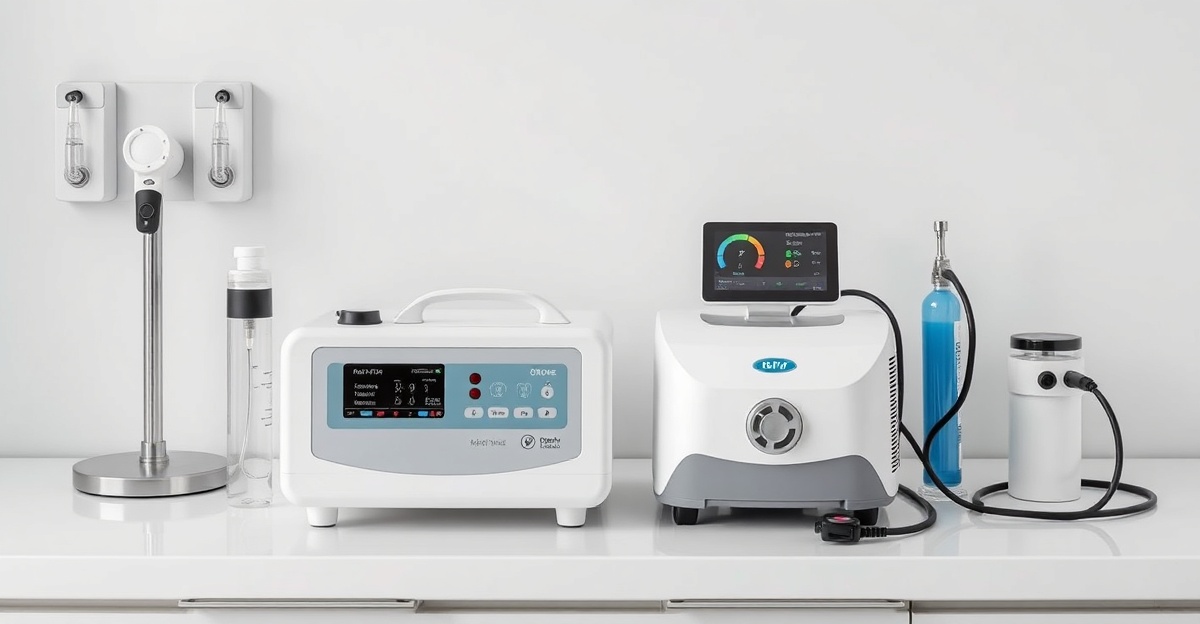
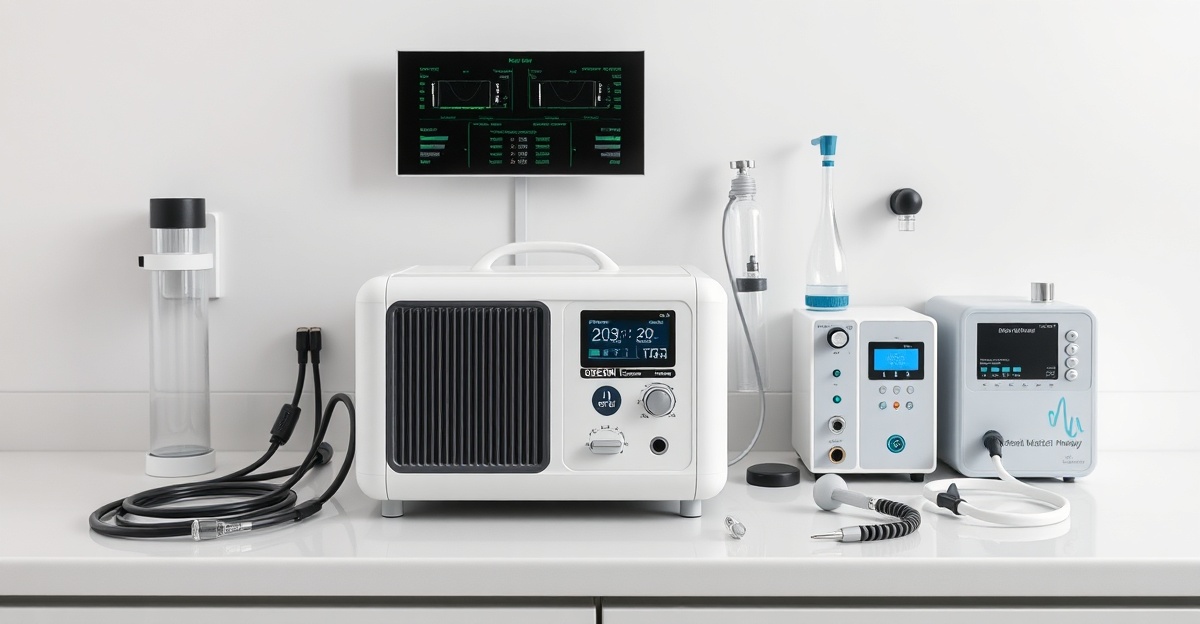
An ozone therapy machine, also called a medical ozone generator, turns medical-grade oxygen into a measured oxygen and ozone gas mix by cold corona discharge, and a working setup pairs it with four other parts: an oxygen source, a low-flow regulator, ozone-resistant delivery accessories and an ozone destructor. Complete equipment costs run from about $600 for a basic insufflation setup to more than $3,000 for a clinic-grade system capable of major autohemotherapy (MAH), based on the component prices in the cost table below.
A functional home ozone setup has five core components: an ozone generator, an oxygen source, a regulator, delivery accessories (tubing, insufflation kits, syringes), and an ozone destructor. Added up component by component, the totals come to $555-1,005 for a budget setup, $1,035-1,660 for a mid-range setup and $1,850-3,210 for a clinic-grade system capable of major autohemotherapy (MAH).
The wrong choices produce contaminated gas, inaccurate concentrations or outright dangerous situations. No ozone generator is FDA approved for ozone therapy, also called oxygen-ozone therapy or ozonotherapy, and most people who use it receive it from a clinician.
Key Takeaways
- Medical-grade ozone generators use cold corona discharge with quartz or borosilicate glass tubes and cost $500-2,500
- Oxygen source matters: medical-grade oxygen tanks (99.5%+ purity) are ideal; concentrators (90-95% purity) work for some but not all applications
- All tubing and fittings must be ozone-resistant (silicone, PTFE, or Kynar) since ozone destroys latex, rubber, and most plastics
- An ozone destructor is essential for safety as it converts excess ozone to oxygen before it enters the room
- Total setup cost: $600-1,200 for basic insufflation, $1,500-3,000+ for a full MAH-capable system
- Under 21 CFR 801.415, the FDA describes ozone as a toxic gas with no known useful medical application, and no ozone generator is FDA approved for home ozone therapy
Ozone Generators: The Core Unit
The ozone generator converts medical-grade oxygen (O2) into ozone (O3) by passing it through a high-voltage electrical field. This is called corona discharge. The generator is the most important purchase, and quality varies dramatically between manufacturers.
Sellers and searchers use several names for the same device: ozone therapy machine, ozone treatment machine, medical ozone generator and ozone insufflation machine. All of them describe a corona discharge generator fed with oxygen, and the name says little about quality. The specifications below are what separate a therapeutic unit from an industrial one.
Types of Ozone Generators
There are three main categories of ozone generators for therapeutic use:1
| Type | How Concentration Is Set | Accuracy | Price Range |
|---|---|---|---|
| Flow-controlled | Adjusting oxygen flow rate | Moderate | $300-600 |
| Flow + dial | Flow rate + concentration dial | Good | $600-1,200 |
| Digital | Digital display with precise gamma readout | High | $1,200-2,500 |
Flow-controlled generators are the entry level. You set the ozone concentration by adjusting how fast oxygen flows through the unit. Slower flow means higher concentration. This is adequate for basic insufflation and ozonating water or oil, but you are estimating the gamma (mcg/mL) based on a chart rather than reading it directly.
Digital generators display the exact ozone concentration on screen and allow precise adjustments. For applications where accuracy matters, like rectal insufflation or limb bagging at specific therapeutic ranges, a digital unit is worth the investment.
What Makes a Generator Medical-Grade
According to the International Scientific Committee of Ozone Therapy (ISCO3), a medical-grade ozone generator must meet these criteria:2
- Uses cold corona discharge (not UV or electrolytic methods)
- Produces ozone from at least 99.5% pure oxygen feed gas
- All internal components are ozone-resistant (quartz glass tube, titanium or stainless steel electrodes)
- Output falls within therapeutic concentrations of 5-80 gamma (mcg/mL)
- Produces only ozone and oxygen, with no nitrogen oxides or other contaminants
UV ozone generators and units designed for air purification or water treatment are not suitable for therapeutic use. They produce imprecise concentrations and may generate harmful byproducts.
ISCO3 is a professional body of ozone practitioners, not a regulator, so its guidelines are a voluntary standard. Clinicians also cite its Madrid Declaration on Ozone Therapy and the work of the Italian physiologist Velio Bocci. The piece on choosing an ozone therapy machine compares generator features in more detail.
Oxygen Sources
Ozone generators need a feed gas of high-purity oxygen to produce clean, therapeutic ozone. There are two main options: oxygen tanks and oxygen concentrators.
Oxygen Tanks
Medical-grade oxygen tanks deliver 99.5-99.9% pure oxygen. This is the gold standard for ozone therapy. Tanks come in various sizes, from small portable cylinders (size M6, lasting about 1-2 hours of use) to large standing tanks (size M, lasting 20+ hours).
You will also need a regulator that attaches to the tank and controls the flow rate, typically set between 1/8 and 1/2 LPM (liters per minute) for ozone therapy. A pediatric regulator with low-flow settings is often recommended because standard medical regulators start at 1 LPM, which is too fast for many ozone applications.
Tank refills cost $15-40 depending on size and location. In the United States, oxygen sold for medical use (oxygen USP) is a prescription drug regulated by the FDA, so medical gas suppliers generally ask for a prescription before filling or delivering a tank. Some home users refill at welding supply shops instead, but industrial oxygen is not made or tested under the drug standards that govern medical oxygen.
Oxygen Concentrators
Oxygen concentrators pull air from the room and filter out nitrogen, producing oxygen at 90-95% purity. They are cheaper to operate long-term (no refills) and more convenient. The lower purity means the ozone output will contain some nitrogen, which at high concentrations could produce small amounts of nitrogen oxides.
For insufflation, limb bagging, and ozonating water, most practitioners consider concentrators acceptable. For MAH (where ozone-treated blood is reinfused), oxygen tanks are strongly recommended because purity matters more.1
A suitable concentrator costs $200-500 and should produce at least 5 LPM at 90%+ purity. Some are specifically marketed for ozone therapy use and include low-flow adapters.
Can an oxygen generator be used for ozonation?
An oxygen concentrator, often sold as an "oxygen generator," can feed an ozone generator for insufflation, limb bagging and ozonated water if it delivers at least 90% oxygen at a steady low flow. It falls short of the 99.5% feed gas purity in the ISCO3 guidelines, so it is a poor match for procedures involving blood, and it needs a low-flow adapter.
Delivery Accessories
Silicone Tubing
Every inch of tubing that contacts ozone must be ozone-resistant. Standard medical tubing (PVC, latex, rubber) will degrade within minutes of ozone exposure, releasing particles and toxic compounds into the gas stream. Use only:
- Silicone tubing (most common for home use, rated for ozone)
- PTFE (Teflon) tubing (more durable, used in some clinical setups)
- Kynar (PVDF) tubing (highest chemical resistance)
Silicone tubing is the standard for home setups. It is flexible, affordable ($10-20 for a length), and widely available from ozone therapy suppliers. Replace it every 3-6 months with regular use, as it will eventually harden and crack.
Insufflation Kits
Insufflation kits are used for rectal, vaginal, and ear ozone delivery. A typical kit includes silicone tubing, a catheter or stethoscope adapter, and a flow control valve. Kits cost $20-60 depending on the application. Understanding how these delivery methods work ties into the broader picture of how ozone therapy is administered across different protocols.
An "ozone insufflation machine" is a standard ozone generator paired with an insufflation kit, an oxygen source and a low-flow regulator. The guide to rectal ozone therapy at home covers the most common home route and its evidence.
Syringe Kits for MAH
Major autohemotherapy requires specialized equipment: ozone-resistant syringes (typically 60 mL), butterfly needles, a blood collection bag or vacuum flask, and IV supplies. This is the most complex home ozone procedure and carries the most risk (infection, air embolism, incorrect blood handling).
MAH syringe kits cost $30-80 per session in disposables. Many ozone therapy practitioners advise against performing MAH at home without clinical training. If you are considering it, get hands-on instruction from an experienced ozone practitioner first.
Ozone Destructors
An ozone destructor is a small canister filled with activated carbon or manganese dioxide that converts ozone back to oxygen. It attaches to the exhaust of your delivery system and prevents ozone gas from accumulating in the room.
This is not optional. Ozone above 0.1 ppm in ambient air irritates the lungs and can cause respiratory symptoms. The EPA ambient air quality standard for ozone is 0.070 ppm over 8 hours.3 A destructor costs $15-40 and should be replaced every 6-12 months.
The FDA sets an even lower ceiling for devices that release ozone indoors: 0.05 ppm in spaces where people spend extended periods, under 21 CFR 801.415. The smell of ozone is not a reliable warning, because the same regulation notes that the nose quickly stops registering it.
“The resulting gas must be in therapeutic concentrations between 5-80 gamma, with nothing other than oxygen and ozone gas.”
ISCO3 Guidelines for Ozone Generators
How a Complete Home Setup Fits Together
A home ozone setup is a single gas path that runs in one direction, from oxygen supply to ozone destructor. Every connection along that path has to be ozone-resistant, and the order of the parts is the same whatever the application.
- Oxygen source: a medical oxygen tank or an oxygen concentrator supplies the feed gas.
- Regulator: a low-flow (pediatric) regulator sets the oxygen flow, typically between 1/8 and 1/2 LPM.
- Ozone generator: the cold corona discharge cell converts part of the oxygen to ozone at the set concentration.
- Delivery accessory: silicone or PTFE tubing carries the gas to an insufflation kit, a limb bag, an ozone-resistant syringe or a bubbler for water or oil.
- Ozone destructor: any excess gas leaves through a catalytic or carbon destructor so it does not build up in the room.
Complete Setup Cost Table
A complete home ozone therapy setup costs about $555 to $1,005 at the budget level, $1,035 to $1,660 at mid-range and $1,850 to $3,210 for clinic-grade equipment. The generator and oxygen source make up most of the total.
| Component | Budget Option | Mid-Range | Clinic-Grade |
|---|---|---|---|
| Ozone generator | $300-500 | $800-1,200 | $1,500-2,500 |
| Oxygen source | Concentrator: $200-400 | Small tank + regulator: $150-300 | Large tank + low-flow regulator: $200-400 |
| Tubing + fittings | $20-40 | $30-60 | $50-100 |
| Insufflation kit | $20-40 | $30-60 | $40-80 |
| Ozone destructor | $15-25 | $25-40 | $30-50 |
| MAH syringe kit | N/A | N/A | $30-80/session |
| Total | $555-1,005 | $1,035-1,660 | $1,850-3,210 |
Running costs come on top of the purchase: oxygen tank refills at $15-40 each, replacement silicone tubing every 3-6 months and a new destructor cartridge every 6-12 months. Home equipment is cash pay, and health insurers generally do not cover it. For what clinic sessions cost by method, including MAH, 10-pass and EBOO, see the breakdown of ozone therapy cost by treatment type.
Where to Buy
The ozone therapy equipment market is niche. A small number of established specialist suppliers in the United States, Canada and Europe serve home users, and Regenerated.com does not recommend any of them by name. Judge a supplier on what it can document rather than on its marketing:
- Construction: the seller states the corona discharge method and the cell, electrode and fitting materials.
- Concentration data: the generator comes with a concentration chart or digital gamma readout within the 5-80 gamma range in the ISCO3 guidelines.
- Matched parts: regulators, ozone-resistant tubing and destructors are sold to fit, so no rubber or PVC fitting enters the gas path.
- Support: the company offers a warranty, replacement cells and technical help.
- Honest labeling: the product pages make no claims to treat disease.
Avoid Amazon generics and AliExpress ozone machines marketed as “air purifiers” or “water purifiers.” These are not designed for therapeutic use and lack the precision and material quality needed for safe ozone therapy.
Quality and Safety Considerations
Before your first session, verify the following:
- Material check: Confirm every component that touches ozone is rated for ozone contact. One rubber gasket or PVC fitting can contaminate the entire gas stream.
- Leak test: Run the system with pure oxygen (no ozone) and check all connections with soapy water. Bubbles indicate leaks.
- Ventilation: Use ozone in a well-ventilated room. Position the ozone destructor so exhaust vents away from your breathing zone.
- Concentration verification: If using a flow-controlled generator, consult the manufacturer’s concentration chart and verify your flow rate setting. Consider purchasing an ozone test kit to spot-check output.
- Maintenance: Inspect tubing and connections before each use. Replace silicone tubing every 3-6 months. Replace the destructor cartridge annually.
Ozone must never be breathed in, and the FDA regulation on ozone notes that lung injury from exposure can appear hours later. Ozone gas must never be injected directly into a vein, which risks gas embolism.
ISCO3 lists glucose-6-phosphate dehydrogenase (G6PD) deficiency as a contraindication for ozone blood procedures, and pregnancy, uncontrolled hyperthyroidism and bleeding disorders are common cautions. The overview of ozone therapy side effects covers the reactions people report and how often they occur.
If you are comparing ozone therapy equipment to other home oxygen modalities like portable hyperbaric chambers or EWOT systems, the article on HBOT alternatives provides a useful side-by-side comparison.
What You Can and Cannot Do at Home
Home ozone equipment suits insufflation, ozonated water and oil, and limb bagging. Procedures involving blood, injections or specialized machines belong in a clinic.
| Application | Home Feasible? | Notes |
|---|---|---|
| Rectal insufflation | Yes | Most common home application |
| Ear insufflation | Yes | Low concentration, gentle flow |
| Ozonated water / oil | Yes | Straightforward, low risk |
| Limb bagging | Yes | For skin conditions, wounds |
| Ozone sauna | Yes (with sauna unit) | Requires separate sauna cabinet ($500-2,000) |
| MAH (autohemotherapy) | Not recommended | Infection risk, requires training |
| 10-pass ozone | No | Requires specialized clinical equipment |
| Intradiscal injection | No | Medical procedure, requires imaging guidance |
The clinic-only rows use equipment that goes well beyond a home generator. 10-pass ozone therapy and EBOO (extracorporeal blood oxygenation and ozonation) rely on dedicated blood-handling systems, and intradiscal oxygen-ozone injection for a herniated disc is done by interventional pain physicians under fluoroscopy or CT guidance.
Is Ozone Therapy Equipment FDA Approved?
No ozone generator is FDA approved or cleared for ozone therapy in the United States. Under 21 CFR 801.415, the FDA states that ozone is a toxic gas with no known useful medical application in specific, adjunctive or preventive therapy, and it treats devices that generate ozone above set limits as adulterated or misbranded.
That rule is why home generators are sold for water, oil or research use rather than as medical devices. Licensed physicians still use ozone in practice, which is how most US patients receive it, and the explainer on whether ozone therapy is FDA approved covers the regulatory picture in full.
The evidence base is uneven. The strongest clinical data concern oxygen-ozone injection for herniated discs and low back pain, small trials in knee osteoarthritis show mixed results, and claims for chronic infections such as Lyme disease rest mostly on case reports.
Home Equipment or Clinic Treatment?
Buying equipment makes sense mainly for people already trained by a clinician in a specific home route. For anyone starting out, an ozone-trained physician (MD or DO), naturopathic doctor or dentist screens for contraindications and chooses the route and concentration.
The ozone therapy treatment guide explains the main methods, the conditions they are used for and what the research shows. To compare practitioners, the national directory of ozone therapy clinics lists providers by state and city, and the walkthrough on ozone therapy at home compares the two paths side by side.
Regenerated.com is free for patients. Listing order on the directory is not paid ranking, Featured slots are labeled and capped, and Verified means a clinic completed the credential checks described in our vetting materials, not that it spent money. Inclusion in the directory is not an endorsement, and the guide to Featured, Verified and organic listings explains each label.
Frequently Asked Questions
How much does ozone therapy equipment cost?
A complete home ozone therapy setup costs about $555 to $1,005 at the budget level and $1,850 to $3,210 for clinic-grade equipment, adding up the component prices in the cost table. The ozone generator is the largest item at $300 to $2,500, followed by the oxygen source at $150 to $400. Ongoing costs include oxygen refills, replacement tubing every 3 to 6 months and a new destructor cartridge every 6 to 12 months.
Is an ozone therapy machine FDA approved?
No ozone therapy machine is FDA approved or cleared for treating any condition in the United States. Federal regulation 21 CFR 801.415 describes ozone as a toxic gas with no known useful medical application and limits indoor ozone from devices to 0.05 ppm. Licensed physicians can still use ozone in their practices, which is how most US patients receive it, but home generators are generally sold for water, oil or research use.
Can I use an oxygen concentrator instead of an oxygen tank for ozone?
An oxygen concentrator can feed an ozone generator for insufflation, limb bagging and ozonated water, as long as it produces at least 90% oxygen and is fitted with a low-flow adapter. It does not reach the 99.5% feed gas purity in the ISCO3 generator guidelines, so a medical oxygen tank is the better source for any procedure involving blood. Concentrators cost $200 to $500 and need no refills.
What do I need for an ozone insufflation setup at home?
An ozone insufflation setup needs five parts: a medical-grade ozone generator, an oxygen tank or concentrator, a low-flow regulator set between 1/8 and 1/2 LPM, an insufflation kit with silicone tubing and a catheter, and an ozone destructor for excess gas. Every part that touches ozone must be silicone, PTFE or Kynar. Budget insufflation setups cost about $555 to $1,005 in total, based on the cost table.
Can I use an air purifier ozone generator for ozone therapy?
Air purifier and water treatment ozone generators are not suitable for ozone therapy. Many use UV lamps or run on room air, which produces imprecise concentrations and can create nitrogen oxides alongside ozone. A therapeutic unit uses cold corona discharge, runs on high-purity oxygen and delivers a known concentration between 5 and 80 gamma (mcg/mL), which is the range set out in the ISCO3 generator guidelines.
Should I buy ozone equipment or go to a clinic?
Most people should start with a clinic, because an ozone-trained physician, naturopathic doctor or dentist screens for contraindications such as G6PD deficiency and chooses the route and concentration. Home equipment suits people already in a clinician's care who were trained for a specific home route. Procedures involving blood or injections, such as MAH, 10-pass, EBOO and intradiscal ozone, stay in the clinic.
Sources
- Mediskill. How to choose an ozone therapy machine for home use (2025). Available at: mediskill.com/ozone-therapy/ozone-therapy-machine-for-home
- ISCO3. Guidelines for ozone generators. International Scientific Committee of Ozone Therapy. Available at: isco3.org/wp-content/uploads/2017/01/GUIDELINES-FOR-OZONE-GENERATORS.pdf
- U.S. Environmental Protection Agency. National Ambient Air Quality Standards (NAAQS) for Ozone. Available at: epa.gov/ground-level-ozone-pollution