Ozone Therapy for Tinnitus: Does It Work? Evidence, Costs, and Alternatives
Explore the clinic directoryIn this article
Ozone treatment for tinnitus, given as ear (auricular) insufflation or major autohemotherapy (MAH), has not reduced tinnitus loudness in controlled research. A randomized trial of 68 patients in the European Archives of Oto-Rhino-Laryngology found no significant change in loudness at 3 or 6 months, and a 2022 systematic review in the International Tinnitus Journal concluded that high-level evidence is still needed. Tinnitus is one of the most frustrating conditions in medicine because effective treatments are scarce and the ringing never stops. That frustration drives people toward anything that might help, and ozone therapy has entered the conversation. The theory is straightforward: improve blood flow and oxygen delivery to the inner ear, and the phantom sounds might decrease. Below is an honest look at what we know, what we do not, and whether ozone therapy for tinnitus is worth considering.
Key Takeaways
- Ozone therapy for tinnitus rests on the theory that better cochlear microcirculation may ease symptoms; no controlled trial has confirmed it.
- Delivery methods include ear (auricular) insufflation and major autohemotherapy (MAH), where blood is ozonated and reinfused.
- A 2022 systematic review in the International Tinnitus Journal screened 264 references, found only a handful of qualifying studies, and concluded that high-level evidence is still needed.
- A randomized trial by Sönmez and colleagues (European Archives of Oto-Rhino-Laryngology, 2013) found no significant difference in tinnitus loudness at 3 or 6 months between ozone MAH, betahistine and no treatment.
- The FDA describes ozone as a toxic gas with no known useful medical application; the AAO-HNS tinnitus guideline recommends CBT instead.
- Sessions cost $50 to $350, paid in cash. Manage expectations carefully.
Why People Try Ozone for Tinnitus
Tinnitus affects roughly 15 to 20% of the population. It is not a disease itself but a symptom, most commonly caused by noise-induced hearing loss, age-related hearing changes (presbycusis), ear infections, Meniere’s disease, jaw problems such as temporomandibular joint disorder, or ototoxic medications. In many cases, no clear cause is found.
Conventional treatment options are limited:
- Sound therapy and masking devices
- Cognitive behavioral therapy (CBT)
- Hearing aids (when hearing loss is present)
- Medications for anxiety or depression caused by tinnitus (no drug treats tinnitus itself)
- Tinnitus retraining therapy (TRT)
None of these makes the sound disappear for good. They help people cope with it and reduce how much it intrudes on daily life. That gap between “manageable” and “gone” is where alternative therapies like ozone find their audience.
The reasoning behind ozone for tinnitus goes like this: the cochlea (the hearing organ in the inner ear) is supplied by a single end artery. If blood flow through that artery is compromised, the hair cells that detect sound do not get enough oxygen and nutrients. They malfunction. The brain interprets the malfunction as sound.
Ozone therapy proponents argue that by improving microcirculation and oxygen delivery, you might restore some function to those damaged hair cells, or at least reduce the severity of tinnitus. This is a plausible hypothesis, and it remains a hypothesis: no study has measured improved cochlear blood flow after ozone in people with tinnitus.
Ozone Delivery Methods for Tinnitus
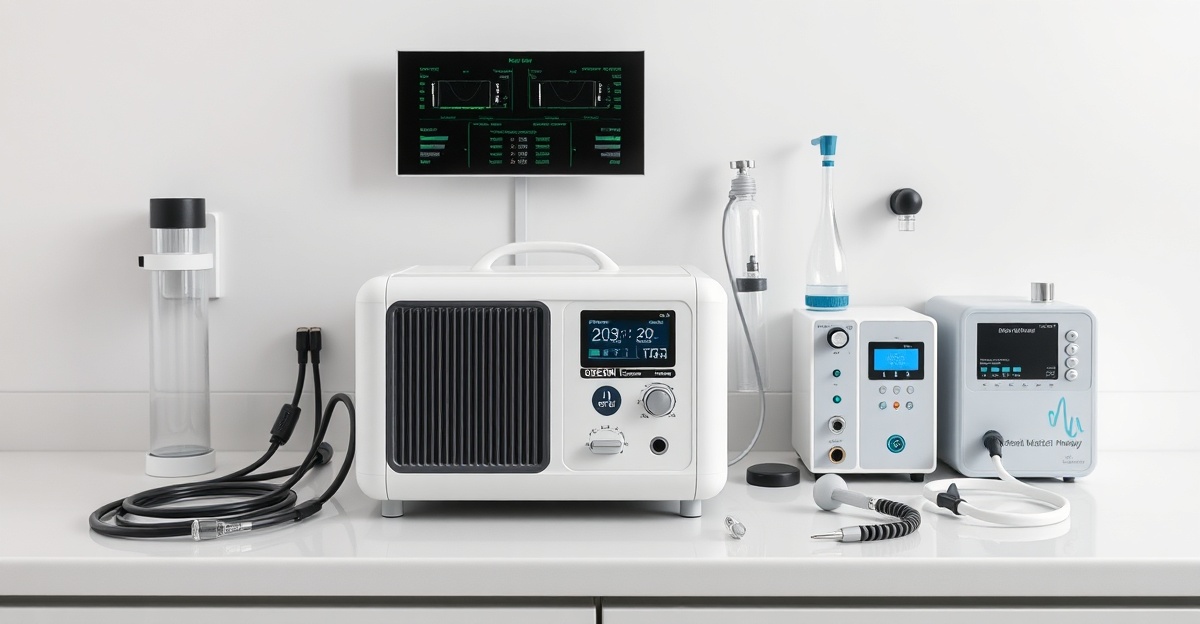
Ozone therapy, also called oxygen-ozone therapy or O3 therapy, uses a generator to turn medical oxygen into an oxygen and ozone mixture, delivered into the ear or through the blood. The ozone therapy treatment guide covers the other routes and general indications.
Ear (Auricular) Insufflation
This involves gently introducing a low concentration of ozone gas into the ear canal through a small catheter connected to a modified stethoscope earpiece. The ozone flows at a very low rate for 3 to 10 minutes per ear.
The idea is that ozone can reach the middle ear through the tympanic membrane and the Eustachian tube, potentially affecting the cochlea. Some practitioners also propose that ozone travels along the auditory nerve, though this is speculative.
Ozone insufflation for tinnitus needs no needle, but no published randomized trial has tested it alone for tinnitus.
For more on how ear insufflation works, see our complete guide to ozone therapy.
Major Autohemotherapy (MAH)
MAH is a systemic ozone treatment. Blood is drawn, mixed with ozone gas, and reinfused. The systemic effects include improved red blood cell flexibility, increased 2,3-DPG (which enhances oxygen release to tissues), and activation of antioxidant pathways.
For tinnitus, the rationale for MAH is that systemic improvements in oxygen delivery and blood flow would benefit the cochlear microcirculation along with everything else. MAH is also the only ozone route that has been tested in a randomized tinnitus trial. Our explainer on how MAH ozone therapy is performed walks through a session step by step.
Other Routes
Some clinics use rectal insufflation or ozonated water as adjunctive treatments, though these are less commonly targeted specifically at tinnitus.
What the Evidence Shows
Ozone therapy for tinnitus has weak and mostly negative evidence. The best trial found no loudness benefit, and the only systematic review found too few sound studies to confirm efficacy or safety.
The Systematic Review
The most rigorous assessment of ozone therapy for tinnitus is a 2022 systematic review published in the International Tinnitus Journal. The researchers searched MEDLINE, Cochrane Library, Scopus, Embase and other databases, screened 264 references and applied strict selection criteria. After exclusions, very few studies qualified. The conclusion was clear: “High-level evidence, such as well-conducted randomized clinical trials, are still needed to confirm the efficacy and safety of this therapy.”1
The studies that did exist had high risk of bias, small sample sizes, and inconsistent outcome measures.
Ozone vs. Betahistine: A Randomized Trial
The strongest individual study is a randomized, prospective, controlled trial by Sönmez and colleagues, published online in 2012 in the European Archives of Oto-Rhino-Laryngology. The study included 68 patients divided into three groups:2
- Ozone group (27 patients): 10 sessions of MAH
- Betahistine group (26 patients): Standard medication for inner ear conditions, 48 mg per day by mouth for 3 months
- Control group (15 patients): No treatment
Results at 3 and 6 months: “Comparison of initial mean tinnitus loudness at 3 and 6 months after treatment in each of the three groups did not reveal a significant difference.”2
In other words, ozone therapy performed no better than betahistine, and neither performed significantly better than no treatment at all.
Distress scores on the Tinnitus Handicap Inventory (THI) fell within the ozone and betahistine groups, but the change did not differ significantly between groups. The authors concluded the findings do not support ozone or betahistine as a tinnitus treatment.
“Comparison of initial mean tinnitus loudness at 3 and 6 months after treatment in each of the three groups did not reveal a significant difference.”
European Archives of Oto-Rhino-Laryngology, 2012
Nocturnal Tinnitus
A separate paper looked at ozone therapy specifically for nocturnal tinnitus (tinnitus that worsens at night, often interfering with sleep). It is a short review of earlier reports rather than a new trial, and while it describes very positive results, it lacks the methodological rigor needed to draw definitive conclusions.3 If night time ringing mainly disrupts sleep, insomnia treatment such as CBT for insomnia is a better supported starting point.
What Do Tinnitus Guidelines Say About Ozone?
No major tinnitus guideline recommends ozone therapy. The 2014 guideline from the American Academy of Otolaryngology, Head and Neck Surgery Foundation (AAO-HNS), led by Tunkel and colleagues, recommends a hearing aid evaluation when tinnitus comes with hearing loss and recommends cognitive behavioral therapy for persistent, bothersome tinnitus, according to the AAO-HNS clinical practice guideline on tinnitus.
It recommends against routine antidepressants, anticonvulsants, supplements such as Ginkgo biloba, and transcranial magnetic stimulation, and does not mention ozone at all. In the UK, the NICE tinnitus guideline (NG155) likewise centers care on assessment, education, sound therapy and psychological therapies.
Why the Evidence Is So Limited
Several factors explain why we do not have better data on ozone for tinnitus:
- Tinnitus is hard to study. It is subjective. There is no blood test or scan that measures it. Researchers rely on patient-reported loudness scales, which vary between individuals.
- Placebo effects are strong. Any intervention that gives a tinnitus patient hope and attention tends to produce short-term improvement, making it difficult to separate real effects from placebo.
- No pharmaceutical funding. Ozone cannot be patented. There is no commercial incentive to run expensive clinical trials.
- Heterogeneous causes. Tinnitus caused by noise damage may respond differently than tinnitus from Meniere’s disease or medication toxicity. Lumping all cases together muddies the results.
Is Ozone Therapy for Tinnitus Safe?
Ozone therapy carries real, if usually small, risks, and the risk depends on the route. The FDA states in its device regulations (21 CFR 801.415) that ozone “is a toxic gas with no known useful medical application in specific, adjunctive, or preventive therapy,” and it has not approved ozone for tinnitus or any other condition. Our explainer on whether ozone therapy is FDA approved covers the regulatory picture in more detail.
Ear insufflation risks
Ear insufflation uses low concentrations, so reported side effects are usually mild: ear fullness or brief irritation. Ozone must never be inhaled, because it irritates the lungs. A perforated eardrum or ear infection should be assessed by an otolaryngologist (ENT) first.
MAH risks
MAH carries the risks of drawing and returning blood, such as bruising and infection. Rare serious events have been published, including a case report of stroke during oxygen-ozone therapy (Avcı and colleagues, American Journal of Emergency Medicine, 2015). The full list of reported problems is in our guide to ozone therapy side effects.
Session Protocols for Tinnitus
Clinics offering ozone therapy for tinnitus typically use one of these approaches:
Ear insufflation protocol:
- Low ozone concentration (10 to 20 mcg/mL)
- 3 to 10 minutes per ear
- 2 to 3 sessions per week
- Initial course of 10 to 20 sessions
MAH protocol:
- 100 to 200 mL blood drawn
- Mixed with ozone at 30 to 50 mcg/mL
- 1 session per week
- Initial course of 10 sessions
Some practitioners combine both approaches, doing ear insufflation alongside systemic MAH. These are clinic protocols, not doses established by trials.
| Attribute | Ear (auricular) insufflation | Major autohemotherapy (MAH) |
|---|---|---|
| How ozone is delivered | Gas into the ear canal through a catheter | Blood drawn, ozonated and reinfused |
| Typical concentration | 10 to 20 mcg/mL | 30 to 50 mcg/mL |
| Session length or volume | 3 to 10 minutes per ear | 100 to 200 mL of blood |
| Typical frequency | 2 to 3 sessions per week | 1 session per week |
| Initial course | 10 to 20 sessions | 10 sessions |
| Typical cost per session | $50 to $150 | $200 to $350 |
| Tested in a randomized tinnitus trial | No | Yes, with no loudness benefit |
Cost
Ear insufflation sessions are among the more affordable ozone treatments, typically ranging from $50 to $150 per session. MAH sessions run $200 to $350 each. A full initial course of 10 to 20 sessions means an investment of $500 to $7,000 depending on the method and frequency.
Insurance does not cover ozone therapy for tinnitus. Ask for the full course price in writing before starting. Our ozone therapy cost breakdown compares prices across other routes.
Managing Expectations
If you are considering ozone therapy for tinnitus, go in with open eyes:
- The evidence does not support it as an effective treatment. The only randomized controlled trial showed no significant benefit over no treatment.
- Individual experiences vary widely. Some people report temporary relief. Others notice no change. Anecdotal reports exist on both sides.
- The physical risk is low, not zero. Ear insufflation and MAH have acceptable safety profiles when performed correctly, but rare serious events have been reported with MAH. The larger risk for most people is financial.
- Keep the approaches with better evidence. If you try ozone, do not stop other management strategies. CBT, sound therapy, and hearing aids (if indicated) have better evidence.
- Set a trial limit. Commit to a defined number of sessions (for example, 6 to 10) and evaluate honestly whether your tinnitus has changed before spending more.
To judge a trial fairly, ask an audiologist to score your Tinnitus Handicap Inventory before the first session and after the last.
How to Find an Ozone Clinic and What to Ask
Ozone therapy is offered by medical doctors (MD and DO), naturopathic doctors and integrative medicine practices, with rules that vary by state. Before any ozone treatment for tinnitus, see an otolaryngologist (ENT) and an audiologist, because causes such as earwax or sudden sensorineural hearing loss have specific treatments.
Sudden hearing loss is urgent, and it is an indication the Undersea and Hyperbaric Medical Society (UHMS) lists for hyperbaric oxygen therapy (HBOT), a different treatment from ozone.
If you still want to try ozone, you can browse ozone therapy clinics across the US and compare profiles. Listing order on Regenerated.com is not paid ranking, Featured slots are labeled and capped, Verified means the clinic completed credential checks rather than paying more, and the directory is free for patients. Inclusion is not an endorsement; see how Featured, Verified and organic listings differ.
Questions worth asking any clinic before you book:
- Who performs the treatment, and what is their license and training?
- Which route do you recommend for my tinnitus, and why?
- What concentration and session count do you plan, and what is the total price?
- How will we measure change, and when will we stop if there is none?
- What happens if I have a reaction during an MAH session?
Other Tinnitus Treatments Worth Considering
Before or alongside ozone therapy, consider these options with stronger evidence:
| Treatment | Evidence Level | What It Does |
|---|---|---|
| Cognitive Behavioral Therapy (CBT) | Strong (multiple RCTs) | Changes your relationship with the sound. Reduces distress and interference with daily life. |
| Sound therapy / masking | Moderate | Uses external sounds to reduce perception of tinnitus. White noise, nature sounds, notched music. |
| Hearing aids | Moderate to strong | Amplifies external sounds, reducing the brain’s need to “fill in” with phantom sounds. Effective when hearing loss is present. |
| Tinnitus Retraining Therapy (TRT) | Moderate | Combines sound therapy with directive counseling to habituate to tinnitus over 12 to 24 months. |
| Neuromodulation (rTMS, tDCS) | Emerging | Uses magnetic or electrical stimulation to alter brain activity in auditory regions. Mixed results so far. |
The strongest evidence sits with CBT. A 2020 Cochrane review of cognitive behavioural therapy for tinnitus by Fuller and colleagues found that CBT may reduce the negative impact tinnitus has on quality of life. The AAO-HNS guideline advises against transcranial magnetic stimulation (TMS) for routine tinnitus care. Where tinnitus drives worry or low mood, anxiety treatment can help directly.
Frequently asked questions
Does ozone therapy work for tinnitus?
Ozone therapy has not been shown to reduce tinnitus in controlled research. The only randomized trial, which gave 27 patients 10 sessions of major autohemotherapy, found no significant change in tinnitus loudness at 3 or 6 months compared with betahistine or no treatment. A 2022 systematic review in the International Tinnitus Journal concluded that well-conducted randomized trials are still needed. Reports of temporary relief have not been separated from placebo.
What is ozone insufflation for tinnitus?
Ozone insufflation for tinnitus is a local treatment in which a low concentration of ozone gas, typically 10 to 20 mcg/mL, flows gently into the ear canal through a catheter for 3 to 10 minutes per ear. Clinics usually schedule 2 to 3 sessions a week for an initial course of 10 to 20 sessions. No randomized trial has tested ear insufflation alone for tinnitus.
How much does ozone treatment for tinnitus cost?
Ozone treatment for tinnitus is paid out of pocket, and insurance does not cover it. Ear insufflation typically costs $50 to $150 per session and major autohemotherapy $200 to $350 per session. Because clinics usually plan an initial course of 10 to 20 sessions, a full course can run from $500 to $7,000 depending on the method and frequency.
Is ozone therapy for tinnitus safe?
Ozone therapy for tinnitus is generally low risk when trained clinicians use correct concentrations, but it is not risk free. Ear insufflation can cause ear fullness or irritation, and ozone must never be inhaled. Major autohemotherapy adds the risks of drawing and reinfusing blood, and rare serious events, including stroke, have been reported. The FDA describes ozone as a toxic gas with no known useful medical application and has not approved it for tinnitus.
What tinnitus treatments have better evidence than ozone?
Cognitive behavioral therapy has the strongest evidence for tinnitus and is recommended by the American Academy of Otolaryngology guideline for persistent, bothersome tinnitus. Hearing aids help when tinnitus comes with hearing loss, and sound therapy and tinnitus retraining therapy have moderate support. An ENT and an audiologist can match the option to the likely cause.
Who should evaluate my tinnitus before trying ozone?
An otolaryngologist (ENT) and an audiologist should evaluate tinnitus before you try ozone therapy. A hearing test and ear exam can find treatable causes such as earwax, middle ear fluid, medication effects or sudden sensorineural hearing loss, which needs urgent care. Tinnitus in one ear, pulsing with your heartbeat, or with dizziness also needs prompt assessment.
The Bottom Line
Ozone therapy for tinnitus is a theory in search of evidence. The mechanistic reasoning is logical: better inner ear circulation could mean less phantom sound. But the clinical data does not back it up. The one controlled trial showed no significant improvement. The systematic review found the existing evidence insufficient.
If conventional tinnitus management has not given you enough relief and you want to explore ozone, the physical risks are low when it is done carefully, though not zero. But the financial cost is real, and the likelihood of meaningful improvement, based on current evidence, is uncertain. Make it part of a broader tinnitus management plan, not your only strategy, and compare what ozone therapy is used for elsewhere.
- Gc NCF, Vc VG, M SB, Jr FB. Efficacy of Ozone Therapy in the Treatment of Tinnitus: A Systematic Review. Int Tinnitus J. 2022;25(2):149-153. doi:10.5935/0946-5448.20210027. PMID: 35239298.
- Sönmez O, Külahlı I, Vural A, Sahin MI, Aydın M. The evaluation of ozone and betahistine in the treatment of tinnitus. Eur Arch Otorhinolaryngol. 2013;270(7):1999-2006. doi:10.1007/s00405-012-2228-8. PMID: 23100082.
- Acosta JCR, Moreno MMAC, Hurtado JDC, et al. Ozonetherapy In The Treatment Of Nocturnal Tinnitus. Int Tinnitus J. 2022;25(2):169-171. doi:10.5935/0946-5448.20210030. PMID: 35239301.