Mild Hyperbaric Oxygen Therapy: Do Soft-Shell Chambers Work?
Explore the clinic directoryIn this article
At a Glance
- Mild hyperbaric oxygen therapy (mHBOT) uses soft-shell, portable chambers that pressurize to 1.3 ATA, significantly lower than clinical HBOT chambers (1.5 to 3.0 ATA).
- Soft-shell chambers typically use room air or an oxygen concentrator (delivering 24% to 35% oxygen) rather than 100% medical-grade oxygen.
- They provide a measurable but modest increase in dissolved oxygen, roughly 50% more than breathing room air at sea level, compared to 10 to 15 times more with clinical HBOT.
- Use cases where mild HBOT may be sufficient: general wellness, athletic recovery, mild cognitive support, and inflammation reduction.
- Use cases where clinical HBOT is needed: wound healing, TBI, radiation injury, and other serious medical conditions.
- Home chamber cost: $5,000 to $20,000. Safety profile is excellent due to lower pressure and no pure oxygen fire risk.
- FDA status: soft-shell chambers are not cleared as medical devices and are marketed as “wellness devices.”
Yes, soft-shell mild hyperbaric oxygen therapy chambers produce a real, measurable effect, but a modest one. At 1.3 ATA with room air or a 24% to 35% oxygen concentrator, a mild HBOT session raises dissolved oxygen by roughly 50% to 100% above baseline, compared with 1,000% to 1,500% for clinical hyperbaric oxygen therapy run at 1.5 to 3.0 ATA with 100% oxygen.
The market for home hyperbaric chambers has exploded in recent years. Scroll through health and biohacking forums and you will find countless discussions about soft-shell chambers, 1.3 ATA protocols, and the promise of bringing hyperbaric oxygen therapy into your living room. Professional athletes swear by them. Wellness influencers promote them. And manufacturers market them as a convenient, affordable alternative to clinical HBOT.
Next step: Read the HBOT guide, then compare clinic hyperbaric options in the Directory.
Next step: Learn how mild HBOT works, then find vetted clinics.
But here is the question that matters: do soft-shell chambers actually work? And if so, for what?
The honest answer is more nuanced than either the enthusiasts or the skeptics would have you believe. This guide breaks down the science, the differences from clinical HBOT, and who might, and might not, benefit from a mild hyperbaric chamber. For a side by side breakdown built specifically around that comparison, see our guide to mild HBOT vs clinical HBOT.
What Is Mild Hyperbaric Oxygen Therapy?
Mild hyperbaric oxygen therapy, sometimes called mHBOT, low-pressure HBOT, or simply “soft chamber therapy,” involves spending time in a portable, inflatable chamber that increases atmospheric pressure to approximately 1.3 ATA (atmospheres absolute). For context, normal sea-level pressure is 1.0 ATA. mHBOT is a lower-pressure variant of the same underlying treatment, hyperbaric oxygen therapy (HBOT), and is sometimes confused with normobaric oxygen therapy, which raises oxygen concentration without raising chamber pressure; our HBOT vs normobaric oxygen therapy comparison walks through that distinction in detail.
There are two critical differences between mild HBOT and clinical HBOT:
1. Pressure
Soft-shell chambers are rated to a maximum of 1.3 to 1.5 ATA (most operate at 1.3 ATA). Clinical hard-shell chambers operate at 1.5 to 3.0 ATA, with most medical protocols using 2.0 to 2.4 ATA. The higher the pressure, the greater the amount of oxygen dissolved in the blood and tissues.
2. Oxygen Concentration
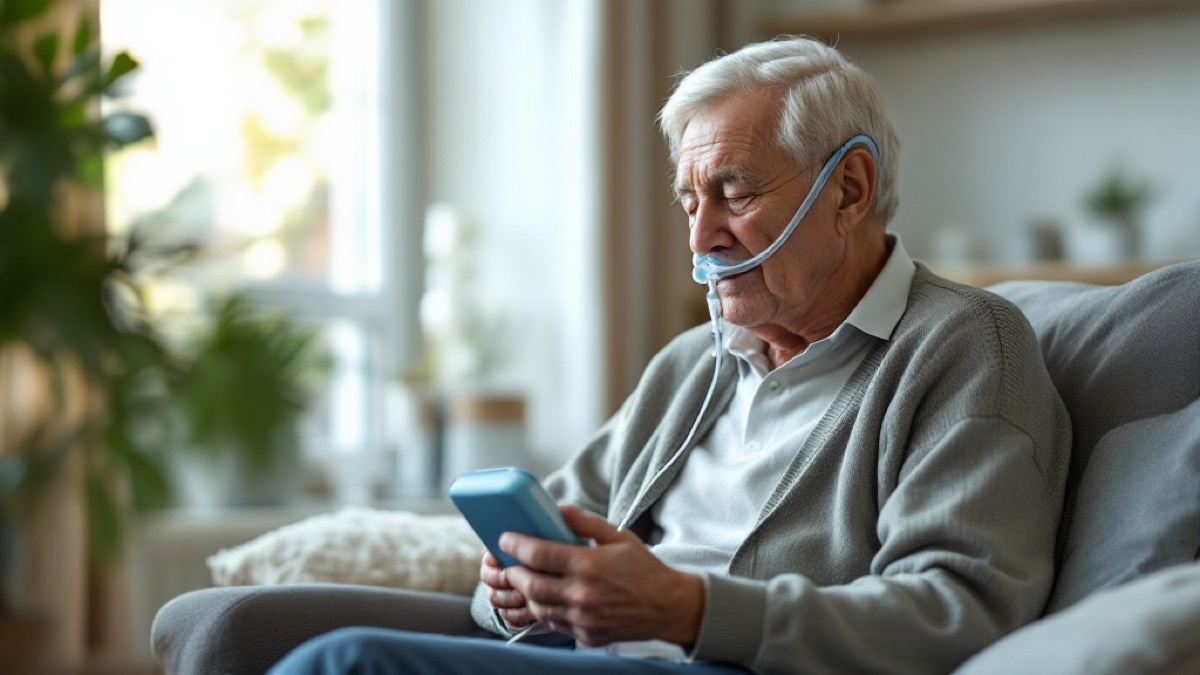
Clinical HBOT delivers 100% medical-grade oxygen through a mask, hood, or whole-chamber pressurization. Soft-shell chambers cannot safely handle 100% oxygen (fire risk in a non-rated enclosure), so users typically breathe either room air (21% oxygen) or supplemental oxygen from a concentrator (24% to 35% oxygen through a nasal cannula).
The combination of lower pressure and lower oxygen concentration means that mild HBOT delivers significantly less dissolved oxygen than clinical HBOT. But “less” does not mean “none”: this distinction is important, and it is the reason mild HBOT and clinical HBOT are not interchangeable terms for the same treatment.
The Physics: How Much Extra Oxygen Are You Getting?
Henry’s Law tells us that the amount of gas dissolved in a liquid is proportional to the pressure of the gas above it. At 1.3 ATA with room air, you are increasing the partial pressure of oxygen from about 160 mmHg (sea level) to about 208 mmHg, roughly a 30% increase. If you add an oxygen concentrator delivering 35% oxygen, the partial pressure rises to approximately 346 mmHg.
Compare this to clinical HBOT at 2.0 ATA with 100% oxygen, which delivers a partial pressure of about 1,520 mmHg, nearly 10 times that of normal breathing. According to Mayo Clinic’s overview of hyperbaric oxygen therapy, clinical sessions are generally delivered at pressures of 1.5 to 3 times normal atmospheric pressure, which lines up with the 1.5 to 3.0 ATA range used in hospital-grade chambers.
In practical terms: mild HBOT with supplemental oxygen roughly doubles your dissolved oxygen levels. Clinical HBOT increases them by 10 to 15 times. Both are real physiological effects, but they are very different in magnitude.
Mild vs. Clinical HBOT: Side-by-Side Comparison
| Factor | Mild HBOT (Soft-Shell) | Clinical HBOT (Hard-Shell) |
|---|---|---|
| Pressure | 1.3 to 1.5 ATA | 1.5 to 3.0 ATA |
| Oxygen source | Room air or O2 concentrator (24% to 35%) | 100% medical-grade oxygen |
| Dissolved O2 increase | Roughly 50% to 100% above baseline | Roughly 1,000% to 1,500% above baseline |
| FDA status | Not cleared as medical device; sold as “wellness device” | FDA-cleared for 14 indications |
| Supervision required | No (home use) | Yes (trained technician) |
| Session cost | $0 (home) or $50 to $100 per session at wellness centers | $150 to $400 per session |
| Chamber cost (purchase) | $5,000 to $20,000 | $75,000 to $300,000+ |
| Evidence base | Limited: mostly anecdotal, some small studies | Extensive: hundreds of clinical trials |
| Fire risk | Minimal (no concentrated O2 in chamber) | Present (strict safety protocols required) |
| Ear barotrauma risk | Very low (gentle pressure change) | Low to moderate (greater pressure change) |
| Best for | Wellness, recovery, mild cognitive support | Wound healing, TBI, radiation injury, serious medical conditions |
How Much Does Mild Hyperbaric Oxygen Therapy Cost?
Mild hyperbaric oxygen therapy is billed one of two ways: a drop-in session at a wellness center or spa, or ownership of a home soft-shell chamber. A single mild HBOT session at a wellness center typically runs $50 to $100, while a comparable session in a clinical, hospital-grade chamber runs $150 to $400, according to the session-cost figures reported earlier in this comparison. Buying a personal soft-shell chamber is a larger, one-time outlay of $5,000 to $20,000 depending on size and features, versus $75,000 to $300,000 or more for a clinical hard-shell chamber.
How the cost breaks down depends on how often you plan to use the chamber. Someone doing a handful of sessions a month is usually better served paying per session at a wellness center, while someone planning daily or near-daily use may recoup a home chamber’s purchase price over time by avoiding per-session fees. An oxygen concentrator add-on, covered in the buying guide below, is a separate cost on top of the chamber itself. For a deeper breakdown of clinical pricing by setting, see our guide to home hyperbaric chamber versus clinic cost.
Does Mild HBOT Actually Work? The Honest Assessment
This is where we need to be careful about separating what the physics tells us, what the limited evidence shows, and what the marketing claims.
What We Can Say Confidently
- Mild HBOT does increase dissolved oxygen. The physics is clear: spending time at 1.3 ATA with supplemental oxygen increases the oxygen available to your tissues. This is not debatable.
- Increased pressure has anti-inflammatory effects. Even at 1.3 ATA, there is evidence that mild hyperbaric exposure can reduce inflammatory markers. Several small studies have shown decreases in C-reactive protein and pro-inflammatory cytokines after mild HBOT protocols.
- The “sham” debate supports mild HBOT. Multiple clinical HBOT studies that used 1.3 ATA room air as a “sham” control found that the sham group also improved, sometimes nearly as much as the treatment group. Rather than proving HBOT does not work, many researchers now believe this demonstrates that even mild pressure increases have a biological effect.
What Remains Uncertain
- Whether the oxygen increase is large enough to drive meaningful clinical outcomes for specific medical conditions. For conditions that require massive oxygen delivery, like non-healing diabetic wounds or radiation tissue damage, the evidence strongly favors clinical HBOT pressures.
- Optimal protocols for mild HBOT. There is very little research on how often, how long, or for how many sessions mild HBOT should be used for specific goals. Most users follow general recommendations (60 minutes, 3 to 5 times per week) based on clinical HBOT protocols adapted downward.
- Long-term benefits. Most anecdotal reports focus on short-term effects (feeling better during and immediately after use). Whether daily or regular mild HBOT produces cumulative, lasting benefits is largely unproven.
A Useful Analogy
Think of the difference between mild and clinical HBOT like the difference between a brisk walk and a high-intensity interval training session. Both are exercise. Both provide real health benefits. But they are different magnitudes of stimulus, and one cannot fully substitute for the other when a specific therapeutic threshold needs to be met. A brisk daily walk is excellent for general health, but it will not prepare you for a marathon the way structured training will.
When Mild HBOT May Be Sufficient
Based on the available evidence (acknowledging its limitations) and the physiological rationale, mild HBOT may be a reasonable option for:
- General wellness and vitality: Users consistently report improved energy, better sleep, and enhanced mental clarity with regular mild HBOT sessions. While this is largely anecdotal, the physiological mechanism (increased tissue oxygenation) supports the experience.
- Athletic recovery: Professional and amateur athletes use mild HBOT to reduce muscle soreness, accelerate recovery between training sessions, and manage exercise-induced inflammation. Some sports teams have installed soft-shell chambers in their training facilities.
- Mild cognitive support: For everyday brain fog, age-related cognitive decline, or post-viral fatigue such as the fatigue reported with long COVID, the anti-inflammatory and oxygenation effects of mild HBOT may provide incremental benefit. This is a popular use case, though rigorous evidence is lacking.
- Inflammation management: For chronic low-grade inflammation, a driver of many modern chronic pain conditions, the anti-inflammatory effects observed even at 1.3 ATA may be therapeutically relevant.
- Complementary wellness protocol: As one component of a broader health optimization strategy (alongside nutrition, exercise, sleep, and stress management), mild HBOT can provide an additional recovery and anti-inflammatory tool.
When You Need Clinical HBOT Instead
For certain conditions, the evidence clearly supports clinical-grade HBOT over mild chambers:
- Non-healing wounds (diabetic foot ulcers, surgical wounds): FDA-approved indication. Requires 2.0 to 2.4 ATA with 100% oxygen. Mild HBOT is insufficient.
- Traumatic brain injury and concussion: Published protocols use 1.5 to 2.0 ATA with 100% oxygen for people recovering from traumatic brain injury. While the “sham” data at 1.3 ATA is intriguing, the strongest outcomes are at higher pressures.
- Radiation tissue damage: FDA-approved indication. Requires clinical pressures and pure oxygen to stimulate angiogenesis in irradiated tissue.
- Carbon monoxide poisoning: A medical emergency requiring immediate clinical HBOT at 2.5 to 3.0 ATA.
- Severe infections (necrotizing fasciitis, gas gangrene): Requires the bactericidal oxygen levels only achievable at clinical pressures.
For these conditions, a soft-shell chamber is not a substitute: it is a different category of intervention entirely. Clinicians who treat these conditions are typically hyperbaric medicine physicians or wound care specialists working in a hospital-based or freestanding hyperbaric unit, not a wellness center.
Home Chamber Buying Guide
If you have decided that mild HBOT aligns with your wellness goals, here is what to consider when purchasing a portable hyperbaric chamber:
Chamber Types and Costs
- Entry-level soft-shell (1.3 ATA): $5,000 to $8,000. Basic inflatable chamber with a compressor. Typically single-zipper design, limited interior space.
- Mid-range soft-shell (1.3 to 1.4 ATA): $8,000 to $14,000. Better construction, larger interior, dual-zipper safety design, some models with interior pressure gauges and communication systems.
- Premium soft-shell (1.3 to 1.5 ATA): $14,000 to $20,000. Highest quality materials, most interior space, advanced safety features, some models approach medical-grade construction.
- Oxygen concentrator (recommended add-on): $500 to $2,000. A 5 to 10 LPM concentrator delivers 90% to 95% oxygen through a nasal cannula while inside the chamber, significantly increasing the therapeutic effect.
Safety Considerations for Home Use
Mild HBOT has an excellent safety profile, significantly safer than clinical HBOT, but basic precautions are still important:
- No smoking or open flames near the chamber, especially when using supplemental oxygen.
- Do not exceed the manufacturer’s rated pressure. Over-pressurizing a soft-shell chamber can cause zipper or seam failure.
- Equalize ear pressure during compression and decompression. While the pressure change is gentle at 1.3 ATA, some users, especially those with Eustachian tube dysfunction, may experience mild discomfort.
- Do not use if you have an untreated pneumothorax, recent ear surgery, or severe claustrophobia.
- Consider having someone nearby during your first several sessions until you are comfortable with the equipment.
- Maintain the chamber: Regular inspection of zippers, seams, and the compressor ensures long-term safe operation.
FDA and Regulatory Reality
Soft-shell hyperbaric chambers are not FDA-cleared as medical devices. They are sold as “wellness devices” or “altitude simulation devices” to navigate regulatory restrictions. This means they have not undergone the same safety testing and quality assurance as FDA-cleared hard-shell chambers. It also means that no medical claims can legally be made about them. When evaluating a purchase, look for chambers that meet relevant pressure vessel standards, have transparent manufacturing processes, and come from established companies with solid track records, not fly-by-night operations with no verifiable history.
Frequently Asked Questions
Is a soft-shell hyperbaric chamber worth it?
It depends on your goals and expectations. If you are looking for a daily wellness tool for general recovery, energy, and mild anti-inflammatory benefits, and you can afford the upfront cost, many users report meaningful subjective benefits from regular mild HBOT. If you are seeking treatment for a specific medical condition (TBI, wound healing, radiation injury), a soft-shell chamber is unlikely to deliver the therapeutic oxygen levels needed, and you should pursue clinical HBOT instead. The key is matching the tool to the goal.
How often should I use a home hyperbaric chamber?
Most users find benefit with 3 to 5 sessions per week, each lasting 60 to 90 minutes. Some use their chamber daily; others use it 2 to 3 times per week for maintenance. There is no established “optimal” protocol for mild HBOT wellness use: the frequency tends to be guided by individual response and schedule. Starting with 3 sessions per week and adjusting based on how you feel is a reasonable approach.
Can I use a soft-shell chamber for TBI or concussion recovery?
The published research on HBOT for TBI uses clinical-grade chambers at 1.5 to 2.0 ATA with 100% oxygen, conditions that soft-shell chambers cannot replicate. While some TBI patients report subjective benefit from mild HBOT, the evidence supporting therapeutic outcomes at 1.3 ATA is primarily from “sham” control groups in clinical trials, and those outcomes were generally inferior to the clinical-pressure groups. If you are pursuing HBOT specifically for TBI, clinical HBOT is the evidence-supported choice.
Are home hyperbaric chambers safe?
Mild HBOT in a soft-shell chamber is very safe when used as directed. The lower pressure (1.3 ATA) means barotrauma risk is minimal, and since pure oxygen is not used inside the chamber, the fire risk associated with clinical HBOT is essentially eliminated. Serious adverse events from soft-shell chambers are exceedingly rare. Basic precautions, equalizing ear pressure, not exceeding rated pressure, and keeping open flames away, are sufficient for safe home use.
How is mild hyperbaric oxygen therapy different from hyperbaric oxygen therapy?
Mild hyperbaric oxygen therapy is a lower-pressure, lower-oxygen version of the same underlying treatment. It runs at 1.3 ATA using room air or a 24% to 35% oxygen concentrator in a soft-shell chamber, while standard clinical hyperbaric oxygen therapy runs at 1.5 to 3.0 ATA with 100% medical-grade oxygen in a hard-shell chamber under trained supervision. Our dedicated mild HBOT vs clinical HBOT comparison lays out the full attribute-by-attribute breakdown.
How much does mild hyperbaric oxygen therapy cost?
A single mild HBOT session at a wellness center typically costs $50 to $100, compared with $150 to $400 for a session in a clinical hard-shell chamber. Buying a personal soft-shell chamber for home use runs $5,000 to $20,000 depending on size, construction, and features, plus $500 to $2,000 for an oxygen concentrator add-on. There is no extra charge for using a chamber you already own beyond the concentrator's operating cost.
Related Reading
This article is part of our full guide to oxygen-based therapies. For a complete overview of hyperbaric oxygen therapy, including clinical applications, FDA-approved indications, and how to find a qualified provider, visit our pillar guide: Hyperbaric Oxygen Therapy: The Complete Patient Guide.
Interested in how clinical HBOT is being used for brain injuries? Read our in-depth review: Hyperbaric Oxygen Therapy for TBI and Concussion: What the Evidence Says. You can also browse vetted HBOT clinics in the directory or read the HBOT treatment guide for what a clinical course of treatment typically involves.