Oxygen Therapy Equipment: Complete Guide to Devices, Costs and Coverage
Explore the clinic directoryIn this article
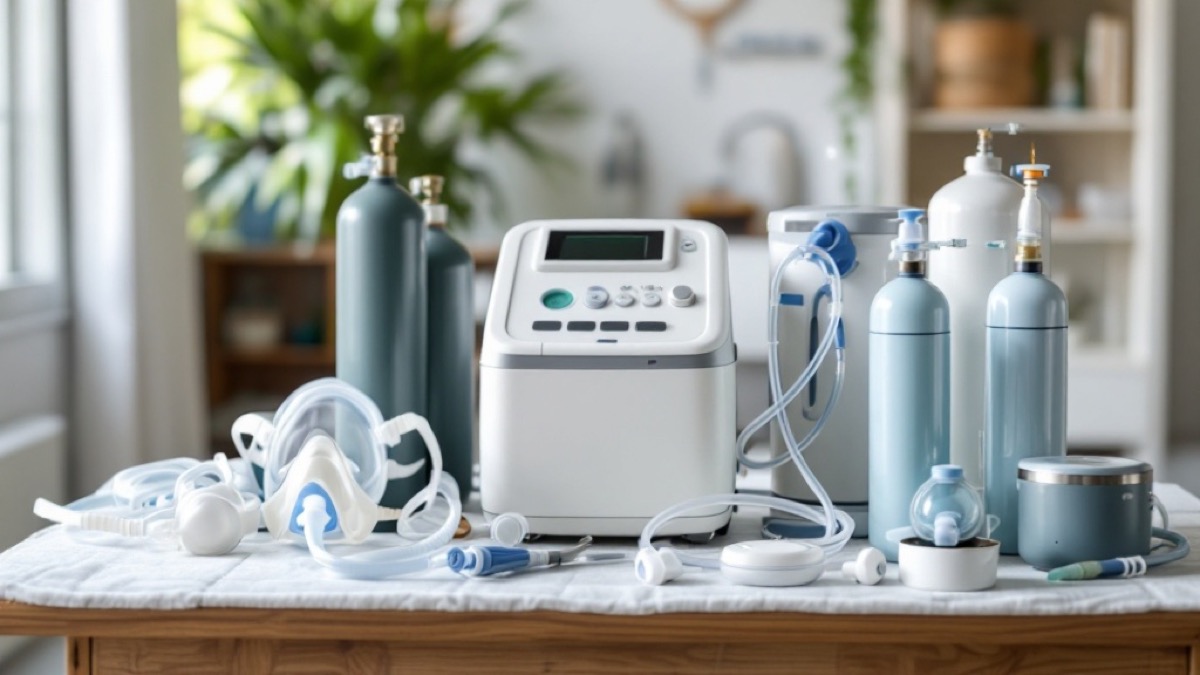
Oxygen therapy equipment is the set of medical devices that supplies, delivers and monitors supplemental oxygen: an oxygen source (a concentrator, a compressed gas cylinder or a liquid oxygen system), a delivery device such as a nasal cannula or face mask, and monitoring tools such as a pulse oximeter. In the United States it is prescription durable medical equipment (DME), and Medicare Part B covers it for patients whose resting blood oxygen is at or below 88% SpO2 or 55 mmHg PaO2, according to the Centers for Medicare & Medicaid Services. Equipment runs from disposable cannulas that cost a few dollars to hospital high-flow systems that cost thousands. The sections below cover what each device does, who uses it, what it costs and how coverage works.
Key Takeaways
- The three main oxygen sources are oxygen concentrators, compressed gas cylinders and liquid oxygen (LOX) systems, as described by Hardavella and colleagues in Breathe (2019). Concentrators are the most common choice for home use because they make oxygen from room air.
- Delivery devices range from nasal cannulas (about 24 to 44% oxygen) to non-rebreather masks (60 to 90%) to high-flow nasal cannula systems (up to 100%), according to UCSF Health and Roca et al. (2010).
- Portable oxygen concentrators cost $2,000 to $4,000 new and stationary concentrators cost $800 to $2,000, although most Medicare patients rent their equipment rather than buy it.
- Medicare Part B covers oxygen equipment after the annual Part B deductible ($257 in 2025), with the patient paying 20% of the Medicare-approved amount. Coverage requires a prescription and qualifying oxygen levels.
- Medicare rents oxygen equipment for 36 months, then the supplier must keep providing it for up to 5 years in total, according to Medicare.gov. The supplier keeps ownership of the equipment.
- Pulse oximeters, regulators, flowmeters and humidifiers are essential supporting equipment, and the FDA has reviewed evidence that oximeters can read less accurately on darker skin.
What oxygen therapy equipment does a patient need?
A complete home oxygen setup has three layers. The source makes or stores the oxygen, the delivery device carries it into the airway, and the monitor confirms that blood oxygen saturation is reaching the prescribed target. Most home patients use a stationary concentrator, a portable concentrator or backup cylinder, a nasal cannula with tubing, and a fingertip pulse oximeter.
Clinicians call this supplemental oxygen, home oxygen therapy or long-term oxygen therapy (LTOT) when it is used for 15 hours a day or more. The oxygen therapy treatment guide explains the therapy itself; this page focuses on the hardware.
Which conditions call for home oxygen equipment?
Chronic obstructive pulmonary disease (COPD) is the most common reason adults use home oxygen. Other indications include interstitial lung disease and pulmonary fibrosis, pulmonary hypertension, advanced heart failure, cystic fibrosis and severe pneumonia during recovery. Medicare also recognizes cluster headaches as a reason for oxygen coverage that does not depend on blood gas levels. Patients with COPD can read more in the COPD treatment guide and in our post on oxygen therapy for COPD.
Who prescribes and supplies the equipment?
A pulmonologist, cardiologist or primary care physician writes the oxygen prescription after testing blood oxygen at rest, with exertion or during sleep. A DME supplier delivers and services the equipment, and a respiratory therapist usually teaches the patient how to set flow rates, change cannulas and check saturation.
Oxygen Sources: Where the Oxygen Comes From
Before oxygen reaches a patient, it has to be generated or stored. There are three main source types, each with distinct advantages and trade-offs.
Oxygen Concentrators
An oxygen concentrator draws in room air (which is about 21% oxygen), removes nitrogen and other gases using a molecular sieve, and delivers purified oxygen at concentrations of 87-95% or higher.1
Concentrators come in two forms:
Stationary (home) concentrators are designed to sit in one place and run continuously. They plug into a standard wall outlet and deliver oxygen at flow rates up to 10 L/min. Weight ranges from 30 to 55 lbs. These are the workhorses of home oxygen therapy. A typical stationary concentrator costs $800-$2,000.2
Portable oxygen concentrators (POCs) run on rechargeable batteries and weigh between 3 and 10 lbs. They are designed for patients who need oxygen while mobile. Most POCs deliver 2-5 L/min on continuous flow, or higher equivalent doses using pulse-dose technology (which delivers a burst of oxygen only when the patient inhales). Battery life ranges from 2 to 8 hours depending on the model and flow setting. New POCs cost $2,000-$4,000.2
Concentrators have one major advantage: they never run out. As long as they have power, they produce oxygen from the surrounding air. There is no tank to refill. The trade-off is that they stop working in a power outage, so concentrator users keep a cylinder as backup.
Portable concentrators used on airplanes must meet Federal Aviation Administration acceptance criteria and carry a label showing conformance, according to the FAA's portable oxygen concentrator rules. Our post on portable oxygen therapy covers travel and battery planning in more detail.
Compressed Gas Cylinders
Compressed gas cylinders (“oxygen tanks”) store pure oxygen under high pressure, typically at 2,000 psi. They are the oldest and most straightforward oxygen delivery method.
Cylinders come in standardized sizes:3
| Cylinder Size | Capacity (liters) | Weight (full) | Duration at 2 L/min | Typical Use |
|---|---|---|---|---|
| B | 200 | 5 lbs | ~1.5 hours | Emergency/portable backup |
| D | 425 | 8 lbs | ~3.5 hours | Portable/transport |
| E | 680 | 14 lbs | ~5.5 hours | Portable/wheelchair |
| M | 3,000 | 63 lbs | ~25 hours | Home backup |
| H/K | 6,900 | 135 lbs | ~57 hours | Hospital/facility use |
Cylinders require regular refills or replacements. Refill costs range from $15-$25 for small portable cylinders to $25-$100 for large “H” or “K” cylinders, depending on your supplier and location.
The main advantage of cylinders is reliability. They do not need electricity. They are the standard backup oxygen source for patients who depend on concentrators.
Liquid Oxygen Systems
Liquid oxygen (LOX) is oxygen cooled to -297°F (-183°C) and stored in insulated containers called dewars. Because liquid oxygen takes up about 860 times less space than gaseous oxygen, LOX systems can store much more oxygen in a smaller, lighter package.3
A typical home LOX setup includes a stationary reservoir (holds 30-40 liters of liquid, equivalent to roughly 25,000-34,000 liters of gas) and a small portable unit that the patient fills from the reservoir. The portable unit weighs 5-10 lbs and can last 4-8 hours depending on flow rate.
LOX systems have become less common as portable concentrator technology has improved. They require scheduled delivery of liquid oxygen refills, and the liquid evaporates slowly even when not in use. They remain the usual choice for patients who need high continuous flow rates (above 5 L/min) while mobile.
Concentrator vs tank vs liquid oxygen: how do the sources compare?
Each oxygen source trades power needs, refills and weight differently. The table summarizes the figures stated in the sections above.
| Oxygen source | Needs electricity | Needs refills | Flow range | Best suited to |
|---|---|---|---|---|
| Stationary concentrator | Yes, wall outlet | No | Up to 10 L/min | Home and overnight use |
| Portable concentrator (POC) | Yes, battery for 2 to 8 hours | No | 2 to 5 L/min continuous, or pulse dose | Outings and air travel |
| Compressed gas cylinder | No | Yes, refill or swap | Set by regulator | Backup and power outages |
| Liquid oxygen (LOX) | No | Yes, scheduled delivery | High continuous flow | Mobile patients above 5 L/min |
Delivery Devices: How Oxygen Reaches the Patient
The delivery device determines how much oxygen the patient actually receives, expressed as FiO2 (fraction of inspired oxygen). Room air has an FiO2 of 0.21 (21%). Supplemental oxygen increases this based on the device and flow rate.
Low-Flow Devices
Low-flow devices deliver oxygen at a rate lower than the patient’s total inspiratory flow. The patient also breathes in room air, so the actual FiO2 varies with breathing pattern.
Nasal Cannula
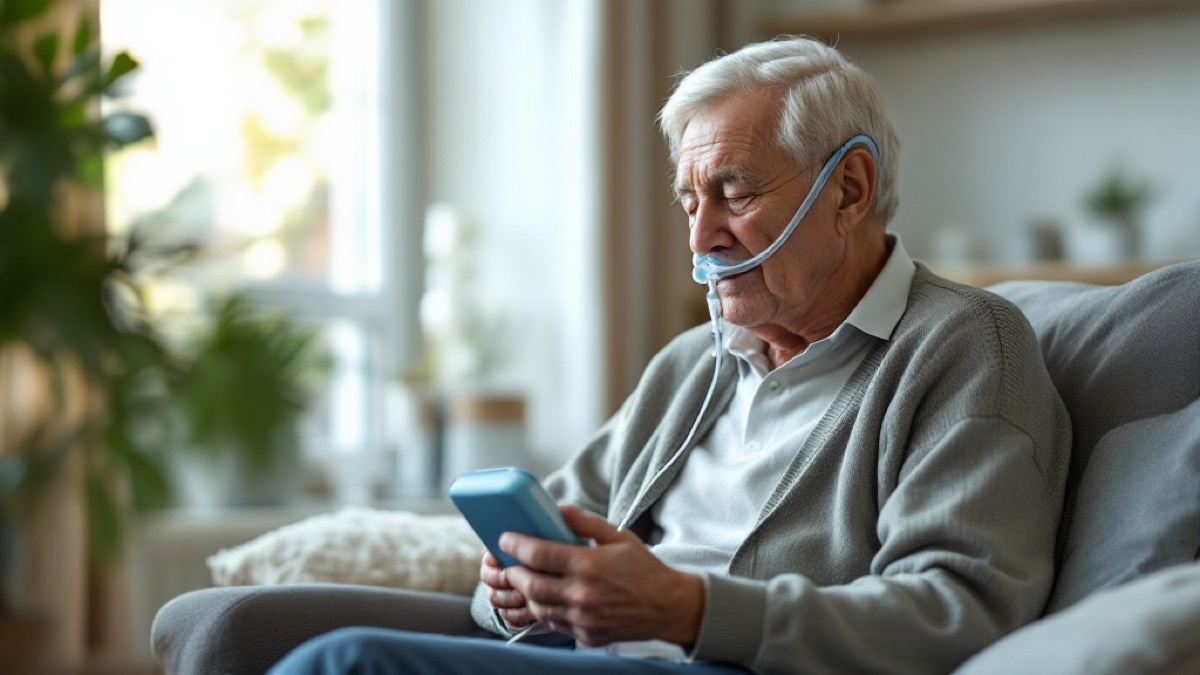
The most common oxygen delivery device. Two small prongs sit in the nostrils. Flow rates range from 0.5 to 6 L/min, delivering an estimated FiO2 of 24-44%. At 1 L/min, FiO2 is approximately 24%. Each additional liter per minute adds roughly 4%.4
Advantages: comfortable, lightweight, allows eating and talking. Disadvantages: FiO2 varies with breathing rate and mouth breathing; flow above 6 L/min dries nasal mucosa and causes discomfort.
Cost: $1-$5 per disposable cannula. Reusable cannulas cost $5-$15.
Simple Face Mask
A plastic mask covering the nose and mouth with exhalation ports on each side. Flow rates: 5-10 L/min. FiO2: approximately 35-55%. Flow must be kept above 5 L/min to prevent CO2 rebreathing inside the mask.4
Cost: $2-$8 per mask.
High-Flow and Reservoir Devices
These deliver a higher and more controlled FiO2 by storing oxygen in a reservoir or delivering it at rates that match or exceed the patient’s inspiratory demand.
Venturi Mask (Air Entrainment Mask)
Uses color-coded adapters (jets) to deliver precise, fixed FiO2 levels: 24%, 28%, 31%, 35%, 40%, or 50%. Each adapter entrains a specific ratio of room air to oxygen, ensuring a constant FiO2 regardless of the patient’s breathing pattern. This makes it a “fixed-performance” device.4
Commonly used for COPD patients who need precise oxygen delivery, because too much oxygen can cause carbon dioxide retention (hypercapnia) in some people with chronic lung disease.
Cost: $5-$15 per mask with adapter set.
Non-Rebreather Mask (NRB)
A face mask with a reservoir bag and one-way valves. The reservoir bag fills with 100% oxygen. When the patient inhales, they draw from the reservoir. One-way valves prevent exhaled air from re-entering the bag. Flow rate: 8-15 L/min. FiO2: 60-90%. At 15 L/min, FiO2 can approach 90%.4
This is the highest-FiO2 device available without intubation or specialized equipment. Used for acute hypoxia, trauma, and emergency situations.
Cost: $5-$15 per mask.
“High-flow nasal cannula systems deliver oxygen at flow rates up to 80 L/min with variable concentrations up to 100%, while providing heated humidification and a small degree of positive airway pressure.”
Roca et al., Respiratory Care, 2010
High-Flow Nasal Cannula (HFNC)
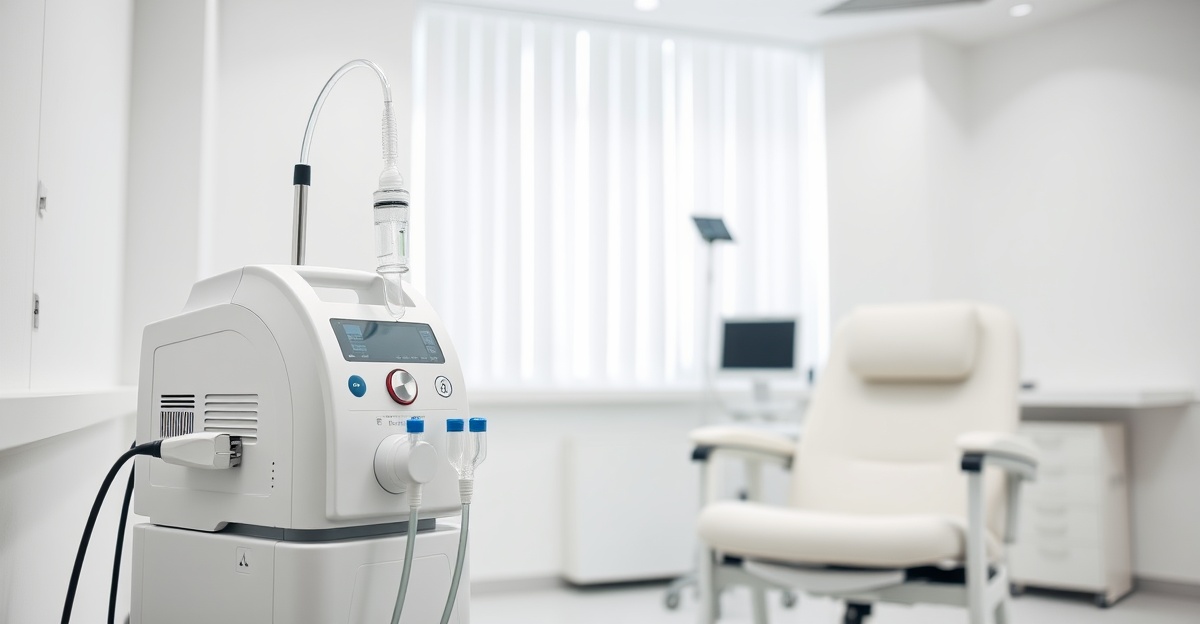
A specialized system that delivers heated, humidified oxygen at flow rates of 40-80 L/min through a wide-bore nasal cannula. FiO2 is adjustable from 21% to 100%. HFNC also generates a small amount of positive end-expiratory pressure (PEEP), which helps keep airways open.5
HFNC requires a dedicated air-oxygen blender and heated humidifier unit. These are hospital and clinic devices, not home equipment.
Cost: $5,000-$15,000 for the unit. Disposable circuits cost $30-$80 each.
Oxygen delivery devices compared
The delivery device sets how much of each breath is oxygen. The figures below come from the device descriptions above, sourced to UCSF Health and Roca et al. (2010).
| Delivery device | Flow rate | Approximate FiO2 | Typical setting |
|---|---|---|---|
| Nasal cannula | 0.5 to 6 L/min | 24 to 44% | Home, long-term oxygen therapy |
| Simple face mask | 5 to 10 L/min | 35 to 55% | Short-term, moderate needs |
| Venturi mask | Set by color-coded jet | Fixed at 24 to 50% | COPD with risk of CO2 retention |
| Non-rebreather mask | 8 to 15 L/min | 60 to 90% | Emergencies, acute hypoxia |
| High-flow nasal cannula | 40 to 80 L/min | 21 to 100%, adjustable | Hospital, acute respiratory failure |
A prescription states the flow rate in liters per minute, and the right device is the one that delivers it comfortably. Our oxygen flow rate chart lists common settings by device and situation.
Monitoring Equipment
Pulse Oximeters
A pulse oximeter clips onto a fingertip and measures blood oxygen saturation (SpO2) and pulse rate using infrared light. Normal SpO2 is 95-100%. Most patients on oxygen therapy target SpO2 of 88-92% (COPD) or 94-98% (other conditions).
Types:
- Fingertip pulse oximeters: Small, battery-powered, designed for spot checks. Cost: $15-$80.
- Tabletop/continuous monitors: Used in clinical settings for continuous monitoring. Cost: $200-$2,000.
- Wrist-worn oximeters: For overnight sleep studies or continuous home monitoring. Cost: $50-$300.
A pulse oximeter is essential for any patient on home oxygen therapy. It allows you to verify that your oxygen prescription is achieving the target saturation.
Pulse oximeters have known limits. Sjoding and colleagues reported in the New England Journal of Medicine (2020) that hidden low oxygen levels were missed about three times as often in Black patients as in White patients, and the FDA's pulse oximeter page describes its ongoing review of how skin pigmentation affects accuracy (Sjoding et al., 2020). Readings that do not match how you feel are worth raising with your care team.
Regulators and Flowmeters
A regulator attaches to a compressed gas cylinder and reduces the high tank pressure (2,000 psi) to a safe, usable pressure. A flowmeter connects to the regulator (or is built into it) and controls the oxygen flow rate in liters per minute.
Types of flowmeters:
- Bourdon gauge flowmeters: Pressure-compensated, accurate regardless of back-pressure. Common in EMS and hospital settings.
- Thorpe tube flowmeters: Use a floating ball in a graduated tube. Simple and reliable. Standard in home setups.
Cost: $30-$100 for a regulator/flowmeter combination.
Humidifiers
Oxygen delivered at flow rates above 4 L/min should be humidified to prevent drying of the nasal and oral mucosa. A bubble humidifier attaches between the oxygen source and the delivery device. Water in the humidifier bottle adds moisture to the oxygen as it bubbles through.
Cost: $10-$30 for a basic bubble humidifier. Replacement bottles cost $3-$8.
How much does oxygen therapy equipment cost?
Oxygen therapy equipment costs from about $1 for a disposable nasal cannula to $2,000 to $4,000 for a new portable oxygen concentrator. Most Medicare patients rent the major equipment and pay 20% of the approved amount, so the purchase prices below matter most to people paying cash or buying a second unit.
| Equipment Type | Approximate Cost | Medicare Covered? |
|---|---|---|
| Stationary Concentrator | $800-$2,000 | Yes (rental) |
| Portable Concentrator | $2,000-$4,000 | Yes (rental, separately from stationary) |
| Compressed Gas Cylinder (E-size) | $100-$200 + $15-$25/refill | Yes (as backup) |
| Liquid Oxygen System | Varies (typically leased) | Yes (rental) |
| Nasal Cannula | $1-$5 | Yes (as accessory) |
| Pulse Oximeter | $15-$80 | Sometimes (with justification) |
| Regulator/Flowmeter | $30-$100 | Yes (as accessory) |
| Humidifier | $10-$30 | Yes (as accessory) |
Prescription Requirements
In the United States, supplemental oxygen is a prescription item. You cannot purchase or rent oxygen equipment for medical use without a doctor’s order. The prescription must specify:6
- Flow rate (L/min) at rest and during activity
- Whether continuous or as-needed
- Qualifying diagnosis (ICD-10 code)
- Results of qualifying arterial blood gas (ABG) or pulse oximetry test
For Medicare coverage, the patient must have a documented resting PaO2 at or below 55 mmHg, or SpO2 at or below 88%. Patients with certain conditions (cor pulmonale, polycythemia) may qualify with slightly higher levels.
What does the research say about home oxygen equipment?
Long-term oxygen therapy improves survival in COPD patients with severe resting hypoxemia. The Nocturnal Oxygen Therapy Trial Group reported in Annals of Internal Medicine (1980) that continuous oxygen was linked to lower mortality than nocturnal-only oxygen (NOTT, 1980). The British Medical Research Council Working Party found a survival benefit for oxygen used about 15 hours a day in The Lancet (MRC, 1981).
The benefit does not extend to everyone with low oxygen. The Long-Term Oxygen Treatment Trial (LOTT) Research Group reported in the New England Journal of Medicine (2016) that long-term supplemental oxygen did not lengthen time to death or first hospitalization in COPD patients with only moderate desaturation (LOTT, 2016). That finding is one reason Medicare ties coverage to measured oxygen levels rather than symptoms alone.
Evidence for oxygen in other settings is thinner. Studies of oxygen for breathlessness without low blood oxygen, or for general wellness, are smaller and less consistent, and a prescriber is the right person to weigh them for a specific diagnosis.
Medicare and Insurance Coverage
Medicare Part B covers supplemental oxygen equipment as durable medical equipment (DME) under specific conditions.6
What Medicare Covers
- Stationary oxygen concentrators (rental)
- Portable oxygen concentrators (rental, billed separately)
- Compressed gas cylinders and refills
- Liquid oxygen systems and refills
- Tubing, cannulas, masks, and related accessories
- Equipment maintenance and repair
How Coverage Works
Medicare pays the supplier a monthly rental fee for up to 36 months. The patient pays 20% of the Medicare-approved amount after meeting the annual Part B deductible ($257 in 2025). The rental covers the equipment, refills for gas or liquid systems, tubing, cannulas and routine servicing.7
After 36 months, rental payments for the equipment stop, but the supplier keeps ownership and must continue to provide oxygen and equipment for as long as it is needed, up to 5 years from the start of use, according to Medicare's oxygen equipment coverage page. Patients who use a concentrator may owe coinsurance for maintenance visits after that point, and a new 36-month rental period can begin after 5 years.
Typical monthly costs to the patient (after deductible): $30-$80 per month for the 20% copay.
Private Insurance
Most private health insurance plans cover home oxygen therapy similarly to Medicare, though specific terms vary. Check with your insurer for pre-authorization requirements, preferred suppliers, and coverage limits.
How do you use oxygen equipment safely at home?
Oxygen does not burn by itself, but it makes other materials burn faster and hotter. MedlinePlus advises keeping oxygen at least 6 feet from open flames, space heaters, candles, fireplaces and stoves, and never allowing smoking in a room where oxygen is in use (MedlinePlus oxygen safety).
- Post "no smoking" signs and keep working smoke detectors and a fire extinguisher in the home.
- Avoid petroleum-based creams and lotions on the face and upper body; water-based products are the usual substitute.
- Store cylinders upright in a ventilated space, never in a car trunk, box or small closet.
- Keep a charged backup cylinder for power outages, and agree a power outage plan with your supplier.
- Route or tape tubing so that it does not become a tripping hazard, and replace cannulas on the schedule your supplier recommends.
Our post on oxygen therapy safety precautions covers cooking, travel and storage in more depth.
Choosing the Right Equipment
The right oxygen therapy equipment depends on your prescription, lifestyle, and budget. Here is a practical framework:
- Homebound patient, low flow (1-5 L/min): Stationary concentrator + backup E-cylinder
- Active patient, low flow: Stationary concentrator for home + portable concentrator for outings
- High flow requirement (above 5 L/min) + mobility: Liquid oxygen system with portable fill unit
- Nighttime-only use: Stationary concentrator
- Emergency/travel backup: Small compressed gas cylinder (B or D size)
Your DME supplier and prescribing physician should help you select the right combination based on your oxygen needs, activity level, and insurance coverage.
How does home oxygen equipment differ from clinic oxygen therapies?
Home oxygen equipment treats low blood oxygen under a prescription and is billed as DME. Clinics also offer oxygen-based treatments that work differently and are usually paid out of pocket, so it helps to know which is which before comparing providers.
Hyperbaric oxygen therapy (HBOT)
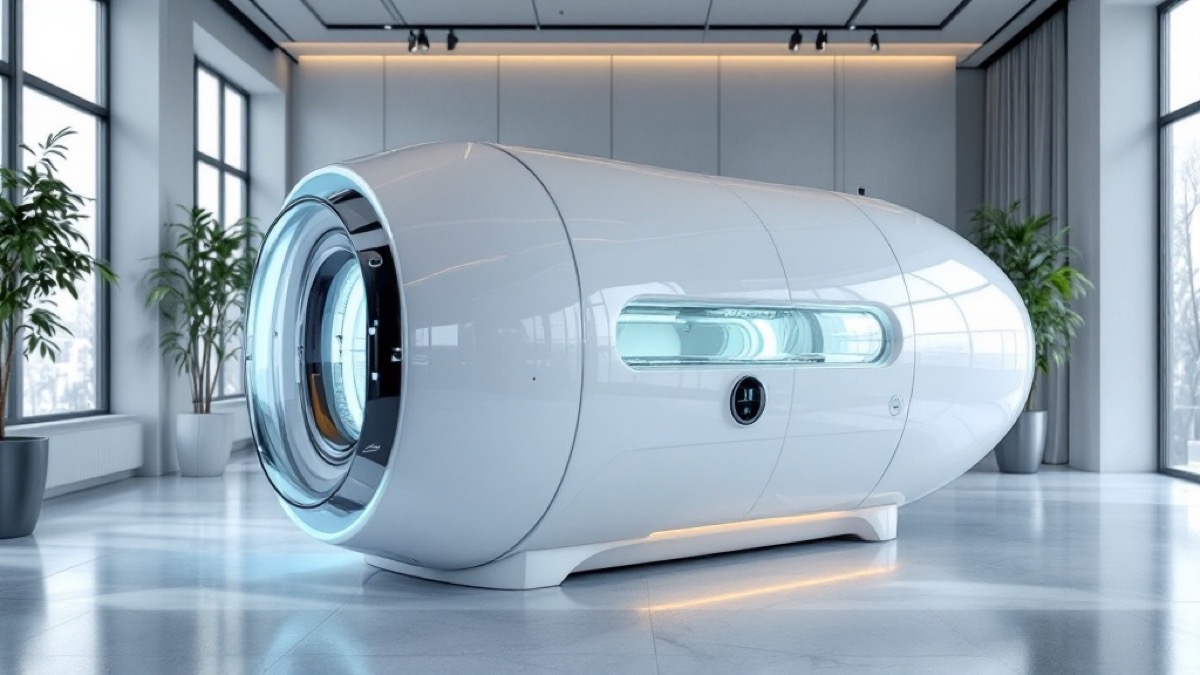
Hyperbaric oxygen therapy delivers close to 100% oxygen inside a pressurized chamber, which raises the amount of oxygen dissolved in blood plasma. The FDA has cleared hyperbaric chambers for a defined list of uses, including decompression sickness, carbon monoxide poisoning and certain non-healing wounds, and the Undersea and Hyperbaric Medical Society publishes the accepted indications. The HBOT treatment guide, our list of FDA-cleared HBOT indications and the comparison of HBOT vs normobaric oxygen therapy explain the differences, and clinics offering hyperbaric oxygen therapy are listed in the directory.
Exercise with oxygen therapy and oxygen bars
Exercise with oxygen therapy (EWOT) and oxygen bars deliver concentrated oxygen at normal pressure during exercise or rest, mostly in wellness settings. Evidence for these uses is thin, they are cash pay, and they are not a substitute for prescribed oxygen. Our post on EWOT vs HBOT sets out what the research does and does not show.
Finding an oxygen therapy provider
Regenerated.com keeps a national directory of oxygen therapy clinics that offer clinic-based oxygen treatments. Listing order on those pages is not paid ranking, and Featured slots are clearly labeled and capped. Verified means a clinic has passed credential checks, not that it paid, and the directory is free for patients to use. Inclusion in the list is not an endorsement; the guide to Featured, Verified and organic listings explains each label.
Frequently asked questions
What equipment do I need for oxygen therapy at home?
Most people on home oxygen need four things: a stationary oxygen concentrator for use at home, a portable concentrator or compressed gas cylinder for outings and power outages, a nasal cannula with tubing, and a fingertip pulse oximeter to check saturation. Patients who need high continuous flow while mobile may use a liquid oxygen system instead. Your prescriber sets the flow rate, and your DME supplier matches the equipment to it.
Does Medicare pay for oxygen therapy equipment?
Yes. Medicare Part B covers oxygen equipment as durable medical equipment when a doctor prescribes it and testing shows qualifying oxygen levels, usually a resting SpO2 at or below 88% or a PaO2 at or below 55 mmHg. After the Part B deductible ($257 in 2025), you pay 20% of the approved rental amount. Rental runs 36 months, and the supplier keeps providing equipment for up to 5 years.
Is a portable oxygen concentrator better than an oxygen tank?
A portable oxygen concentrator suits active patients because it never needs refilling and many models are accepted on airplanes under FAA rules. A compressed oxygen tank needs no electricity, which makes it the standard backup during power outages. Most POCs top out at 2 to 5 L/min of continuous flow, so patients with higher prescriptions often rely on tanks or liquid oxygen. Many patients use both.
Can you buy oxygen therapy equipment without a prescription?
Medical oxygen concentrators, cylinders and liquid oxygen systems are prescription equipment in the United States, and suppliers need a doctor's order that states the flow rate and qualifying diagnosis. Accessories such as pulse oximeters can be bought over the counter. Using oxygen without testing can mask a worsening condition, and too much oxygen can cause carbon dioxide retention in some people with chronic lung disease.
How long does an oxygen tank last?
An oxygen tank's duration depends on its size and the flow rate. At 2 L/min, a small B cylinder lasts about 1.5 hours, an E cylinder about 5.5 hours and a large M cylinder about 25 hours, based on the cylinder table above. Higher flow rates empty a tank faster, and pulse-dose regulators stretch a cylinder further by releasing oxygen only when you inhale.
The Bottom Line
Oxygen therapy equipment ranges from simple $5 nasal cannulas to $15,000 high-flow systems. For most home patients, the core setup is a stationary concentrator, a portable unit or backup cylinder, a nasal cannula, and a pulse oximeter. Medicare covers the major equipment costs for qualifying patients.
The most important factors in choosing equipment are matching the device to your prescribed flow rate, ensuring reliable oxygen supply (with a backup plan for power outages), and monitoring your oxygen levels regularly to confirm the equipment is doing its job.
For readers comparing clinic-based options such as hyperbaric oxygen, the guide to oxygen therapy as a treatment and the national list of oxygen therapy providers are the next places to look.
Sources
- Hardavella G, Karampinis I, Frille A, et al. “Oxygen devices and delivery systems.” Breathe. 2019;15(3):e108-e116. doi:10.1183/20734735.0354-2019
- Jacobs SS, Lindell KO, et al. “Characterization of Prescription Patterns and Estimated Costs for Use of Oxygen Concentrators for Home Oxygen Therapy in the US.” JAMA Netw Open. 2021;4(10):e2129973. doi:10.1001/jamanetworkopen.2021.29973
- American Lung Association. “Oxygen Delivery Devices and Accessories.” Lung.org. Accessed May 2026.
- UCSF Health. “Your Oxygen Equipment.” UCsfHealth.org. Accessed May 2026.
- Roca O, Riera J, Torres F, Masclans JR. “High-flow oxygen therapy in acute respiratory failure.” Respir Care. 2010;55(4):408-413.
- Centers for Medicare & Medicaid Services. “Oxygen Equipment & Accessories.” Medicare.gov. Accessed May 2026.
- Solace Health. “Medicare Coverage for Portable Oxygen Concentrators.” Solace.health. Accessed May 2026.