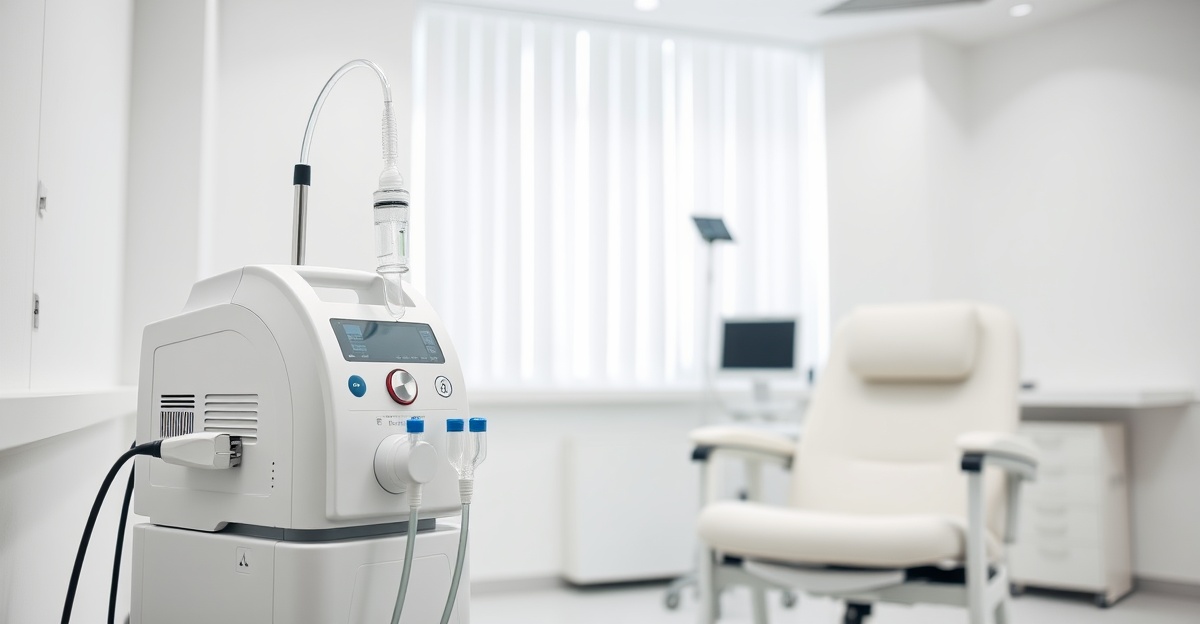
Topical Oxygen Therapy: How It Works, Devices & Evidence for Wound Healing
Explore the clinic directoryIn this article
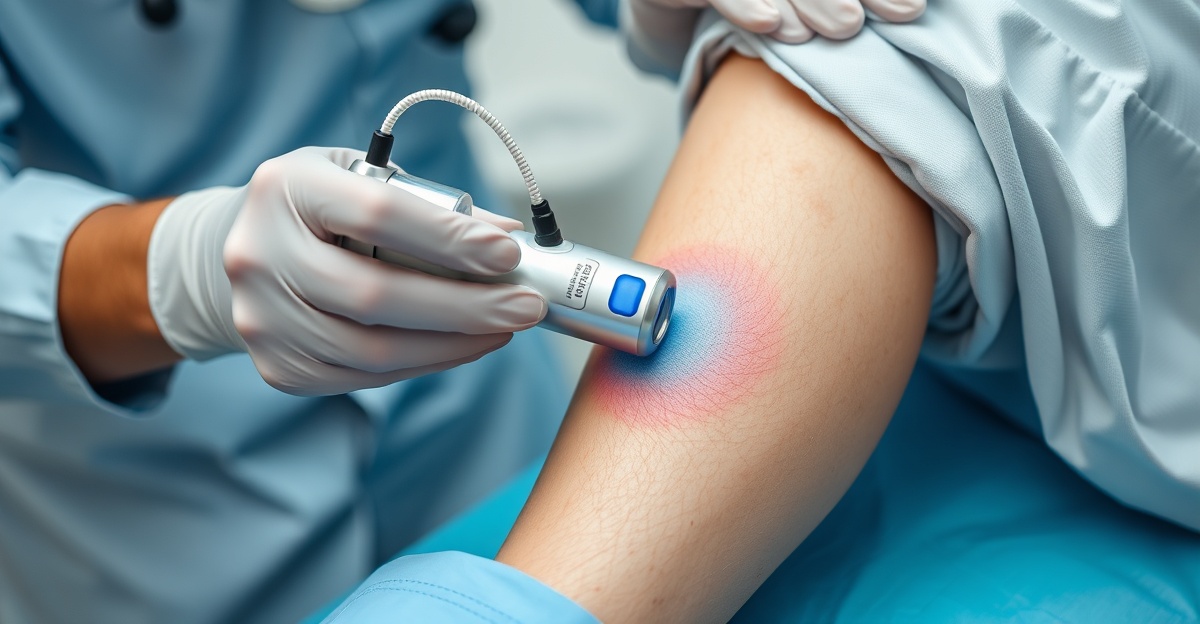
Topical oxygen therapy (TOT), also called topical wound oxygen therapy, delivers pure oxygen directly to the surface of a chronic wound through a small portable device at or near normal atmospheric pressure, rather than inside a pressurized chamber. In the TWO2 randomized trial (Frykberg et al., Diabetes Care, 2020), 41.7% of chronic diabetic foot ulcers closed with active topical oxygen compared with 13.5% with sham treatment. Unlike hyperbaric oxygen therapy (HBOT), which requires a pressurized chamber and treats the entire body, topical oxygen targets the wound bed specifically. Clinical trials show it can nearly double healing rates in diabetic foot ulcers that have stalled with standard care.
Key Takeaways
- Topical oxygen therapy delivers concentrated oxygen directly to the wound surface at about 1.0 to 1.03 ATA, not through a pressurized chamber that treats the whole body.
- The TWO2 randomized controlled trial (Frykberg et al., 2020) showed a 41.7% closure rate vs 13.5% for sham in chronic diabetic foot ulcers, and 56% vs 27% closure at 12 months.
- Leading devices include TWO2, NATROX, and TransCu O2, each using a different delivery mechanism: cyclical pressure, an electrochemical generator, or a transdermal membrane.
- Cost ranges from $50-200 per in-clinic session or $200-600/month for continuous-use home devices, and Medicare covers certain devices only for diabetic foot ulcers that meet defined criteria.
- TOT works best for chronic wounds that have not responded to 4+ weeks of standard wound care, and the strongest evidence, including meta-analyses by Carter et al. (2023) and Putri et al. (2024), is in diabetic foot ulcers.
- It is not a replacement for HBOT in conditions requiring systemic oxygenation, such as radiation tissue damage or crush injuries.
What Is Topical Oxygen Wound Therapy?
Topical oxygen wound therapy is an adjunct wound care treatment that bathes an open wound in medical grade oxygen applied from the outside. The oxygen reaches the wound bed by diffusion through moist tissue, not through the bloodstream. Clinicians use it on top of standard care, never instead of it.

The treatment goes by several names. You will see topical wound oxygen (TWO2), transdermal continuous oxygen therapy (TCOT), continuous diffusion of oxygen (CDO), and simply topical oxygen. All describe the same idea: local oxygen for a local wound. The broader family of oxygen therapy options also includes supplemental oxygen by nasal cannula and hyperbaric oxygen, which work very differently.
Topical oxygen devices sold in the United States are regulated by the U.S. Food and Drug Administration (FDA) as medical devices. Most use is prescribed and supervised by wound care teams, either in an outpatient wound center or at home between clinic visits.
How Topical Oxygen Therapy Differs from HBOT
The distinction matters because these are fundamentally different treatments. Hyperbaric oxygen therapy places the entire patient inside a pressurized chamber breathing 100% oxygen at 1.5 to 3.0 ATA. Oxygen dissolves into the blood plasma and reaches tissues systemically. Sessions last 60-90 minutes and require visiting a clinic.
Topical oxygen therapy takes the opposite approach. A small, portable device delivers concentrated oxygen directly to the wound surface at or near atmospheric pressure. The oxygen diffuses into the wound bed through the moist wound environment. No chamber, no pressurization, no full-body treatment. Some devices are worn continuously for days at a time.
| Feature | Topical Oxygen Therapy | Hyperbaric Oxygen Therapy |
|---|---|---|
| Delivery method | Direct to wound surface | Systemic via pressurized chamber |
| Pressure | Near atmospheric (1.0-1.03 ATA) | 1.5-3.0 ATA |
| Treatment duration | Continuous or 90-min cycles | 60-90 min per session |
| Location | Home or clinic | Clinic or hospital |
| Best for | Chronic surface wounds | Deep tissue injuries, radiation damage, systemic conditions |
| Cost per session | $50-200 | $200-500 |
HBOT is a separate, chamber based treatment with its own indications list, maintained in part by the Undersea and Hyperbaric Medical Society (UHMS). Our hyperbaric oxygen therapy guide covers how chamber sessions work and which conditions they are used for.
How Topical Oxygen Heals Wounds
Chronic wounds stall for many reasons, but oxygen deprivation is one of the most common. Wound healing is an oxygen-hungry process. Fibroblasts need oxygen to produce collagen. White blood cells need it to generate the reactive oxygen species that kill bacteria. Endothelial cells need it to build new blood vessels.
When a wound doesn’t have enough oxygen, this entire cascade slows down or stops. Topical oxygen therapy addresses this directly by flooding the wound surface with concentrated O2.
The oxygen diffuses through the moist wound bed into the underlying tissue. Research shows that topically applied oxygen penetrates approximately 700 micrometers into tissue, enough to reach the critical zone where new blood vessels and collagen scaffolding are being built.1
This mechanism is different from HBOT, which raises systemic blood oxygen levels. TOT works locally. It’s a targeted approach for wounds where the local oxygen supply is the bottleneck.
The local effect also has a limit. Topical oxygen cannot fix a blocked artery upstream of the wound, so clinicians check blood flow to the limb before starting. A wound with severe arterial disease usually needs a vascular surgeon’s assessment first.
Topical Oxygen Therapy Devices
Topical oxygen therapy devices fall into three main designs: cyclical pressure systems that seal a dressing over the wound, battery powered electrochemical generators worn on the body, and thin transdermal membranes that sit on the wound. All three deliver oxygen at or near atmospheric pressure, and all are used alongside standard wound care.
| Device | How it delivers oxygen | Wear pattern | Key study cited here |
|---|---|---|---|
| TWO2 | Cyclical pressurization through a sealed, disposable dressing | Treatment cycles, often at home | Double blinded RCT, Frykberg et al. (2020) |
| NATROX | Electrochemical generator feeding an oxygen distribution element | Continuous, 24/7 | Observational OTONAL trial, Tang et al. (2024) |
| TransCu O2 | Electrochemical oxygen through a flexible membrane | Continuous between dressing changes | No trial cited in the sources below |
TWO2 (Topical Wound Oxygen)
The TWO2 system is the most clinically studied topical oxygen device. It uses cyclical pressurization to deliver oxygen to the wound through a disposable, sealed dressing. The device cycles between slight positive pressure and ambient pressure, which helps push oxygen into the wound bed while preventing fluid buildup.
The TWO2 device was the subject of the landmark randomized controlled trial by Frykberg et al. (2020) that demonstrated its superiority over sham treatment in diabetic foot ulcers.2
NATROX
NATROX takes a different approach. It uses a small, battery-powered electrochemical generator that splits water vapor in ambient air to produce pure, humidified oxygen. This oxygen flows continuously through a thin delivery system to an “oxygen distribution element” (ODE) placed directly over the wound.
The OTONAL trial evaluated NATROX in 20 patients with chronic diabetic foot ulcers of more than 3 months’ duration. After 12 weeks, wound closure of greater than 75% was observed in 14 of 20 patients (70%).3
NATROX is designed for continuous wear. Patients keep the device on 24/7, changing the ODE during regular dressing changes. The generator is about the size of a smartphone and clips to clothing or a belt.
TransCu O2
TransCu O2 is a transdermal continuous oxygen therapy system. It generates oxygen electrochemically and delivers it through a thin, flexible membrane that sits directly on the wound. Like NATROX, it’s designed for continuous use between dressing changes.
Can topical oxygen devices be used at home?
Yes, most topical oxygen devices are designed for home use under a wound care team’s prescription. The clinic fits the device, teaches dressing changes, and reviews the wound at regular visits. Our post on oxygen wound therapy at home walks through the practical side of daily use.
“The active TWO2 arm showed a closure rate of 41.7% compared with 13.5% for sham, producing an odds ratio of 4.57.”
Frykberg et al., Diabetes Care, 2020
Clinical Evidence for Topical Oxygen Therapy
Topical oxygen therapy has its strongest evidence in chronic diabetic foot ulcers, where one double blinded randomized trial and several meta-analyses report higher healing rates than standard care alone. Evidence for other wound types is thinner and mostly observational.
The TWO2 Trial (Frykberg et al., 2020)
This is the strongest piece of evidence for topical oxygen therapy. It was a multinational, multicenter, randomized, double-blinded, placebo-controlled trial, the gold standard study design. Patients with chronic diabetic foot ulcers were randomized to either active TWO2 therapy or sham control, both in addition to optimal standard of care.2
At the first analysis point, the active TWO2 arm showed a closure rate of 41.7% compared with 13.5% for sham, producing an odds ratio of 4.57 (97.8% CI: 1.19-17.57, P = 0.010). At 12 months, 56% of ulcers in the TWO2 group were closed compared with 27% in the sham group (P = 0.013).
These are significant numbers. The trial was stopped early at its first pre-planned analysis because the results were so clearly positive that continuing the sham arm would have been ethically questionable.
A trial stopped early also has limits worth knowing. The wide confidence interval (1.19 to 17.57) reflects a modest sample, and the study was industry sponsored, so larger independent trials would strengthen the picture.
Meta-Analyses
Carter et al. (2023) conducted a systematic review and meta-analysis pooling data from six RCTs involving 530 patients with diabetic foot ulcers. The pooled results showed a risk ratio of 1.59 (95% CI: 1.07-2.37, P = 0.021) favoring topical oxygen therapy.4
Putri et al. (2024) published an updated meta-analysis including both RCTs and observational studies. The use of topical oxygen significantly increased the number of healed wounds (RR = 1.77; 95% CI: 1.18-2.64; P = 0.005).5 The full paper is available in the International Wound Journal.
Sun et al. (2022) found similar results in their meta-analysis, with the TOT group showing a higher healing rate compared to controls (RR = 1.63, 95% CI: 1.33-2.00).6
What do wound care guidelines say?
The International Working Group on the Diabetic Foot (IWGDF) 2023 guideline on wound healing interventions suggests considering topical oxygen as an adjunct for diabetic foot ulcers that have failed to heal with best standard care. The recommendation is conditional, based on low certainty evidence, which matches the overall picture: promising results in one wound type, with more trials still needed.
For venous leg ulcers, pressure injuries and surgical wounds, the evidence is mostly case series and observational studies. A scoping review by Sýkorová et al. (2024) in the International Wound Journal describes the mechanisms in detail but also notes the gaps in comparative data.1
When to Use Topical Oxygen vs. HBOT
These therapies serve different patient populations, and choosing the right one matters.
Topical oxygen is better suited for:
- Chronic surface wounds (diabetic foot ulcers, venous leg ulcers, pressure injuries)
- Patients who cannot tolerate HBOT (claustrophobia, ear/sinus issues, inability to travel daily)
- Wounds that need continuous oxygen delivery between clinic visits
- Outpatient or home-based wound management
HBOT is better suited for:
- Deep tissue injuries requiring systemic oxygenation
- Radiation tissue damage (osteoradionecrosis, radiation cystitis)
- Crush injuries and compromised surgical grafts
- Conditions where the entire body benefits from supraphysiologic oxygen levels
Some wound care specialists use both: HBOT for systemic oxygenation and TOT for continuous local delivery between chamber sessions. This combined approach is not yet well-studied in clinical trials but is used in clinical practice.
For a deeper look at the chamber option for chronic wounds, see our article on HBOT for wound healing.
Cost of Topical Oxygen Therapy
Topical oxygen therapy typically costs $50-200 per in-clinic session, $200-600 per month for a continuous home device, or $3,000-6,000 for a full 12-week TWO2 treatment course, based on the ranges below. What you actually pay depends on the device, how long the wound takes to respond, and whether insurance covers it.
| Option | Typical Cost | Notes |
|---|---|---|
| In-clinic TOT session | $50-200 per session | Typically 2-3 sessions per week |
| NATROX rental | $200-400/month | Continuous home use, ODE changes at dressing change |
| TWO2 treatment course | $3,000-6,000 total | 12-week protocol, device + disposables |
| TransCu O2 | $200-600/month | Continuous home use |
Insurance coverage varies. Medicare has specific coverage criteria for certain topical oxygen devices when used for diabetic foot ulcers that meet defined chronicity and severity thresholds. Private insurance coverage is inconsistent. Many wound care clinics handle insurance authorization as part of their service.
What drives the cost of topical oxygen therapy?
Three factors drive most of the total. The first is the device model, since continuous wear systems are usually rented monthly while cyclical systems are priced as a course. The second is treatment length, because a wound that responds in weeks costs far less than one that needs months. The third is disposables, such as dressings and oxygen distribution elements, which some quotes include and others bill separately.
Before starting, ask the wound center for a written estimate that lists the device, the expected duration, the disposables and what insurance is expected to pay. Comparing that figure with the cost of continued standard care, or with what hyperbaric oxygen therapy costs, gives a fairer picture than a per session price alone.
When Topical Oxygen Is Appropriate
Topical oxygen therapy is typically considered when a chronic wound has not responded to at least 4 weeks of standard wound care including offloading, moisture management, infection control, and nutritional optimization. It is not a first-line treatment. It’s an escalation option for wounds that are stalling.
The strongest evidence supports its use for diabetic foot ulcers. Evidence for venous leg ulcers, pressure injuries, and surgical wound dehiscence exists but is less robust, consisting mainly of case series and observational studies rather than randomized trials.
If you’re managing a chronic wound that isn’t responding to standard care, ask your wound care specialist whether topical oxygen therapy is appropriate for your specific situation. The clinical evidence is strong enough to justify a conversation, particularly for diabetic foot ulcers.
What to Expect During Topical Oxygen Treatment
A typical course of topical oxygen wound therapy follows a predictable sequence, although the details depend on the device and the wound.
- A wound care clinician assesses the wound, measures it, and checks blood flow to the limb, often with an ankle brachial index or similar test.
- Standard care continues or is tightened first: debridement of dead tissue, offloading pressure from the foot, infection control and blood sugar management.
- The clinician fits the device and dressing and teaches the patient or a caregiver how to run it and change dressings.
- Treatment runs continuously or in daily cycles, depending on the device, with regular clinic visits to measure progress.
- The team reviews the wound over the following weeks, commonly against a 12-week window like the one used in the TWO2 and OTONAL studies, and stops or changes course if the wound is not improving.
Risks and Side Effects of Topical Oxygen Therapy
Topical oxygen therapy is generally well tolerated because it works at near normal pressure and only on the wound surface. The meta-analysis by Sun et al. (2022) in the International Wound Journal assessed safety alongside efficacy.6 Reported issues are mostly local, such as skin irritation around the dressing or moisture problems at the wound edge.
Oxygen also supports combustion, so devices should be kept away from open flames and smoking. Topical oxygen is not a substitute for treating a deep infection, bone infection (osteomyelitis) or blocked arteries. Those problems need their own treatment, and a clinician should rule them out before topical oxygen begins.
Who Provides Topical Oxygen Therapy?
Topical oxygen therapy is usually prescribed by wound care specialists, podiatrists, vascular surgeons and hyperbaric medicine physicians, and managed day to day by certified wound care nurses. Many hospital based wound centers offer both topical oxygen and HBOT, which makes it easier to compare the two for the same wound.
To find providers, you can browse oxygen therapy clinics in the directory or look at clinics offering hyperbaric oxygen therapy if your team is weighing the chamber option. Listing order in the directory is not paid ranking, and Featured slots are clearly labeled and capped. Verified means a clinic has passed credential checks, not that it paid more, and Regenerated.com is free for patients. Inclusion in the directory is not an endorsement, so ask each clinic which topical oxygen devices it uses and how it measures wound progress.
Frequently asked questions
What is topical oxygen wound therapy?
Topical oxygen wound therapy is a treatment that delivers pure oxygen directly onto a chronic wound through a portable device, at or near normal atmospheric pressure. The oxygen diffuses into the wound bed to support collagen production, infection fighting and new blood vessel growth. It is used alongside standard wound care, mainly for diabetic foot ulcers that have stalled after at least 4 weeks of good care.
How much does topical oxygen therapy cost?
Topical oxygen therapy usually costs $50-200 per in-clinic session or $200-600 per month for a continuous home device, while a 12-week TWO2 course runs about $3,000-6,000 including disposables. The final total depends on the device, how long the wound needs treatment and what insurance pays. Ask the wound center for a written estimate that includes dressings and other disposables.
Does Medicare cover topical oxygen therapy?
Medicare covers certain topical oxygen devices for diabetic foot ulcers that meet defined chronicity and severity criteria, so coverage depends on the wound and the documentation. Private insurance coverage is inconsistent and often requires prior authorization. Many wound care clinics handle that paperwork, so ask the clinic to check your specific plan before treatment starts.
Is topical oxygen therapy the same as hyperbaric oxygen therapy?
No, topical oxygen therapy and hyperbaric oxygen therapy are different treatments. Topical oxygen applies oxygen only to the wound surface at about 1.0 to 1.03 ATA, often at home. Hyperbaric oxygen therapy places the whole body in a chamber breathing 100% oxygen at 1.5 to 3.0 ATA in a clinic, raising oxygen levels throughout the bloodstream. Some wound teams use both together.
What wounds can topical oxygen therapy help?
Topical oxygen therapy has its strongest evidence in chronic diabetic foot ulcers, supported by the TWO2 randomized trial and meta-analyses by Carter et al. (2023), Sun et al. (2022) and Putri et al. (2024). Clinicians also use it for venous leg ulcers, pressure injuries and surgical wound dehiscence, although evidence for those wounds comes mainly from case series and observational studies rather than randomized trials.
How long does topical oxygen therapy take to work?
Topical oxygen therapy is usually judged over weeks, not days. The TWO2 and OTONAL studies measured results over 12 weeks, and the TWO2 trial followed patients for 12 months. Wound teams typically measure the wound at each visit and reconsider the plan if it is not shrinking. Healing speed varies widely with blood flow, infection, blood sugar control and offloading.
Sources
- Sýkorová A, et al. Topical oxygen therapy and singlet oxygen in wound healing: A scoping review. Int Wound J. 2024;21(5):e14846. doi:10.1111/iwj.14846
- Frykberg RG, et al. A Multinational, Multicenter, Randomized, Double-Blinded, Placebo-Controlled Trial to Evaluate the Efficacy of Cyclical Topical Wound Oxygen (TWO2) Therapy in the Treatment of Chronic Diabetic Foot Ulcers: The TWO2 Study. Diabetes Care. 2020;43(3):616-624. doi:10.2337/dc19-0476
- Tang TY, et al. An Observational Clinical Trial Examining the Effect of Topical Oxygen Therapy (Natrox) on the Rates of Healing of Chronic Diabetic Foot Ulcers (OTONAL Trial). Int J Low Extrem Wounds. 2024;23(2):256-265. doi:10.1177/15347346211053694
- Carter MJ, Frykberg RG, Oropallo A, Sen CK, Armstrong DG, Nair HKR, Serena TE. Efficacy of Topical Wound Oxygen Therapy in Healing Chronic Diabetic Foot Ulcers: Systematic Review and Meta-Analysis. Adv Wound Care. 2023;12(4):177-186. doi:10.1089/wound.2022.0041
- Putri NR, et al. The efficacy of topical oxygen therapy for wound healing: A meta-analysis of randomized controlled trials and observational studies. Int Wound J. 2024;21(7):e14960. doi:10.1111/iwj.14960
- Sun X, et al. Efficacy and safety of topical oxygen therapy for diabetic foot ulcers: An updated systematic review and meta-analysis. Int Wound J. 2022;19(8):2200-2209. doi:10.1111/iwj.13830