Ozone Therapy at Home: Rectal Insufflation, Ozonated Water, and What’s Safe
At a Glance
- Rectal insufflation is the most widely used home ozone method, simple, effective, and well-tolerated.
- A complete home ozone setup typically costs $500 to $2,000 depending on generator quality and accessories.
- Never inhale ozone gas directly, this is the single most important safety rule in ozone therapy.
- Some ozone therapies (IV/MAH, 10-pass) require a clinical setting and cannot safely be done at home.
- Ozonated water and ear insufflation offer gentler entry points for beginners.
Ozone therapy has been used in clinical settings for decades, but a growing number of people are exploring how to use it safely at home. The appeal is straightforward: clinic visits for ozone can run $150 to $400 per session, and many conditions that respond to ozone benefit from consistent, repeated treatments. Doing it at home puts you in control of your schedule and dramatically lowers the per-session cost.
Next step: Read the ozone therapy guide for clinic vs home context, then browse vetted clinic listings.
But home ozone therapy is not a free-for-all. Some methods are well-suited to self-administration. Others are genuinely dangerous without medical supervision. And one rule is absolutely non-negotiable: you must never breathe ozone gas into your lungs.
This guide walks you through the home ozone methods that practitioners most commonly recommend, the equipment you need, the safety protocols you must follow, and where the line falls between what you can do at home and what belongs in a clinic.
The Most Common Home Ozone Methods
Rectal Insufflation: The Workhorse of Home Ozone
Rectal insufflation is the backbone of home ozone therapy. It involves introducing a small volume of ozone/oxygen gas (typically 100 to 300 ml) into the rectum using a catheter connected to your ozone generator. The gas is absorbed through the rectal mucosa and enters systemic circulation.
Why is it so popular for home use? It is systemic (meaning it affects the whole body, not just the local area), it requires no needles or IV access, the equipment is relatively simple, and there is a substantial history of clinical use to draw from. Many ozone-trained physicians consider rectal insufflation roughly 90 to 95 percent as effective as major autohemotherapy (MAH) for systemic effects, though this comparison is debated.
A typical home protocol involves treatments two to five times per week, with sessions lasting about 10 to 15 minutes including setup. Most people start with lower ozone concentrations (around 20 to 30 gamma) and lower volumes, then gradually increase based on tolerance and response.
The procedure itself is not complicated. You connect your oxygen source to your ozone generator, set the desired concentration and flow rate, fill a syringe or bag with the ozone/oxygen mixture, lubricate a small rectal catheter, insert it a few inches, and slowly release the gas. Most people lie on their left side during the procedure. The gas is retained naturally, there is no urgency to expel it, and most of it absorbs within minutes.
Ozonated Water
Ozonated water is made by bubbling ozone gas through water using a diffuser stone. You drink the water within a few minutes of preparation, because ozone dissipates from water quickly, the half-life is roughly 20 to 30 minutes at room temperature, faster in warm water.
This method is used for gut health, oral health, and as a gentle systemic treatment. The effects are milder than rectal insufflation, but ozonated water is arguably the easiest and safest entry point for someone new to home ozone therapy. Many people start their day with a glass of freshly ozonated water as a simple wellness practice.
Ozonated water is also used topically. You can soak wounds in it, use it as a mouth rinse for dental health, or apply it to skin conditions. Some practitioners recommend ozonated olive oil (made by bubbling ozone through olive oil for extended periods) for topical applications, this is available commercially and keeps its ozone activity for months when refrigerated.
Ear Insufflation
Ear insufflation involves flowing humidified ozone into the ear canal using a modified stethoscope. The ozone passes through the tympanic membrane (eardrum), which is semi-permeable, and into the sinus cavities and surrounding tissues. It is commonly used for sinus infections, ear infections, brain fog, and as a general wellness treatment.
This method requires a humidifier attachment on your ozone generator, dry ozone gas in the ear canal is irritating and potentially harmful to the delicate tissues. When done correctly with proper humidification, ear insufflation is gentle and well-tolerated. Most people describe a slight bubbling sensation and sometimes notice sinus drainage during or after treatment.
Sessions typically last 5 to 10 minutes per ear at low ozone concentrations. It is one of the mildest ozone delivery methods and is often recommended for children (under practitioner guidance) when appropriate.
Ozone Sauna Bags and Limb Bagging
Ozone saunas use a bag or tent that encloses part or all of the body (but never the head) while ozone is introduced. The skin absorbs ozone, particularly when pores are open from heat or steam. Full-body ozone saunas are available but expensive, dedicated ozone sauna cabinets run $2,000 or more.
Limb bagging is a more accessible and targeted option. You seal an arm, leg, hand, or foot inside a plastic bag, introduce ozone, and let the gas contact the skin for 15 to 30 minutes. This is particularly useful for wounds that are slow to heal, localized infections, diabetic ulcers, fungal infections, and joint pain.
Equipment You Need for Home Ozone Therapy
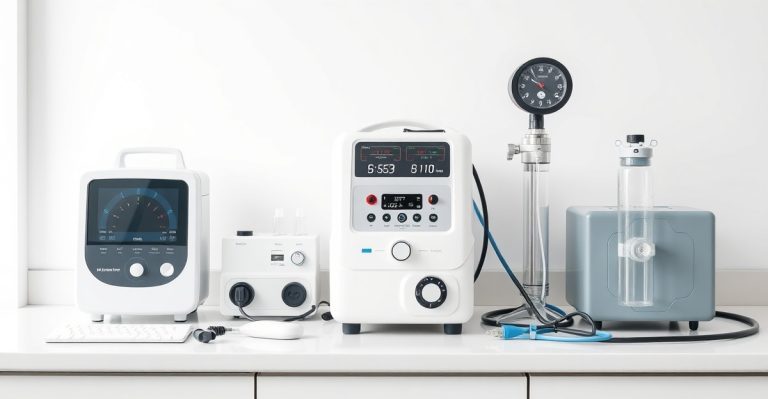
A proper home ozone setup has several components. Cutting corners on equipment is not recommended, you are working with a reactive gas, and quality matters for both safety and therapeutic effectiveness.
| Equipment | Purpose | Approximate Cost |
|---|---|---|
| Medical-grade ozone generator | Produces precise ozone concentrations from oxygen | $300 to $1,500 |
| Oxygen tank or oxygen concentrator | Feeds pure oxygen to the generator | $50 to $300 |
| Regulator with flow meter | Controls oxygen flow rate (typically 1/8 to 1/2 LPM) | $40 to $80 |
| Silicone tubing (ozone-resistant) | Connects generator to delivery device | $10 to $30 |
| Rectal catheters (disposable) | For rectal insufflation delivery | $15 to $30 (pack) |
| Luer-lock syringes (various sizes) | For collecting and delivering ozone gas | $15 to $25 (pack) |
| Destruct unit | Converts excess ozone back to oxygen safely | $30 to $80 |
| Humidifier (for ear insufflation) | Moistens ozone gas before ear delivery | $20 to $50 |
| Bubbler stone (for ozonated water) | Diffuses ozone into water | $5 to $15 |
Total estimated cost for a basic home setup: $500 to $2,000, depending on the generator you choose and which delivery methods you plan to use. The generator itself is the biggest variable, entry-level units start around $300, while high-end medical-grade generators with precise gamma controls can run $1,000 to $1,500 or more.
A few important notes on equipment selection: Always use ozone-resistant materials. Ozone degrades rubber, latex, PVC, and many common plastics. Your tubing must be silicone, and connectors should be glass, PTFE, or kynar. If your tubing is crumbling, discolored, or has a chemical smell, replace it immediately, degraded materials can release toxic compounds.
Safety Protocols: The Non-Negotiables
Home ozone therapy is generally safe when protocols are followed. But “generally safe” is not the same as “impossible to misuse.” Here are the rules that are not optional:
1. Never inhale ozone. This bears repeating because it is literally the difference between a beneficial therapy and a trip to the emergency room. Ozone is a potent lung irritant at any therapeutic concentration. Lung tissue lacks the antioxidant enzyme defenses that the gut mucosa, skin, and blood possess. Even brief inhalation of concentrated ozone can cause coughing, chest tightness, and inflammation. Always use your generator in a well-ventilated room and use a destruct unit to capture any excess gas.
2. Use medical-grade oxygen, not ambient air. Ozone generators that use ambient air produce nitrogen oxides alongside ozone, these are genuinely toxic compounds. A proper medical ozone generator requires a feed of pure oxygen from either an oxygen tank or an oxygen concentrator rated for ozone use.
3. Start low, go slow. Begin with lower concentrations and volumes, then increase gradually over weeks. More is not always better with ozone, there is a therapeutic window, and exceeding it can cause oxidative stress rather than the beneficial hormetic (adaptive) response you are looking for.
4. Know your contraindications. Ozone therapy is contraindicated in G6PD deficiency (a genetic enzyme disorder affecting red blood cells), active hyperthyroidism, the first trimester of pregnancy, and during active hemorrhage. If you have any of these conditions, ozone therapy is not appropriate regardless of the delivery method.
5. Maintain your equipment. Check tubing for degradation regularly. Ensure your generator is producing accurate concentrations. Replace disposable components (catheters, syringes) as recommended. A malfunctioning generator that produces unpredictable concentrations is a safety hazard.
Home vs. Clinical Ozone: What Can You Do Where?
Not all ozone therapies are appropriate for home use. The general rule is simple: if it involves needles, blood, or injection, it belongs in a clinic with a trained practitioner. If it involves introducing ozone through a natural body opening or through intact skin, it can potentially be done at home with proper equipment and education.
| Method | Home Use? | Clinic Required? | Notes |
|---|---|---|---|
| Rectal insufflation | Yes | No | Most popular home method; systemic effects |
| Ozonated water | Yes | No | Easiest method; mild systemic and local effects |
| Ear insufflation | Yes | No | Requires humidifier; good for sinus and ear issues |
| Limb bagging | Yes | No | Topical use for wounds, infections, joints |
| Ozone sauna (full body) | Possible | No | Requires dedicated sauna cabinet ($2,000+) |
| Major autohemotherapy (MAH) | No | Yes | Requires IV access, blood draw, sterile technique |
| 10-pass ozone | No | Yes | Specialized equipment; trained physician only |
| Prolozone injections | No | Yes | Joint injection technique; requires sterile procedure |
Getting Started: A Practical Roadmap
If you are considering home ozone therapy, here is a sensible sequence that minimizes risk and maximizes your chances of a good outcome:
Step 1: Get professional guidance first. Ideally, get at least one or two clinical ozone treatments from a trained practitioner before attempting anything at home. This lets you experience the therapy, ask questions, observe proper technique, and establish a baseline for how your body responds. Some practitioners offer “home ozone training” sessions specifically for this purpose.
Step 2: Invest in quality equipment. This is not an area to bargain-hunt. Cheap generators with imprecise concentration controls are not just less effective, they can produce inconsistent or dangerously high ozone outputs. Look for generators from established manufacturers with clear gamma (mcg/ml) readouts, consistent output verified by independent testing, and a track record in the ozone therapy community.
Step 3: Start with one method. Most people begin with either rectal insufflation or ozonated water. Master the setup, the procedure, the cleanup, and your body’s response before branching into additional delivery methods.
Step 4: Track everything. Keep a simple log of dates, ozone concentrations, volumes, duration, and how you feel during and after each session. Note any detox reactions, energy changes, sleep effects, or symptom improvements. This data is invaluable for adjusting your protocol and for sharing with any practitioners who are guiding your care.
The Cost Equation: Home vs. Clinic Over Time
One of the primary motivations for home ozone therapy is cost. Here is how the numbers typically work out:
A clinical ozone session (rectal insufflation or MAH) costs $100 to $400 per visit. If you are doing two sessions per week, that is $800 to $3,200 per month, a significant financial commitment that is rarely covered by insurance.
A home ozone setup costs $500 to $2,000 upfront, with ongoing costs of roughly $20 to $50 per month for oxygen refills, replacement catheters, and occasional equipment maintenance. After your initial investment, each home session costs only a few dollars in consumables.
For someone planning to use ozone therapy long-term (which is common for chronic conditions), the home setup typically pays for itself within two to four months compared to regular clinic visits. That said, some people prefer a hybrid approach, using home rectal insufflation for regular maintenance while visiting a clinic periodically for MAH or other IV ozone therapies that cannot be done at home.
Who Should Not Do Home Ozone Therapy
Certain people should avoid home ozone entirely and only receive treatment under medical supervision:
- G6PD deficiency: Ozone can trigger hemolytic anemia in people with this genetic enzyme deficiency. Get tested before starting ozone therapy
- Hyperthyroidism: Ozone may stimulate thyroid function further
- Pregnancy: Insufficient safety data
- Active bleeding disorders: Ozone has mild anticoagulant properties
- Recent organ transplant: Immune stimulation from ozone could theoretically trigger rejection
Choosing an Ozone Generator
Not all ozone generators are appropriate for medical use. Key features to look for:
- Gamma calibration: The generator must allow you to set precise ozone concentrations (measured in mcg/mL or gamma)
- Corona discharge technology: Medical-grade generators use corona discharge, not UV. UV generators produce too little ozone for therapeutic use
- Ozone-resistant construction: Internal components must be ozone-resistant (quartz glass, silicone, PTFE)
- Flow rate compatibility: The generator should work with your oxygen regulator’s flow rate (typically 1/8 to 1 LPM for insufflation)
Popular medical-grade home generators include the O3Elite series, Promolife Dual Cell, and SimplyO3. Prices range from $800 for basic models to $2,500 for advanced units with digital readouts and multiple output ports.
Frequently Asked Questions
How often should I do rectal ozone insufflation at home?
Most protocols recommend two to five times per week during an active treatment phase, then tapering to one to three times per week for maintenance. Some practitioners suggest daily use for acute conditions. Start with two to three times per week and adjust based on your response. Consistency matters more than aggressive frequency, regular treatments over months produce better outcomes than intense short-term protocols followed by long gaps.
Can I use an oxygen concentrator instead of an oxygen tank?
Yes, but with caveats. Oxygen concentrators produce 90 to 95 percent pure oxygen, compared to 99.5 percent or higher from medical-grade tanks. For rectal insufflation and most home applications, a quality concentrator is acceptable and more convenient since there are no tank refills and no risk of running out mid-treatment. However, some practitioners prefer tanks for the higher oxygen purity. If you use a concentrator, choose one rated for ozone use and producing at least 93 percent oxygen at your desired flow rate.
Is home ozone therapy legal?
Ozone therapy occupies a regulatory gray area in many countries. In the United States, ozone generators marketed for therapeutic use are regulated, but generators sold as water purifiers or for other non-medical purposes are widely available. Using them for personal health purposes is a matter of individual choice, similar to using a sauna or supplement. Ozone therapy is not FDA-approved for any medical condition, though it is widely used in integrative medicine clinics. In countries like Germany, Austria, Italy, Spain, and Russia, ozone therapy has a more established legal and medical framework with formal training programs and clinical guidelines.
What is the difference between ozone therapy and ozone from an air purifier?
They are completely different things. Therapeutic ozone is a precise concentration of O3 generated from medical-grade oxygen, delivered to the body through routes that can safely process it (blood, gut mucosa, skin). Ozone from air purifiers is generated from ambient air, produces nitrogen oxides as byproducts, and is designed for room disinfection, not human therapy. Never use an air purifier “ozone machine” as a therapy device. The equipment is fundamentally different, and using them interchangeably is genuinely dangerous.
Related Reading
This article is part of our in-depth guide to ozone therapy. For a complete overview, including clinical applications, the science behind ozone’s mechanisms, and how to find a qualified practitioner, see our pillar article: Ozone Therapy: The Complete Guide.
You may also be interested in:
- 10-Pass Ozone Therapy, the high-dose clinical protocol that requires specialized equipment and a trained physician.