10-Pass Ozone Therapy: What It Is, How It Differs, and Is It Worth the Cost?
At a Glance
- 10-pass ozone therapy (hyperbaric ozone autohemotherapy) delivers 10 cycles of ozone-blood mixing in a single session, roughly 10 times the ozone exposure of standard MAH.
- The treatment uses a specialized device (originally the Herrmann/Zotzmann Ozonosan) that draws blood, ozonates it under pressure, and returns it, repeating the cycle 10 times.
- Cost ranges from $800 to $2,500 per session, significantly more than standard MAH ($150 to $400).
- Commonly used for chronic Lyme disease, chronic infections, autoimmune conditions, and as an intensive treatment for patients who have plateaued on standard ozone protocols.
- The evidence base is largely clinical and observational, no large randomized controlled trials exist specifically for 10-pass.
If you have been researching ozone therapy for any length of time, you have probably encountered the term “10-pass”, often presented as the most powerful form of ozone therapy available. It is the treatment that ozone therapy clinics promote for their most complex cases, the protocol that generates both enthusiasm and skepticism in roughly equal measure, and the procedure that carries the highest price tag in the ozone therapy world.
But what exactly is 10-pass ozone therapy? How does it differ from standard major autohemotherapy (MAH)? And is the dramatically higher cost justified by the results? This article examines what we actually know, and what we do not.
What Is 10-Pass Ozone Therapy?
To understand 10-pass, you first need to understand standard major autohemotherapy (MAH). In standard MAH, a physician draws approximately 100 to 250 ml of your blood into a glass bottle or bag, mixes it with a precise concentration of ozone/oxygen gas, and returns the ozonated blood to your body through an IV. This is one “pass”, one cycle of draw, ozonate, return.
10-pass ozone therapy, also called high-dose ozone therapy (OHT) or hyperbaric ozone autohemotherapy, repeats this cycle ten times in a single session. Using a specialized device, 200 ml of blood is drawn, mixed with 200 ml of ozone at a concentration of 70 mcg/ml under positive pressure (hyperbaric conditions), and returned. This process is repeated ten times, exposing a total of approximately 2,000 ml of blood to ozone during the session.
The math is straightforward: ten passes delivers roughly ten times the total ozone dose of a single standard MAH treatment. Where a standard MAH might deliver 2,000 to 6,000 mcg of ozone total, a 10-pass session delivers approximately 140,000 mcg (140 mg) of ozone. That is a dramatic increase in dose intensity.
The Herrmann/Zotzmann Protocol
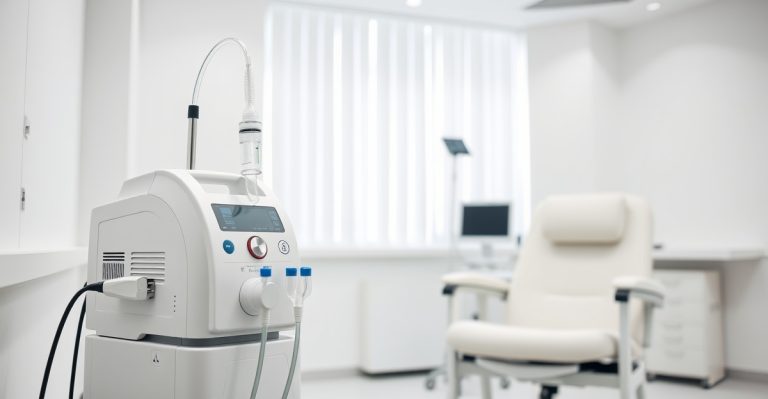
The 10-pass technique was developed by Dr. Johann Lahodny, an Austrian physician, using the Zotzmann Ozonosan (later called the Herrmann device), a specialized ozone delivery system manufactured in Germany. The device is purpose-built for multi-pass autohemotherapy and includes features that standard MAH equipment lacks:
- Hyperbaric ozone mixing: The blood-ozone mixture is exposed under positive pressure, which increases ozone dissolution into the blood beyond what is achievable at atmospheric pressure.
- Automated cycling: The device manages the draw-ozonate-return cycle with consistent volumes and pressures, reducing variability and practitioner error.
- Heparin integration: A small amount of heparin (blood thinner) is used to prevent clotting during the extended procedure, which lasts 60 to 90 minutes.
- Closed system: The blood remains in a closed circuit, reducing contamination risk during the multiple cycles.
The original protocol specifies 200 ml blood per pass, 200 ml ozone/oxygen gas at 70 mcg/ml concentration, positive pressure of approximately 0.8 bar, and all ten passes completed in a single session. Some practitioners have modified this protocol, using fewer passes (5-pass or 7-pass), different concentrations, or different volumes, but the term “10-pass” specifically refers to the full ten-cycle protocol.
Who Uses 10-Pass and For What?
10-pass ozone therapy is most commonly used for complex, chronic conditions where standard ozone protocols have provided some benefit but have plateaued, or where the severity of the condition warrants a more intensive approach from the start. The most common clinical applications include:
Chronic Lyme disease and co-infections: This is probably the single most common reason patients seek 10-pass therapy. The theory is that the higher ozone dose provides greater antimicrobial activity against Borrelia burgdorferi and common co-infections (Babesia, Bartonella, Ehrlichia). Many Lyme-literate physicians who offer ozone therapy consider 10-pass their most potent ozone-based intervention for persistent Lyme symptoms.
Chronic viral infections: Including Epstein-Barr virus (EBV) reactivation, chronic hepatitis, herpes simplex, and other persistent viral conditions. Ozone has demonstrated antiviral properties in laboratory studies, and the higher dose delivered by 10-pass is hypothesized to be more effective against entrenched viral reservoirs.
Autoimmune conditions: Some practitioners use 10-pass as an immunomodulatory treatment for autoimmune diseases, including rheumatoid arthritis, lupus, multiple sclerosis, and Hashimoto’s thyroiditis. The rationale is that ozone’s immunomodulatory effects, rather than immunosuppressive effects, may help rebalance a dysregulated immune system.
Mold illness and biotoxin exposure: Patients with chronic inflammatory response syndrome (CIRS) related to mold exposure sometimes undergo 10-pass as part of a in-depth detoxification and immune support protocol.
Cancer support: Some integrative oncology clinics offer 10-pass as an adjunctive therapy alongside conventional cancer treatment. The intent is to support immune function and potentially enhance the oxidative stress on cancer cells, though evidence for this application is limited to case reports and small series.
Standard MAH vs. 10-Pass: A Direct Comparison
| Feature | Standard MAH | 10-Pass Ozone |
|---|---|---|
| Blood volume per session | 100 to 250 ml | ~2,000 ml (200 ml x 10) |
| Total ozone dose | 2,000 to 6,000 mcg | ~140,000 mcg |
| Pressure | Atmospheric (gravity flow) | Hyperbaric (~0.8 bar) |
| Session duration | 30 to 45 minutes | 60 to 90 minutes |
| Equipment required | Standard ozone generator, glass bottle, IV supplies | Specialized Herrmann/Zotzmann device ($30,000+) |
| Heparin needed | No (single pass, blood does not clot) | Yes (prevents clotting during extended procedure) |
| Cost per session | $150 to $400 | $800 to $2,500 |
| Can be done at home | No | No |
| Training required | Medical provider, ozone training | Medical provider, ozone training + device-specific training |
| Evidence base | Multiple RCTs for various conditions | Clinical observations, case reports, no RCTs |
Claims vs. Evidence: An Honest Assessment
Here is where intellectual honesty requires us to draw some clear lines.
What we can say with confidence: Ozone therapy, broadly, has a substantial evidence base supporting its biological effects, it stimulates antioxidant enzyme systems, modulates the immune response, improves oxygen delivery, and has documented antimicrobial properties. Standard MAH has been studied in randomized controlled trials for conditions including peripheral arterial disease, diabetic foot ulcers, chronic hepatitis, and low back pain.
What we cannot say with confidence: That 10-pass is specifically superior to standard MAH, or that the dramatically higher dose translates to proportionally better clinical outcomes. There are no published randomized controlled trials comparing 10-pass to standard MAH. The evidence for 10-pass specifically consists of clinical observations, practitioner reports, case series, and patient testimonials, not controlled studies.
This is an important distinction. The biological plausibility is there, higher ozone exposure likely does produce a more intense biological response. And the clinical reports from experienced practitioners are genuinely impressive in many cases. But “impressive clinical reports” is a lower standard of evidence than “demonstrated in controlled trials,” and the history of medicine is full of treatments that looked promising in clinical practice but did not hold up under rigorous testing.
Does this mean 10-pass does not work? No. It means we do not have the quality of evidence needed to make definitive claims about its superiority over standard MAH. For a treatment that costs five to ten times more per session, that uncertainty is relevant to the decision-making process.
What a 10-Pass Session Looks Like
If you decide to pursue 10-pass ozone therapy, here is what to expect:
Before the session: You will need adequate IV access, typically a large-bore IV catheter or, for patients doing repeated 10-pass sessions, sometimes a peripherally inserted central catheter (PICC line). You should be well-hydrated. Some clinics recommend specific supplements before and after treatment (vitamin C, glutathione, and other antioxidant support), though protocols vary.
During the session: The practitioner places the IV, administers a small dose of heparin, and connects you to the 10-pass device. The machine draws approximately 200 ml of blood, mixes it with ozone under pressure, and returns it. This cycle repeats ten times over 60 to 90 minutes. Most patients describe the procedure as tolerable but not comfortable, the blood draw and return can cause mild sensations of pressure or temperature change. Some patients feel energized during the treatment; others feel fatigued.
After the session: Some patients feel immediately energized; others feel tired or experience a “Herxheimer-like” reaction (flu-like symptoms, fatigue, headache) in the hours or days following treatment, particularly if the treatment is targeting chronic infections. These reactions are generally interpreted as a sign of microbial die-off and toxin release. They typically resolve within 24 to 72 hours.
Treatment frequency: Protocols vary widely depending on the condition and practitioner. Common schedules include weekly sessions for 6 to 10 weeks (intensive protocols), biweekly sessions for 3 to 6 months (moderate protocols), or monthly maintenance sessions after an initial intensive course.
Safety Considerations
10-pass ozone therapy carries the same general safety considerations as standard MAH (which has a well-established safety record when performed by trained practitioners) plus some additional factors related to the higher dose and extended procedure:
- Heparin use: The anti-coagulant required for the multi-pass procedure introduces a small additional risk. Patients with bleeding disorders or on blood-thinning medications need careful evaluation.
- Herxheimer reactions: These are more common and potentially more intense with 10-pass than with standard MAH, particularly in patients with heavy infectious or toxic burden.
- G6PD deficiency: As with all ozone therapy, G6PD deficiency is an absolute contraindication. This should be tested before any ozone autohemotherapy.
- Vein access: Repeated 10-pass sessions require reliable IV access with large-bore catheters, which can be challenging for patients with difficult veins.
10-Pass vs. EBOO
EBOO (Extracorporeal Blood Ozonation and Oxygenation) is sometimes compared to 10-pass. EBOO filters blood through a dialysis-like membrane while exposing it to ozone, treating a larger volume of blood in a continuous flow rather than discrete passes.
A 2022 study found that ozone dialysis (EBOO-like treatment) delivers three or more times the ozone exposure compared to other forms of ozone blood treatment, including 10-pass.
| Factor | 10-Pass | EBOO |
|---|---|---|
| Mechanism | Discrete passes with vacutainer | Continuous flow through membrane |
| Blood volume treated | ~2,000 ml | ~3,000-5,000 ml |
| Ozone exposure | High | Very high (3x+ more) |
| Session length | 60-90 min | 45-60 min |
Frequently Asked Questions
Is 10-pass ozone therapy ten times better than standard MAH?
Not necessarily. While it delivers roughly ten times the ozone dose, biological responses do not always scale linearly with dose. There is likely a curve of diminishing returns at some point. The clinical question is whether the additional dose provides meaningful additional benefit for your specific condition, and for some patients it clearly does, while for others, standard MAH may be sufficient. There is no published data directly comparing clinical outcomes between the two approaches.
How many 10-pass sessions do I need?
This depends entirely on the condition being treated and your individual response. For chronic Lyme disease, practitioners commonly recommend 6 to 10 sessions as an initial course. For autoimmune conditions, treatment courses may be longer. Some patients do a short intensive series and then transition to periodic maintenance sessions. Your practitioner should be evaluating your progress and adjusting the protocol accordingly, not committing you to a fixed number of sessions regardless of response.
Can I do 10-pass at home?
No. 10-pass ozone therapy requires specialized equipment costing $30,000 or more, IV access and blood handling, heparin administration, and a trained medical professional to perform the procedure safely. This is strictly a clinical treatment. If you are interested in home ozone therapy, rectal insufflation and other home-appropriate methods are available and can provide meaningful systemic ozone exposure at a fraction of the cost.
Is 10-pass safe?
When performed by a trained practitioner using proper equipment and protocol, 10-pass has a good safety record. Serious adverse events are rare in the published literature and practitioner reports. The most common issue is Herxheimer reactions, which are uncomfortable but not dangerous. However, the procedure is more complex than standard MAH and requires additional precautions (heparin management, extended session monitoring). Choose a practitioner with specific training and experience in the 10-pass technique, not someone who has simply purchased the equipment.
Related Reading
This article is part of our thorough guide to ozone therapy. For a complete overview, including the science behind how ozone works, all available delivery methods, and guidance on finding a qualified practitioner, see our pillar article: Ozone Therapy: The Complete Guide.
You may also be interested in:
- Ozone Therapy at Home, a guide to safe, cost-effective home ozone methods like rectal insufflation and ozonated water.




One Comment