Eczema: A Complete Guide to Understanding and Managing Atopic Dermatitis
Eczema: At a Glance
- What it is: A chronic inflammatory skin condition causing dry, itchy, red, and irritated skin
- Most common type: Atopic dermatitis, affecting roughly 10% of adults and up to 20% of children worldwide
- Key driver: A combination of genetic predisposition, immune system overactivity, and a weakened skin barrier
- Not contagious: You cannot catch eczema from someone else
- Treatable: While there is no cure, a growing number of therapies, from topical creams to biologics and integrative approaches, can bring significant relief
If you have ever dealt with skin that itches so badly it keeps you up at night, cracks when you move your fingers, or flares up at the worst possible moment, you already know how disruptive eczema can be. It is not just a rash. It is a condition that can shape your daily routine, your wardrobe choices, your sleep, and even your mental health.
This guide walks you through everything worth knowing about eczema: what causes it, how to recognize it, what treatments actually work, and which newer and integrative strategies are showing real promise. Whether you are newly diagnosed or have been managing flares for years, there is something here for you.
What Exactly Is Eczema?
Eczema is a general term for a group of conditions that make the skin inflamed, itchy, and often red or discolored. The word comes from the Greek “ekzein,” meaning “to boil out,” which is a pretty accurate description of how a bad flare can feel.
When doctors say “eczema,” they are usually referring to atopic dermatitis, the most common form. “Atopic” means there is a genetic tendency to develop allergic conditions like asthma, hay fever, and, yes, eczema. These three often travel together in what allergists call the “atopic triad” or “atopic march.”[1]
At its core, eczema involves two problems happening at once. First, your skin barrier is not working properly, so it loses moisture too quickly and lets irritants in too easily. Second, your immune system overreacts to things that should not be a big deal, triggering inflammation that produces the itch-scratch cycle most eczema sufferers know all too well.[2]
Types of Eczema
Eczema is not one-size-fits-all. There are several distinct types, each with its own patterns and triggers.
Atopic Dermatitis
The most common form, typically starting in childhood. It tends to appear in the creases of the elbows, behind the knees, and on the face and neck. It is closely linked to a family history of allergies and asthma.[1]
Contact Dermatitis
This occurs when your skin reacts to something it touches. There are two subtypes: allergic contact dermatitis (a true immune reaction, like a nickel allergy) and irritant contact dermatitis (direct damage from harsh chemicals, soaps, or repeated hand washing).[3]
Dyshidrotic Eczema (Pompholyx)
Small, intensely itchy blisters form on the edges of the fingers, toes, palms, and soles. It is more common in women and tends to worsen in warm weather or during periods of stress.[4]
Nummular Eczema
Coin-shaped patches of irritated skin, often on the legs, arms, or torso. It can be triggered by dry skin, insect bites, or skin injuries, and it is sometimes mistaken for ringworm.
Seborrheic Dermatitis
This affects areas rich in oil glands: the scalp, face, and upper chest. In infants it is known as “cradle cap.” In adults, it often appears as stubborn dandruff or flaky patches around the nose and eyebrows. The yeast Malassezia plays a role in this type.[5]
Stasis Dermatitis
Linked to poor circulation in the lower legs, stasis dermatitis typically affects older adults. The skin becomes swollen, discolored, and itchy, often around the ankles. Managing the underlying venous insufficiency is key to treatment.
What Causes Eczema? The Genetics-Immune-Barrier Connection
There is no single cause of eczema. Instead, it arises from an interplay of genetic susceptibility, immune dysfunction, and environmental factors.
The Filaggrin Gene
One of the most important discoveries in eczema research has been the role of filaggrin, a protein essential for building and maintaining the skin barrier. Mutations in the FLG gene, which codes for filaggrin, are found in roughly 30% of people with atopic dermatitis. When filaggrin is deficient, the skin loses water more easily and becomes vulnerable to allergens and microbes.[6]
Immune System Overactivity
In eczema, a branch of the immune system (the Th2 pathway) is dialed up too high. This leads to excess production of inflammatory molecules like interleukin-4 (IL-4) and interleukin-13 (IL-13), which drive the itch, redness, and swelling characteristic of flares. Understanding this pathway has led directly to newer biologic treatments.[7]
Common Triggers
- Environmental allergens: Dust mites, pet dander, pollen, and mold
- Irritants: Soaps, detergents, fragrances, wool, and synthetic fabrics
- Climate: Cold, dry air in winter; excessive sweating in summer
- Stress: Emotional stress reliably worsens eczema in most people, likely through cortisol and neuropeptide pathways[8]
- Food allergens: In some children, foods like milk, eggs, peanuts, and wheat can trigger flares (though food triggers in adults are less clear-cut)
- Infections: Staphylococcus aureus colonizes the skin of up to 90% of eczema patients and can worsen flares[9]
- Hormonal shifts: Many women notice flares around their menstrual cycle or during pregnancy
Symptoms by Age: How Eczema Looks at Different Life Stages
Infants (0 to 2 Years)
Eczema in babies usually shows up on the cheeks, forehead, and scalp as red, weepy, or crusty patches. The diaper area is typically spared (the moisture actually helps). Babies cannot tell you they itch, but you will notice them rubbing their face against bedding or becoming unusually fussy.
Children (2 to 12 Years)
As kids grow, eczema tends to migrate to the creases: the inner elbows, behind the knees, wrists, and ankles. The skin often becomes thicker and drier (a process called lichenification) from repeated scratching. Some children also develop patches around the mouth or on the eyelids.
Teens and Adults
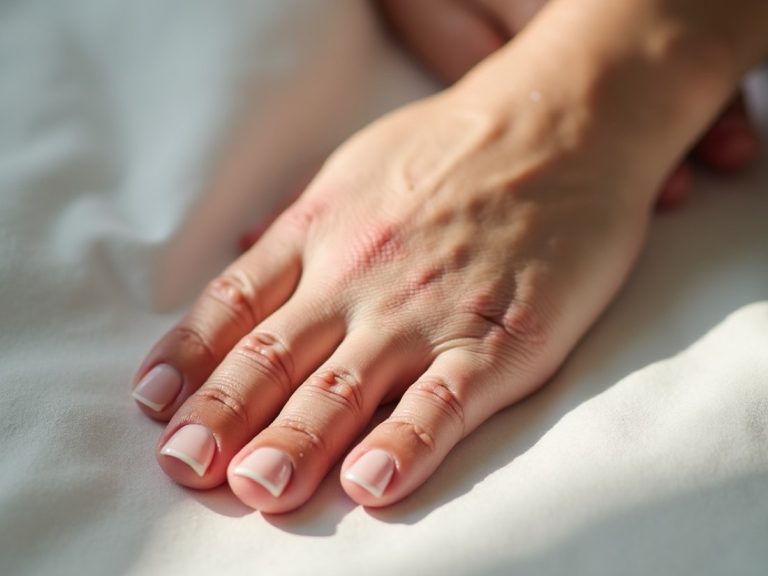
Adult eczema frequently affects the hands, eyelids, neck, and the bend of the arms and legs. The skin may look less red and more brownish or grayish, especially on darker skin tones. Many adults describe a persistent, low-grade itch punctuated by intense flares. Hand eczema can be particularly stubborn and disabling, especially for people who work with water, chemicals, or frequent hand washing.
Getting a Diagnosis
There is no single blood test or biopsy for eczema. Diagnosis is clinical, meaning your doctor examines your skin, asks about your history, and looks for characteristic patterns. Most dermatologists follow criteria that include chronic or relapsing itch, typical distribution for your age, a personal or family history of atopy, and visible signs of dry or inflamed skin.[10]
Patch testing may be done if contact dermatitis is suspected. Allergy testing (skin prick or blood IgE tests) can be helpful in children when specific food triggers are suspected, but these tests have a high false-positive rate and should be interpreted carefully.
Conventional Treatments: Building Your Toolkit
Eczema treatment follows a stepwise approach. You start with the basics and add more targeted therapies as needed.
Step 1: Moisturizers (Emollients)
This is the foundation of all eczema care. A good moisturizer applied generously and frequently (at least twice daily, and always after bathing) helps restore the skin barrier and reduce the need for medications. Look for fragrance-free creams or ointments. Ointments like plain petroleum jelly are the most effective at locking in moisture, though they can feel greasy. Ceramide-containing moisturizers may offer additional barrier repair.[11]
Step 2: Topical Corticosteroids
These remain the first-line anti-inflammatory treatment for eczema flares. They come in a range of potencies, from mild (hydrocortisone 1%) to very potent (clobetasol). The right strength depends on the severity and location of your eczema. For example, mild steroids are used on the face and skin folds, while stronger ones may be needed on thick-skinned areas like the palms and soles.
When used correctly, topical steroids are safe and effective. Problems like skin thinning generally arise from prolonged use of potent steroids on sensitive areas. A common strategy is “proactive therapy,” where you apply a low-potency steroid two to three times per week to areas that tend to flare, even when the skin looks clear, to prevent relapses.[12]
Step 3: Topical Calcineurin Inhibitors
Tacrolimus (Protopic) and pimecrolimus (Elidel) are non-steroidal anti-inflammatory creams that are particularly useful for sensitive areas like the face, eyelids, and groin where long-term steroid use is a concern. They can sting a bit when first applied, but this usually resolves within a few days.[13]
Step 4: PDE4 Inhibitors
Crisaborole (Eucrisa) is a topical PDE4 inhibitor approved for mild-to-moderate eczema. It works differently from steroids and calcineurin inhibitors, blocking an enzyme involved in inflammation. It is well-tolerated, though some people experience a brief burning sensation.
Step 5: JAK Inhibitors
This is a newer class of treatment. Topical ruxolitinib (Opzelura) was approved for mild-to-moderate atopic dermatitis and can provide rapid itch relief. Oral JAK inhibitors (abrocitinib, upadacitinib, baricitinib) are options for moderate-to-severe disease that has not responded to other treatments. They work fast, often reducing itch within days, but they require monitoring due to potential side effects including infections and changes in blood counts.[14]
Step 6: Biologics
Dupilumab (Dupixent) was a turning point in eczema treatment when it launched in 2017. It is a monoclonal antibody that blocks IL-4 and IL-13, two key drivers of the Th2 inflammation behind atopic dermatitis. Given as an injection every two weeks, it produces dramatic improvement in many patients with moderate-to-severe disease. Tralokinumab (Adbry) is another biologic option that specifically targets IL-13.[7]
These medications have a strong safety profile compared to older systemic treatments like cyclosporine or methotrexate, though they are expensive without insurance coverage.
Regenerative and Integrative Approaches
Conventional treatments work well for many people, but a growing body of evidence supports additional strategies that address eczema from the inside out.
Gut Health and the Microbiome
The connection between gut health and skin is not just speculation. Research shows that the gut microbiome in eczema patients is often less diverse, with fewer beneficial bacteria like Bifidobacterium and Lactobacillus species. Probiotic supplementation has shown modest benefit in preventing eczema in high-risk infants when given to mothers during pregnancy and to babies in early life. For treating existing eczema, the evidence is more mixed, but certain strains (particularly Lactobacillus rhamnosus GG and Bifidobacterium lactis) have shown benefit in some trials.[15]
Elimination Diets
If you suspect food triggers, working with a healthcare provider on a structured elimination diet can help identify culprits. The typical approach involves removing common allergens (dairy, eggs, wheat, soy, peanuts, tree nuts) for four to six weeks, then reintroducing them one at a time while monitoring your skin. Random or overly restrictive diets without guidance are not recommended, especially for children, as they can lead to nutritional deficiencies.
Vitamin D
Multiple studies have linked low vitamin D levels with more severe eczema. A meta-analysis of randomized controlled trials found that vitamin D supplementation significantly improved eczema severity scores compared to placebo. Given that vitamin D is also important for immune regulation and skin barrier function, checking your levels and supplementing if deficient (most experts suggest aiming for 40 to 60 ng/mL) is a reasonable step.[16]
Omega-3 Fatty Acids
Omega-3s from fish oil (EPA and DHA) have anti-inflammatory properties that may benefit eczema. While study results are not universally positive, a number of trials have shown modest improvements in itch and severity, particularly at higher doses (around 3 to 4 grams of combined EPA/DHA daily). They are generally safe and come with cardiovascular benefits as a bonus.[17]
Red Light Therapy (Photobiomodulation)
Red and near-infrared light therapy is gaining attention as a non-invasive option for inflammatory skin conditions. The mechanism involves stimulating mitochondrial function in skin cells, reducing inflammatory markers, and promoting tissue repair. While research specifically on eczema is still in the early stages, the existing evidence, along with the strong safety profile, makes this an interesting option to explore alongside conventional treatment.[18]
Managing Flares: Practical Strategies
Even with the best ongoing treatment, flares happen. Here is how to handle them.
- Act early: At the first sign of a flare (increased itch, slight redness), step up your treatment. Waiting until your skin is raw and cracked makes recovery harder and longer.
- Wet wrap therapy: For severe flares, apply moisturizer or a prescribed topical, then cover the area with a damp layer of cotton fabric followed by a dry layer. This can dramatically boost absorption and provide soothing relief overnight.
- Bleach baths: Adding half a cup of regular household bleach to a full bathtub (or one teaspoon per gallon) creates a dilute solution that reduces Staph bacteria on the skin. Used two to three times per week, this simple approach has been shown to decrease flare frequency.[9]
- Keep nails short: This reduces skin damage from scratching, especially in children.
- Cool compresses: A cold, damp cloth on itchy skin can interrupt the itch-scratch cycle.
- Track your triggers: A simple diary noting flares alongside activities, foods, stress levels, and weather can reveal patterns you might otherwise miss.
Eczema and Mental Health
The psychological burden of eczema is real and often underappreciated. Studies consistently show higher rates of anxiety, depression, and sleep disturbance in people with eczema compared to the general population. Children with eczema are more likely to have behavioral difficulties and attention problems, likely driven in part by chronic sleep disruption.[19]
The itch itself is exhausting. It interrupts sleep, makes concentration difficult, and can feel socially isolating. Many people with visible eczema report feeling self-conscious or embarrassed, which can affect relationships and social participation.
If eczema is affecting your mood or quality of life, it is worth bringing this up with your doctor. Mental health support, whether through therapy, stress management techniques, or medication when appropriate, is a legitimate and important part of eczema care. Cognitive behavioral therapy has shown particular promise for breaking the itch-scratch cycle and improving coping skills.[20]
Eczema in Babies vs. Adults: Key Differences
While the underlying disease is the same, managing eczema in a baby is quite different from managing it in yourself.
In babies, the primary concerns are identifying and avoiding triggers (including potential food allergens), maintaining the skin barrier with gentle cleansers and thick moisturizers, and using the mildest effective treatments. Most infants do best with fragrance-free ointments and low-potency topical steroids for flares.
In adults, the disease tends to be more chronic and may require escalation to stronger topicals, phototherapy, or systemic treatments. Adults also have the added burden of occupational triggers (hand washing, chemical exposure) and the psychological toll that comes with visible, long-lasting disease.
The good news: roughly half of children with eczema will see significant improvement or complete resolution by adolescence, though they may retain a tendency toward dry, sensitive skin throughout life.[1]
When to See a Specialist
See a dermatologist if:
- Your eczema is not responding to over-the-counter moisturizers and mild topical steroids
- You are having frequent or severe flares despite consistent skin care
- Your eczema is affecting your sleep, work, or mental health
- You see signs of skin infection: increased redness, warmth, swelling, pus, or honey-colored crusting
- You are interested in newer treatments like biologics or JAK inhibitors
- Your child has widespread or worsening eczema that is not improving with basic measures
An allergist can also be valuable if you suspect environmental or food allergies are contributing to your flares.
The Bottom Line
Eczema is a complex condition, but it is more treatable today than at any point in history. The combination of a solid skin care routine, appropriate medical therapy, trigger avoidance, and integrative strategies like gut health optimization and vitamin D can make a meaningful difference in your quality of life. The key is finding the right combination for your body, and being patient with the process.
Frequently Asked Questions
Does vitamin D supplementation help with eczema?
A meta-analysis of randomized controlled trials found that vitamin D supplementation significantly improved eczema severity scores compared to placebo. The guide points to a target blood level of 40 to 60 ng/mL. It is presented as one supportive option rather than a standalone cure.
Do omega-3 fatty acids improve eczema symptoms?
A number of trials have shown modest improvements in itch and severity, particularly at higher doses of around 3 to 4 grams of combined EPA and DHA daily. The benefit is described as modest, not dramatic, so the guide frames omega-3s as a supporting measure alongside standard care.
How quickly do treatments work?
Timeframes vary by approach. JAK inhibitors can reduce itch within days, while an elimination diet protocol runs about four to six weeks before foods are reintroduced one at a time. Research on red light therapy for eczema is still in the early stages, so its timeframe is not established.
Are the newer eczema medications safe?
Biologics like dupilumab are described as having a strong safety profile compared to older systemic treatments such as cyclosporine or methotrexate, though they are expensive without insurance coverage. JAK inhibitors require monitoring due to potential side effects including infections and changes in blood counts. Topical steroid problems like skin thinning generally arise from prolonged use of potent steroids on sensitive areas.
Do probiotics work for eczema?
The evidence is split. Probiotics show a modest benefit in preventing eczema in high-risk infants when given prenatally and in early life, but for treating existing eczema the evidence is more mixed. Certain strains, Lactobacillus rhamnosus GG and Bifidobacterium lactis, have shown some benefit.
Will children outgrow eczema?
Roughly half of children with eczema will see significant improvement or complete resolution by adolescence, according to the guide. Atopic dermatitis affects roughly 10 percent of adults and up to 20 percent of children worldwide, and where it appears on the body tends to shift with age.
References
- Weidinger S, Novak N. Atopic dermatitis. Lancet. 2016;387(10023):1109-1122. doi:10.1016/S0140-6736(15)00149-X
- Elias PM, Hatano Y, Williams ML. Basis for the barrier abnormality in atopic dermatitis: outside-inside-outside pathogenic mechanisms. J Allergy Clin Immunol. 2008;121(6):1337-1343. doi:10.1016/j.jaci.2008.01.022
- Nassau S, Fonacier L. Allergic contact dermatitis. Med Clin North Am. 2020;104(1):61-76. doi:10.1016/j.mcna.2019.08.012
- Lofgren SM, Warshaw EM. Dyshidrosis: epidemiology, clinical characteristics, and therapy. Dermatitis. 2006;17(4):165-181. doi:10.2310/6620.2006.05021
- Dessinioti C, Katsambas A. Seborrheic dermatitis: etiology, risk factors, and treatments. J Clin Aesthet Dermatol. 2013;6(12):2-7. PMID: 24765221
- Palmer CN, Irvine AD, Terron-Kwiatkowski A, et al. Common loss-of-function variants of the epidermal barrier protein filaggrin are a major predisposing factor for atopic dermatitis. Nat Genet. 2006;38(4):441-446. doi:10.1038/ng1767
- Gandhi NA, Bennett BL, Graham NM, et al. Targeting key proximal drivers of type 2 inflammation in disease. Nat Rev Drug Discov. 2016;15(1):35-50. doi:10.1038/nrd4624
- Arndt J, Smith N, Tausk F. Stress and atopic dermatitis. Curr Allergy Asthma Rep. 2008;8(4):312-317. doi:10.1007/s11882-008-0050-6
- Huang JT, Abrams M, Tlougan B, et al. Treatment of Staphylococcus aureus colonization in atopic dermatitis decreases disease severity. Pediatrics. 2009;123(5):e808-e814. doi:10.1542/peds.2008-2217
- Eichenfield LF, Tom WL, Chamlin SL, et al. Guidelines of care for the management of atopic dermatitis. J Am Acad Dermatol. 2014;70(2):338-351. doi:10.1016/j.jaad.2013.10.010
- Lodén M. The clinical benefit of moisturizers. J Eur Acad Dermatol Venereol. 2005;19(6):672-688. doi:10.1111/j.1468-3083.2005.01326.x
- Wollenberg A, Barbarot S, Bieber T, et al. Consensus-based European guidelines for treatment of atopic eczema (atopic dermatitis) in adults and children: part I. J Eur Acad Dermatol Venereol. 2018;32(5):657-682. doi:10.1111/jdv.14891
- Ruzicka T, Bieber T, Schöpf E, et al. A short-term trial of tacrolimus ointment for atopic dermatitis. N Engl J Med. 1997;337(12):816-821. doi:10.1056/NEJM199709183371203
- Simpson EL, Lacour JP, Spelman L, et al. Baricitinib in patients with moderate-to-severe atopic dermatitis and inadequate response to topical corticosteroids. J Am Acad Dermatol. 2020;83(2):468-479. doi:10.1016/j.jaad.2020.03.032
- Zuccotti G, Meneghin F, Aceti A, et al. Probiotics for prevention of atopic diseases in infants: systematic review and meta-analysis. Allergy. 2015;70(11):1356-1371. doi:10.1111/all.12700
- Kim G, Bae JH. Vitamin D and atopic dermatitis: a systematic review and meta-analysis. Nutrition. 2016;32(9):913-920. doi:10.1016/j.nut.2016.01.023
- Koch C, Dölle S, Metzger M, et al. Docosahexaenoic acid (DHA) supplementation in atopic eczema: a randomized, double-blind, controlled trial. Br J Dermatol. 2008;158(4):786-792. doi:10.1111/j.1365-2133.2007.08430.x
- Avci P, Gupta A, Sadasivam M, et al. Low-level laser (light) therapy (LLLT) in skin: stimulating, healing, restoring. Semin Cutan Med Surg. 2013;32(1):41-52. PMID: 24049929
- Silverberg JI, Gelfand JM, Margolis DJ, et al. Association of atopic dermatitis with allergic, autoimmune, and cardiovascular comorbidities in US adults. Ann Allergy Asthma Immunol. 2018;121(5):604-612. doi:10.1016/j.anai.2018.07.042
- Chida Y, Steptoe A, Hirakawa N, et al. The effects of psychological intervention on atopic dermatitis: a systematic review and meta-analysis. Int Arch Allergy Immunol. 2007;144(1):1-9. doi:10.1159/000101940
- Psoriasis: A Complete Guide to Understanding and Managing Psoriasis
- Red Light Therapy: What the Evidence Actually Shows
- The Gut-Skin Connection: How Your Microbiome Affects Your Skin
- Vitamin D: Why Most People Are Deficient and What to Do About It