OxyHealth Hyperbaric Chamber: Unbiased Guide for Clinics, Athletes & Home Users
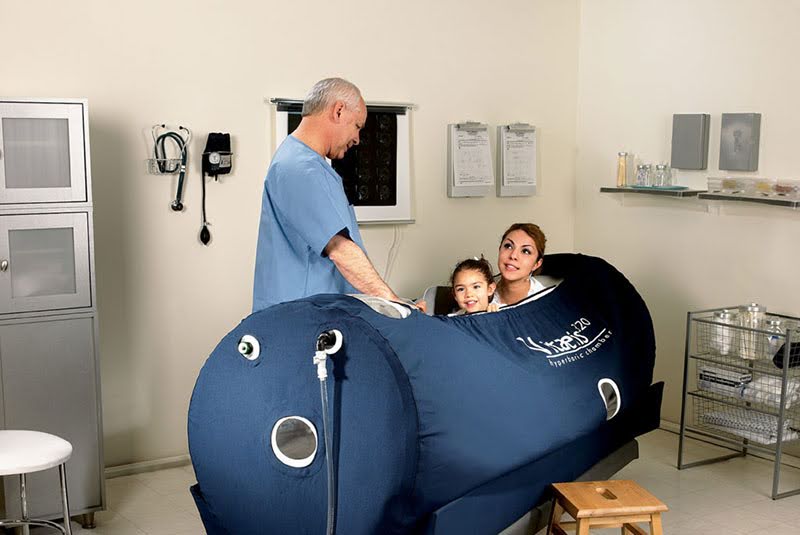
OxyHealth is the most established portable hyperbaric chamber brand, with over 18,000 chambers distributed in 28 years, a 5-year warranty, and FDA 510(k) clearance for altitude sickness. Models range from $6,500 to $30,000. All are soft-shell limited to 1.3 ATA, so they cannot deliver the 2.0 to 3.0 ATA that clinical treatment requires.
The OxyHealth hyperbaric chamber has a uniquely broad footprint: it turns up in sports performance labs, integrative rehab clinics, and, increasingly, well-managed home setups. That visibility sometimes blurs the line between what these chambers actually are and what their marketing implies. This guide covers the real specs, the certification facts, and the honest performance picture.
Key Takeaways
- OxyHealth’s line spans the Solace 210 at $6,500 to $8,000 up to the Fortius 420 at $25,000 to $30,000, per OxyHealth specifications (2026).
- OxyHealth reports distributing over 18,000 chambers in 28 years, more than any other portable brand (manufacturer-reported figure).
- Every OxyHealth model carries a 5-year warranty, roughly 2.5x longer than Summit to Sea or Newtowne, per OxyHealth (2026).
- All OxyHealth chambers are soft-shell limited to 1.3 ATA, a pressure that peer-reviewed analysis places below the therapeutic HBOT threshold, per Burman (2019).
- OxyHealth holds FDA 510(k) clearance for altitude sickness only, not for wound healing or neurological conditions.
What Models Does OxyHealth Make?
OxyHealth Chamber Models 2026
| Model | Diameter | Pressure | Price | Warranty |
|---|---|---|---|---|
| Solace 210 | 21 inches | 1.3 ATA | $6,500–$8,000 | 5 years |
| Respiro 270 | 27 inches | 1.3 ATA | $12,000–$16,000 | 5 years |
| Vitaeris 320 | 32 inches | 1.3 ATA | $18,000–$23,000 | 5 years |
| Quamvis 320 | 32 inches | 1.3 ATA | $20,000–$25,000 | 5 years |
| Fortius 420 | 42 inches | 1.3 ATA | $25,000–$30,000 | 5 years |
Why Does OxyHealth Lead the Home Chamber Market?
OxyHealth’s market position rests on four differentiators, some verifiable and some based on the company’s own reporting.
1. Warranty
OxyHealth offers a 5-year warranty across its entire product line. Summit to Sea and Newtowne offer 2 years, and most international brands offer 1 year. In a category where compressor reliability decides long-term cost, that coverage is a real practical advantage, not just a marketing claim.
2. Installed Base
OxyHealth reports over 18,000 chambers distributed in 28 years, which the company says exceeds all other portable brands combined.1 That figure comes from OxyHealth’s own materials and is not independently audited, but even discounted it points to the largest service network and parts supply chain among portable brands. When a chamber needs service years later, that infrastructure matters. For how OxyHealth compares against the wider field, see our portable hyperbaric chamber guide.
3. Construction Quality
The Vitaeris 320 uses a double-sided 44 oz polyurethane bladder with a rigid internal metal frame, 0.01-micron inline air filtration, and tamper-proof redundant pressure regulators. These are institutional-grade specifications applied to a consumer device.
4. Institutional Use
OxyHealth states that its chambers are used by US Special Forces and the International Olympic Committee.1 These are manufacturer-reported client claims rather than independently published procurement records, so weigh them as marketing context, not verified endorsement.
What Are the Limits of OxyHealth Chambers?
OxyHealth’s single biggest limitation is that every model is a soft-shell chamber capped at 1.3 ATA. The company does not make hard-shell or higher-pressure chambers, and that ceiling defines what the chambers can and cannot do.
Burman’s 2019 analysis in the South African Medical Journal is direct on this point: fabric chambers below 1.4 ATA hold FDA 510(k) clearance for acute mountain sickness only, and exposure below 2.0 ATA does not meet the accepted definition of therapeutic hyperbaric oxygen therapy.3 In practice:
- Oxygen delivery stays low. At 1.3 ATA, arterial oxygen tension is a fraction of the roughly 1,800 mmHg reached at a clinical 2.4 ATA on 100% oxygen. Burman notes that mild exposures on air deliver little more oxygen than breathing through a mask at sea level.3
- No bacteriostatic effect. The oxygen tensions that suppress microbial growth require pressures above the fabric-chamber range.3
- Clinical conditions need 2.0 to 3.0 ATA. OxyHealth chambers cannot reach this range.
- Higher-pressure alternatives exist. Brands such as OxyRevo and Dr. Hugo offer 1.5 to 2.0 ATA at comparable or lower prices, though they carry CE certification rather than FDA clearance.
None of this makes OxyHealth chambers useless. It means their evidence-backed use is altitude sickness and general recovery, not the clinical indications treated at hospital pressures. For where higher pressure actually matters, see our review of HBOT for wound healing.
What Does FDA Clearance Actually Mean Here?
OxyHealth holds FDA 510(k) clearance, cleared specifically for altitude sickness. The 510(k) pathway lets a device reach market by showing it is substantially equivalent to a legally marketed one. It is worth separating three terms that marketing tends to blur.
FDA cleared (510(k)): the device is substantially equivalent to an existing one for a named use. OxyHealth’s named use is acute altitude sickness.
FDA approved: a higher bar requiring the manufacturer to prove safety and effectiveness through clinical trials (PMA). OxyHealth chambers are not FDA approved, and no soft-shell home chamber is.
Medical-grade: a description of materials and build quality, not a regulatory status. It says nothing about which conditions a device is authorized to treat.
So FDA clearance for OxyHealth does not mean the chamber is authorized for wound healing or neurological conditions, and it does not mean the FDA has verified any wellness benefit.2
How Does OxyHealth Compare to Competitors?
OxyHealth vs Key Competitors (Home Soft Chambers)
| Brand | Entry Price | Max Pressure | Warranty | FDA Cleared | Made In |
|---|---|---|---|---|---|
| OxyHealth | $6,500 | 1.3 ATA | 5 years | Yes | USA |
| Summit to Sea | $4,000 | 1.3 ATA | 2 years | Yes | USA |
| Newtowne | $4,495 | 1.3 ATA | 2 years | Yes | USA |
| OxyRevo Apex32 | $8,499 | 1.5 ATA | Varies | No (CE) | International |
| Dr. Hugo | $6,000 | 1.5 ATA | Varies | No (CE) | China |
The OxyRevo and Dr. Hugo units offer 1.5 to 2.0 ATA at competitive prices with CE certification. Hard-shell options such as the Zeugma reach clinical pressures at a much higher cost. For US buyers who specifically need FDA clearance, OxyHealth remains the premium pick. For buyers who prioritize pressure capability over FDA status, cheaper higher-pressure alternatives exist.4
Which OxyHealth Model Is Right for You?
The right OxyHealth model depends on two things: how many people will use it and how much space you have.
- Solace 210 (21 inches): solo sessions only, tightest fit, lowest entry price, best for petite adults.
- Respiro 270 (27 inches): comfortable for one average-sized adult, fits most rooms.
- Vitaeris 320 (32 inches): roomy enough for one adult plus a child, or two smaller adults. The sweet spot for most buyers.
- Quamvis 320 (32 inches): same diameter as the Vitaeris but with an exterior rigid frame for added stability.
- Fortius 420 (42 inches): two adults at once, the largest soft-shell chamber available. Needs a 6×10 foot space.
For a full comparison of all home chamber options including non-OxyHealth brands, see our home chamber rankings guide and our cost breakdown.
Sources
- OxyHealth LLC. “Company history and institutional client documentation.” oxyhealth.com. Accessed August 2026. (Manufacturer-reported figures.)
- US Food and Drug Administration. “510(k) Premarket Notification.” fda.gov/medical-devices. Accessed August 2026.
- Burman F. “Low-pressure fabric hyperbaric chambers.” South African Medical Journal, 2019;109(4):284-288. PMID: 31084683. doi:10.7196/SAMJ.2019.v109i4.13524
- OxyRevo. “Apex series product specifications.” oxyrevo.com. Accessed August 2026.

3 Comments