MAH Ozone Therapy: Major Autohemotherapy Protocol, Evidence, and What to Expect
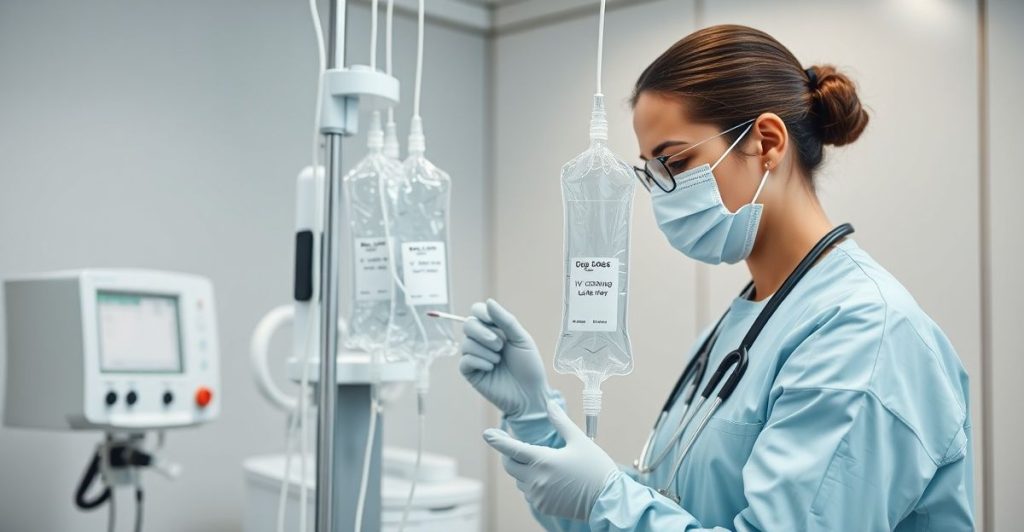
Major autohemotherapy (MAH) is the most widely studied form of intravenous ozone therapy, involving the withdrawal, ozonation, and reinfusion of a patient’s own blood. It has been used in clinical settings for over 60 years, with an adverse event rate estimated at 0.0007%.
Key Takeaways
- MAH draws 100-200 mL of blood, mixes it with ozone at 20-70 mcg/mL, and reinfuses it intravenously.
- The procedure takes 30-60 minutes per session, typically performed 1-3 times per week.
- MAH has more published research than any other ozone delivery method, with 70+ clinical trials.
- Evidence is strongest for peripheral vascular disease, chronic wounds, and as an adjunct in hepatitis and herpes infections.
- MAH differs from minor autohemotherapy, which uses much smaller blood volumes injected intramuscularly.
What Is Major Autohemotherapy?
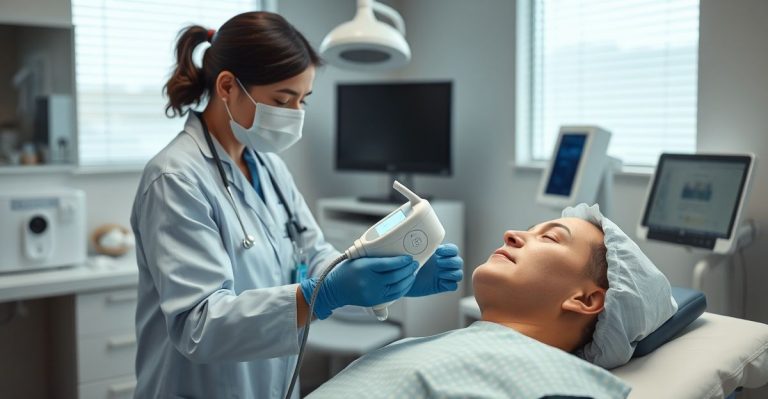
Major autohemotherapy is a systemic ozone delivery method. A practitioner draws 100-200 mL of the patient’s venous blood into a sterile glass bottle or bag containing an anticoagulant (typically heparin or sodium citrate). A precise volume of medical-grade ozone/oxygen gas mixture is then introduced into the blood at a controlled concentration. The ozonated blood is gently mixed and reinfused intravenously over 15-30 minutes.[1]
The procedure differs from direct IV ozone injection, which is not recommended by any major ozone therapy organization due to the risk of gas embolism. MAH ensures the ozone reacts with blood components ex vivo (outside the body) before reinfusion.
For more on the broader category of ozone blood therapy, see our complete guide.
The MAH Protocol in Detail
Step-by-Step Procedure
- Blood draw: 100-200 mL of venous blood is drawn from an arm vein into a sterile vacuum glass bottle or specialized ozone-resistant bag containing anticoagulant.
- Ozone generation: A medical-grade ozone generator produces an oxygen/ozone gas mixture at the prescribed concentration (20-70 mcg/mL).
- Mixing: 100-200 mL of ozone/oxygen gas is introduced into the blood. The bottle is gently rotated (never shaken) for 2-5 minutes to ensure complete mixing without hemolysis (red blood cell destruction).
- Reinfusion: The ozonated blood is returned to the patient through the same IV line over 15-30 minutes via gravity drip.
- Total session time: 30-60 minutes.
Ozone Concentration Ranges
| Concentration | Typical Use | Notes |
|---|---|---|
| 20-30 mcg/mL | Immunostimulation, chronic fatigue | Lower doses stimulate antioxidant pathways |
| 30-45 mcg/mL | Most common therapeutic range | Standard for infections, vascular conditions |
| 45-60 mcg/mL | Chronic infections, Lyme disease | Higher antimicrobial activity |
| 60-70 mcg/mL | Cancer support, severe infections | Upper therapeutic range; not routinely exceeded |
The World Federation of Ozone Therapy (WFOT) recommends concentrations between 15 and 50 mcg/mL as the generally safe therapeutic range. Concentrations above 80 mcg/mL are considered potentially harmful and should not be used.[2]
How MAH Works: Proposed Mechanisms
When ozone contacts blood, it does not circulate as ozone in the body. It reacts immediately with blood components, generating secondary messengers that produce the therapeutic effects:[3]
Oxidative preconditioning. Low-dose ozone exposure triggers the body’s antioxidant defense systems, upregulating superoxide dismutase (SOD), glutathione peroxidase, and catalase. This hormetic response (a small stress producing a protective adaptation) is considered the primary mechanism of MAH.
Improved oxygen delivery. Ozone increases levels of 2,3-diphosphoglycerate (2,3-DPG) in red blood cells, which shifts the oxygen-hemoglobin dissociation curve to the right. This means hemoglobin releases oxygen more readily to tissues.
Immune modulation. MAH stimulates cytokine production, particularly interferon-gamma and interleukins 2, 4, and 10. At lower concentrations, the effect is immunostimulatory. At higher concentrations, the effect shifts toward immunosuppressive/anti-inflammatory.
Improved blood rheology. Ozone treatment makes red blood cells more flexible and deformable, improving blood flow through small capillaries.
“The incidence of adverse effects of ozone therapy is estimated at 0.0007%, typically manifesting as transient euphoria, nausea, headache, or fatigue.”
Bocci V, Ozone: A New Medical Drug, 2nd ed., 2011
Evidence by Condition
MAH has been studied across numerous conditions. The quality of evidence varies significantly:
| Condition | Evidence Level | Key Findings |
|---|---|---|
| Peripheral artery disease | Moderate (multiple RCTs) | Improved walking distance, wound healing, reduced amputation rates |
| Diabetic foot ulcers | Moderate | Faster healing, reduced infection. Often used alongside standard wound care. |
| Hepatitis B and C | Low-moderate | Some trials show viral load reduction when combined with standard antivirals |
| Herpes simplex/zoster | Low-moderate | Reduced outbreak frequency and severity in small studies |
| Chronic fatigue | Low | Patient-reported improvements; few controlled trials |
| Cancer (adjunct) | Very low | Used to reduce chemo side effects. No evidence for direct anti-tumor activity. |
| Lyme disease | Very low | Anecdotal reports. No published RCTs. |
MAH vs. Minor Autohemotherapy
These two procedures share a name but differ substantially:
| Feature | Major Autohemotherapy | Minor Autohemotherapy |
|---|---|---|
| Blood volume | 100-200 mL | 2-5 mL |
| Delivery route | Intravenous (reinfusion) | Intramuscular injection |
| Primary effect | Systemic (bloodstream) | Immune stimulation (local) |
| Session duration | 30-60 minutes | 5-10 minutes |
| Cost per session | $150-350 | $50-100 |
| Evidence base | More extensive | Limited |
Minor autohemotherapy draws only a few milliliters of blood, mixes it with a small amount of ozone, and injects it intramuscularly (typically into the gluteal muscle). The idea is to create a localized immune reaction. It is primarily used for allergies, acne, and immune modulation.
MAH is the procedure most practitioners mean when they discuss “ozone IV therapy” or “ozone blood therapy.”
Finding a Trained Provider
MAH requires proper training in both the technique and the equipment. Providers should have:
- Training from recognized organizations such as the American Academy of Ozonotherapy (AAO) or the International Scientific Committee of Ozonetherapy (ISCO3)
- Medical-grade ozone generator with precise concentration control
- Proper blood handling protocols (sterile technique, anticoagulation, appropriate containers)
- Experience with dosing protocols for different conditions
MAH should be performed in a clinical setting by a licensed medical professional. It is not suitable for home use due to the IV access and blood handling requirements.
Treatment Schedule and Cost
A typical MAH protocol involves:
- Acute conditions: 2-3 sessions per week for 2-4 weeks
- Chronic conditions: 1-2 sessions per week for 6-12 weeks
- Maintenance: 1-2 sessions per month
Cost ranges from $150-350 per session in the US. Insurance does not typically cover MAH. A full course of 10-20 sessions costs $1,500-7,000 out of pocket.
Safety and Side Effects
MAH has an excellent safety profile when performed correctly. The most common side effects are mild and transient:
- Brief feeling of lightheadedness or euphoria
- Mild fatigue after the session
- Headache (uncommon)
- Nausea (rare)
Serious adverse events are extremely rare. A review of over 5 million MAH treatments estimated the adverse event rate at 0.0007%.[4]
Contraindications include G6PD deficiency (ozone can cause hemolytic anemia in these patients), hyperthyroidism, active hemorrhage, and pregnancy.
The Bottom Line
MAH is the best-studied and most widely used form of systemic ozone therapy. Its safety record is strong, and the evidence for certain conditions, particularly vascular disease and chronic wounds, is encouraging. For other conditions, the evidence remains preliminary. If you are considering MAH, choose a trained provider, understand the specific evidence for your condition, and set realistic expectations about what the treatment can and cannot do.
- Bocci V, Borrelli E, Travagli V, Zanardi I. The ozone paradox: ozone is a strong oxidant as well as a medical drug. Med Res Rev. 2009;29(4):646-682. doi:10.1002/med.20150
- World Federation of Ozone Therapy (WFOT). Review on Evidence Based Ozone Therapy. WFOT Scientific Advisory Committee. 2015.
- Bocci V. Ozone: A New Medical Drug. 2nd ed. Springer; 2011. doi:10.1007/978-90-481-9234-2
- Jacobs MT. Untersuchung uber Zwischenfalle und typische Komplikationen in der Ozon-Sauerstoff-Therapie. OzoNachrichten. 1982;1:5.
- Smith NL, Wilson AL, Gandhi J, et al. Ozone therapy: an overview of pharmacodynamics, current research, and clinical utility. Med Gas Res. 2017;7(3):212-219. doi:10.4103/2045-9912.215752
- Di Mauro R, Cantarella G, Bernardini R, et al. The biochemical and pharmacological properties of ozone: the smell of protection in acute and chronic diseases. Int J Mol Sci. 2019;20(3):634. doi:10.3390/ijms20030634


One Comment