Hyperbaric Sleep Chamber: Can You Sleep in One, and Should You?
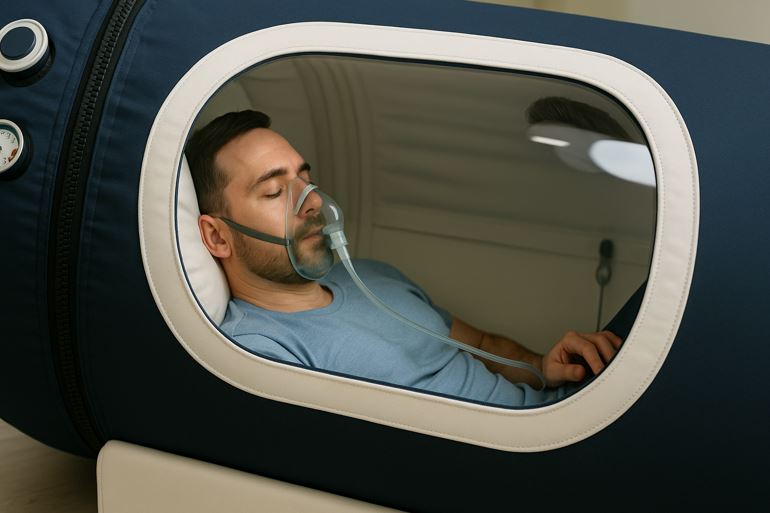
Sleeping overnight inside a hyperbaric chamber is not a medically supported practice. No clinical study has tested overnight HBOT, and no manufacturer or medical authority recommends it. Standard clinical sessions run 60 to 120 minutes at 2.0 to 3.0 ATA under supervision, not eight hours while you are asleep and cannot equalize your ears or respond to a problem. The concept spread after athletes like LeBron James were photographed in chambers, but the studied protocol is short and supervised.
What Is a Hyperbaric Sleep Chamber?
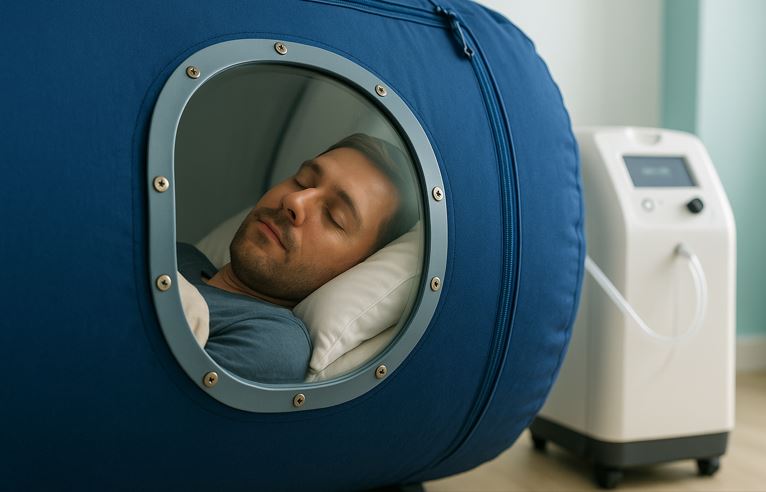
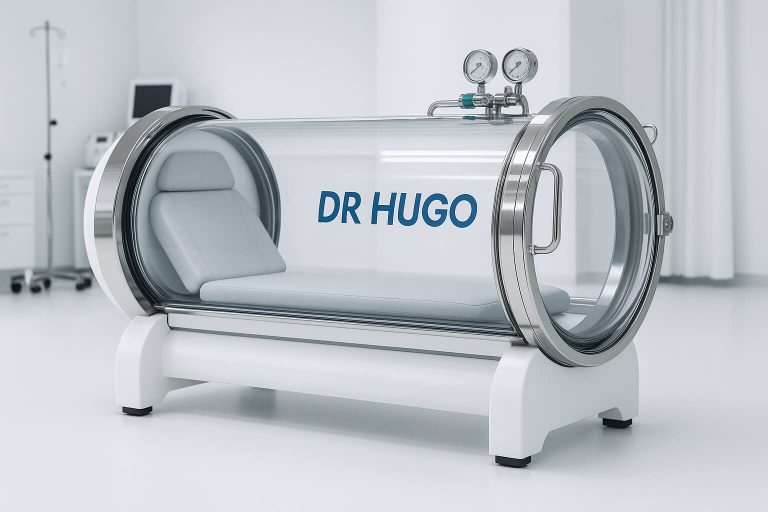
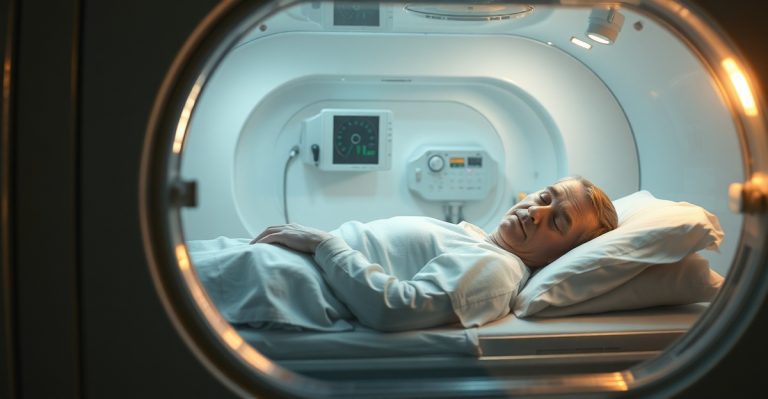
The term does not describe a distinct medical device. It refers to using a standard chamber, usually a soft-sided home unit, for an extended overnight stay rather than a timed clinical session. A soft chamber operates near 1.3 ATA on ambient air. A clinical hard chamber reaches 2.0 to 3.0 ATA with 100% oxygen and trained monitoring. Marketing sometimes implies overnight use multiplies the benefit, but there is no protocol, no dosing study, and no device cleared for sleeping. Our home HBOT chamber guide and mild hyperbaric chamber explainer cover what these units actually do.
Is There Any Evidence for Sleeping in a Hyperbaric Chamber?
No. Established HBOT research uses timed sessions (60 to 120 minutes) for specific medical conditions such as wound healing and carbon monoxide poisoning, delivered in clinical settings with supervision. Studies of 6 to 8 hour continuous exposures are effectively nonexistent, and none has examined sleep quality or overnight recovery as an outcome. Reports of better sleep or faster recovery from overnight use are anecdotal, not trial data.
General recovery research on short, supervised HBOT does not transfer to unsupervised overnight use. The two differ in duration, oxygen dose, and monitoring, which are exactly the variables that determine both benefit and risk. Extending a 90-minute supervised protocol to an eight-hour unmonitored one is a change in kind, not a change in degree.
1.3 ATA
is the ceiling pressure of most soft home chambers, well below the 2.0 ATA minimum used in clinical HBOT protocols and on ambient air rather than 100% oxygen
UHMS Indications
Is It Safe to Sleep in a Hyperbaric Chamber?
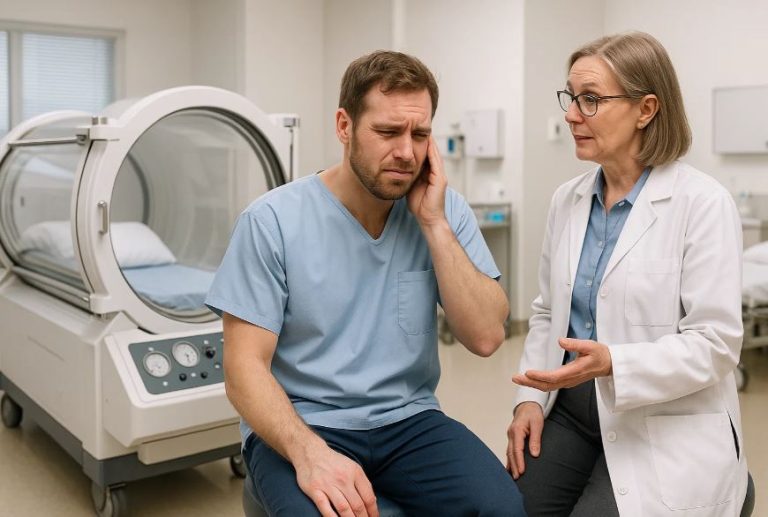
The safety trade-off is the real issue, and it runs against overnight use. Being asleep removes your ability to detect and respond to the three failure modes that matter most in a pressurized, oxygen-influenced environment: fire, oxygen toxicity, and pressure injury. Each is manageable in a supervised 90-minute session and much harder to manage across eight unconscious hours.
Fire Risk
Oxygen-enriched and pressurized atmospheres accelerate combustion, which is why hyperbaric facilities are governed by strict fire codes (NFPA 99, Chapter 14). Ignition sources that are trivial at sea level become dangerous inside a chamber. During sleep, escape time is reduced and a person may not notice electrical faults, static discharge, or heat until it is too late. This is the single most serious hazard of unsupervised overnight use.
Oxygen Toxicity
Prolonged exposure to elevated oxygen can cause central nervous system and pulmonary oxygen toxicity, ranging from seizures to lung inflammation (Thom, 2011). CNS toxicity is time-and-pressure dependent, so a multi-hour exposure carries more cumulative risk than a timed session. A seizure while asleep and alone in a sealed chamber is a worst-case scenario. Lower soft-chamber pressures reduce this risk but do not remove it across a full night.
Pressure Injury
Sleeping under pressure can cause ear barotrauma if you cannot actively equalize while unconscious, along with sinus discomfort. Equalizing pressure requires deliberate action (swallowing, jaw movement) that does not happen reliably during sleep, so the middle ear is exposed to pressure changes it cannot compensate for.
Standard HBOT vs Overnight Use: A Direct Comparison
Clinical HBOT Session vs Overnight “Sleep Chamber”
| Feature | Standard clinical HBOT | Overnight “sleep chamber” |
|---|---|---|
| Session length | 60-120 minutes | 6-8 hours |
| Pressure | 2.0-3.0 ATA | ~1.3 ATA (soft home unit) |
| Oxygen | 100% medical oxygen | Ambient air (~21%) |
| Medical supervision | Trained staff present | None |
| Evidence base | RCTs for accepted indications | No studies |
| Fire and toxicity risk exposure | Minutes, monitored | Hours, unmonitored, asleep |
Using a soft chamber overnight without supervision does not replicate clinical HBOT. Therapeutic benefit in the trials depends on precise pressure, 100% oxygen delivery, and trained monitoring, none of which an overnight home setup provides. The athlete photos that popularized the idea, including the LeBron James chamber, show short recovery sessions, not overnight sleeping.
What Does It Cost?
Sleep-rated or clinical-grade chambers run roughly $50,000 to $150,000, while lower-pressure home units run $10,000 to $30,000, plus installation, electrical upgrades, and ongoing maintenance. Insurance does not cover wellness use, and operating a chamber above certain pressures without medical supervision can conflict with local regulations. The cost is substantial for a use case that has no supporting evidence and an unfavorable safety profile.
The Bottom Line
No evidence supports sleeping in a hyperbaric chamber, and the safety trade-off is unfavorable: eight unmonitored hours multiply fire, oxygen-toxicity, and barotrauma exposure that a timed, supervised session keeps small. If you want the documented benefits of HBOT, use standard supervised sessions for an accepted indication. If you want better sleep or recovery, the evidence-based routes (consistent sleep schedule, a cool dark room, treating any sleep disorder, and adequate rest between training) deliver more with far less risk and expense.
Sources
- Undersea and Hyperbaric Medical Society. Indications for Hyperbaric Oxygen Therapy (accepted indications, session length and pressure standards). uhms.org
- Thom SR. Hyperbaric oxygen: its mechanisms and efficacy. Plast Reconstr Surg. 2011;127(Suppl 1):131S-141S. doi:10.1097/PRS.0b013e3181fbe2bf
- Mathieu D, Marroni A, Kot J. Tenth European Consensus Conference on Hyperbaric Medicine: recommendations for accepted and non-accepted clinical indications and practice of hyperbaric oxygen treatment. Diving Hyperb Med. 2017;47(1):24-32. doi:10.28920/dhm47.1.24-32
- National Fire Protection Association. NFPA 99: Health Care Facilities Code, Chapter 14 (Hyperbaric Facilities). nfpa.org

One Comment