Pneumonia and Oxygen Therapy: Delivery Methods, Targets, and Recovery
Supplemental oxygen is started when pneumonia drops blood oxygen saturation (SpO2) below 94 percent, or below 88 percent in people with chronic lung disease. Pneumonia fills alveoli with fluid and inflammatory debris, so oxygen cannot cross into the blood efficiently. The result is hypoxemia, low blood oxygen that can damage the brain, heart, and other organs if left uncorrected. This guide covers why pneumonia lowers oxygen, how oxygen is delivered, the targets, and what recovery looks like.
Key Takeaways
- Pneumonia causes hypoxemia mainly through ventilation-perfusion (V/Q) mismatch and intrapulmonary shunt.
- Oxygen is prescribed when SpO2 falls below 94 percent, or below 88 percent in patients with chronic lung disease.
- Delivery ranges from nasal cannula (1 to 6 L/min) to high-flow nasal cannula (up to 60 L/min) to mechanical ventilation.
- In the FLORALI trial, high-flow nasal cannula (HFNC) cut 90-day mortality versus standard oxygen; a 2026 meta-analysis confirmed lower intubation but similar mortality.
- Most patients need supplemental oxygen for days to weeks. Severe COVID pneumonia extended that to weeks or months.
- Awake prone positioning improves oxygenation and probably reduces the need for intubation.
Why does pneumonia cause low oxygen levels?
Pneumonia lowers oxygen because fluid and inflammatory cells flood the alveoli, the tiny air sacs where oxygen crosses into the blood. Your lungs hold roughly 300 million alveoli. When some fill with fluid, blood still flows past them but picks up little or no oxygen. Two mechanisms drive the drop.
Ventilation-perfusion (V/Q) mismatch
In healthy lungs, ventilation (air reaching the alveoli) and perfusion (blood flowing past them) are well matched. In pneumonia, partially fluid-filled alveoli receive blood flow but limited air, so blood passes through without picking up adequate oxygen.1 V/Q mismatch, rather than anatomical shunt alone, is often the dominant mechanism in pneumonia-related hypoxemia. That distinction matters clinically: V/Q mismatch usually responds well to supplemental oxygen, while true shunt does not.
Intrapulmonary shunt
When alveoli are completely filled with fluid or collapse entirely, blood flows past them with no gas exchange at all. This is a shunt. Shunt physiology is why some pneumonia patients stay hypoxemic even on high-concentration oxygen. The blood bypasses functional lung tissue.
Diffusion impairment
Inflammation thickens the alveolar membrane, slowing the rate at which oxygen crosses into the blood. This is a smaller contributor than V/Q mismatch, but it adds up in viral pneumonia where inflammation affects large areas of lung tissue.
At what oxygen level do you need oxygen for pneumonia?
Oxygen is started once SpO2 falls below 94 percent in most patients, or below 88 to 92 percent in people at risk of carbon dioxide retention. The decision combines pulse oximetry with clinical assessment.
| SpO2 Level | Classification | Action |
|---|---|---|
| 96-100% | Normal | No oxygen needed; monitor |
| 94-96% | Borderline | Monitor closely; oxygen if clinical concern |
| 90-94% | Mild hypoxemia | Start supplemental oxygen |
| 85-90% | Moderate hypoxemia | Higher-flow oxygen; consider hospital admission |
| Below 85% | Severe hypoxemia | High-flow or NIPPV; ICU assessment |
The British Thoracic Society guideline recommends a target SpO2 of 94 to 98 percent for most patients and 88 to 92 percent for those at risk of hypercapnia, primarily COPD patients.2 Over-oxygenation provides no benefit and can cause harm through oxygen toxicity and absorption atelectasis with prolonged use. If you are managing a supplemental oxygen setup, our oxygen therapy safety precautions guide covers flow rates, fire risk, and monitoring.
What oxygen delivery methods are used for pneumonia?
Pneumonia oxygen is delivered in a stepwise fashion, from nasal cannula for mild hypoxemia up to high-flow nasal cannula and mechanical ventilation for respiratory failure. The device is matched to how low the oxygen is and how much support the patient needs.
Nasal cannula
A nasal cannula delivers 1 to 6 liters per minute, achieving roughly 24 to 44 percent FiO2. It is the first-line device for mild-to-moderate hypoxemia. Patients can eat, drink, and talk comfortably. Most people with mild community-acquired pneumonia start here.
Simple face mask
A face mask delivers 5 to 10 L/min at 40 to 60 percent FiO2, used when a nasal cannula is not enough. The minimum flow is 5 L/min to prevent carbon dioxide rebreathing inside the mask.
Venturi mask
A Venturi (air-entrainment) mask delivers precise FiO2 concentrations of 24, 28, 31, 35, 40, or 60 percent using color-coded adapters. It suits patients with COPD and pneumonia who need controlled oxygen without triggering hypercapnia.
Non-rebreather mask
A non-rebreather mask with a reservoir bag delivers 10 to 15 L/min at 60 to 90 percent FiO2. It is used for severe hypoxemia as a bridge to more advanced support.
High-flow nasal cannula (HFNC)
HFNC delivers heated, humidified oxygen at flow rates up to 60 L/min and FiO2 up to 100 percent. The high flow generates a small amount of positive airway pressure (2 to 5 cmH2O), which helps keep alveoli open and improves gas exchange.3
The FLORALI trial by Frat and colleagues, published in the New England Journal of Medicine in 2015, compared HFNC, standard oxygen, and non-invasive ventilation in 310 patients with acute hypoxemic respiratory failure. The intubation rate was 38 percent with HFNC versus 47 percent with standard oxygen and 50 percent with non-invasive ventilation. HFNC also reduced 90-day mortality (hazard ratio 2.01 for standard oxygen vs HFNC, and 2.50 for NIV vs HFNC).3
| Delivery Method | Flow Rate | FiO2 | Best For |
|---|---|---|---|
| Nasal Cannula | 1-6 L/min | 24-44% | Mild hypoxemia |
| Simple Face Mask | 5-10 L/min | 40-60% | Moderate hypoxemia |
| Venturi Mask | 4-15 L/min | 24-60% | Precise FiO2 control (COPD + pneumonia) |
| Non-Rebreather | 10-15 L/min | 60-90% | Severe hypoxemia (bridge to ICU) |
| HFNC | Up to 60 L/min | 21-100% | Severe hypoxemia, avoiding intubation |
| Mechanical Ventilation | Variable | 21-100% | Respiratory failure, unable to protect airway |
Do you get oxygen for pneumonia in the hospital or at home?
Most pneumonia patients who need oxygen receive it in the hospital, where continuous monitoring and rapid escalation are available. Some are discharged on home oxygen once they are stable but still mildly hypoxemic.
In the hospital
The average hospital stay for community-acquired pneumonia requiring oxygen is 3 to 7 days, though severe cases may need weeks in the ICU. Continuous pulse oximetry and the option to escalate quickly are the reasons inpatient care is standard when oxygen is required.
Oxygen at home after discharge
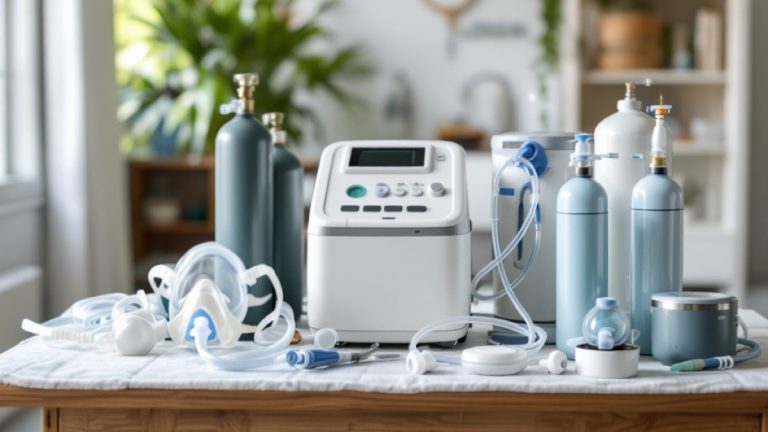
Home oxygen after pneumonia typically involves a portable concentrator or tanks, a nasal cannula at 1 to 3 L/min, a target SpO2 of 94 percent or above, and follow-up pulse oximetry at 2 to 4 weeks. Most patients wean off within 2 to 6 weeks as the pneumonia resolves. If oxygen need persists beyond 8 weeks, imaging and pulmonary function tests are indicated to rule out complications like empyema, organizing pneumonia, or underlying COPD. For a full breakdown of equipment and running costs, see our guide to the cost of oxygen therapy at home.
What did COVID pneumonia teach us about oxygen therapy?
COVID pneumonia reshaped oxygen practice in three ways: it revealed silent hypoxemia, pushed high-flow nasal cannula out of the ICU and into general wards, and normalized awake prone positioning for non-intubated patients.
Silent hypoxemia
COVID pneumonia introduced clinicians to “happy hypoxia,” or silent hypoxemia: patients with dangerously low SpO2 (sometimes below 70 percent) who appeared comfortable and were not in obvious respiratory distress. This happens because COVID initially causes V/Q mismatch without the stiff, fluid-filled lungs that make breathing feel labored.4 It drove the widespread use of home pulse oximeters, which catch oxygen drops before symptoms turn severe.
High-flow nasal cannula expansion
Before COVID, HFNC was mostly an ICU tool. The pandemic forced rapid deployment in general wards, emergency departments, and field hospitals. A 2026 meta-analysis in Respiratory Medicine pooled eight randomized trials (2,528 patients) comparing high-flow nasal oxygen with conventional oxygen in hypoxemic COVID pneumonia. It found HFNC significantly reduced intubation, with similar mortality between groups, plus better gas exchange, recovery time, and patient comfort.5
Awake prone positioning
Prone positioning (lying face down) had been used for decades in ventilated ARDS patients. During COVID, clinicians found that proning awake, non-intubated patients could improve oxygenation. Lying prone redistributes blood flow to better-ventilated lung areas, reducing V/Q mismatch. In the PROVID randomized trial (Harrois et al., 2025), awake prone positioning for at least 6 hours a day gave a 93.8 percent posterior probability of reducing intubation or death within 28 days (mean odds ratio 0.74).6 Hard-outcome results across trials have been mixed, but oxygenation gains are consistent, and the technique is now part of standard pneumonia protocols.
When is mechanical ventilation needed for pneumonia?
Mechanical ventilation is the last resort, used when other delivery methods cannot maintain adequate oxygenation or when the patient cannot protect their airway. Indications include:
- Refractory hypoxemia: SpO2 below 88 percent despite HFNC at maximum settings
- Respiratory muscle fatigue: respiratory rate above 30 to 35/min, accessory muscle use, paradoxical breathing
- Altered consciousness: drowsiness, confusion, or inability to follow commands
- Hemodynamic instability: low blood pressure, rapid heart rate, signs of organ failure
- Inability to clear secretions: weak cough, pooling secretions, aspiration risk
Intubation carries real risks, including ventilator-associated pneumonia, lung injury from positive pressure, and prolonged ICU stay. That is why the stepwise approach, starting with nasal cannula and escalating only as needed, is standard care.
How is oxygen titrated and monitored?
Oxygen therapy for pneumonia is titrated continuously, not set once. Clinicians adjust the flow rate and device based on several signals:
- Continuous pulse oximetry: SpO2 is monitored around the clock in hospitalized patients.
- Arterial blood gas (ABG): precise measurement of PaO2, PaCO2, pH, and bicarbonate, essential for patients on high-flow oxygen or at risk of CO2 retention.
- Respiratory rate and work of breathing: nasal flaring, accessory muscle use, and rate trends matter as much as the SpO2 number.
- ROX index: SpO2/FiO2 divided by respiratory rate, which predicts HFNC failure. A value below 3.85 at 12 hours is associated with HFNC failure.
Patients with certain lung conditions need extra caution with oxygen dosing. Our guide to oxygen therapy contraindications explains when high-flow oxygen can do more harm than good.
How long do you need oxygen with pneumonia?
Most people need supplemental oxygen for a few days to a few weeks, depending on the type and severity of pneumonia. Severe cases, especially COVID-related ARDS, can require weeks of oxygen plus additional home oxygen after discharge.
| Pneumonia Type | Typical Oxygen Duration | Full Recovery |
|---|---|---|
| Mild community-acquired | 0-3 days | 2-4 weeks |
| Moderate community-acquired | 3-7 days | 4-8 weeks |
| Severe (ICU admission) | 1-4 weeks | 2-6 months |
| COVID pneumonia (moderate) | 5-14 days | 4-12 weeks |
| COVID pneumonia (severe/ARDS) | 2-8 weeks | 3-12 months |
Pneumonia oxygen management in children follows different thresholds and devices; see our guide to oxygen therapy for pneumonia in children. For adults recovering from severe COVID pneumonia, hyperbaric oxygen therapy has been studied as an adjunctive treatment for lingering symptoms, covered in our article on HBOT for lingering COVID-19 symptoms. Oxygen delivery in acute lung injury is detailed in our oxygen therapy for ARDS guide.
How long do pneumonia patients stay on oxygen?
It varies widely. Mild pneumonia may need oxygen for 1 to 3 days. Severe cases, especially COVID pneumonia complicated by ARDS, can require weeks of supplemental oxygen plus additional weeks of home oxygen after discharge. The FLORALI trial and later COVID data show that patients on high-flow nasal cannula are often those with more prolonged oxygen needs, since HFNC is reserved for more severe hypoxemia (Frat et al., NEJM 2015).
Can you recover from pneumonia at home with oxygen?
Some patients with mild pneumonia and borderline hypoxemia can be managed at home with a portable oxygen concentrator, close monitoring, and a clear plan for when to go to the hospital. This requires a physician’s assessment and prescription. Most pneumonia that needs oxygen is still treated in the hospital because the British Thoracic Society recommends continuous monitoring and rapid escalation when SpO2 falls below target (O’Driscoll et al., Thorax 2017).
What oxygen level is dangerous with pneumonia?
An SpO2 below 92 percent is concerning. Below 88 percent is dangerous and usually requires high-flow oxygen or ICU-level care. Below 80 percent is a medical emergency with real risk of organ damage. The British Thoracic Society target range is 94 to 98 percent for most patients, and 88 to 92 percent for those at risk of carbon dioxide retention (O’Driscoll et al., Thorax 2017).
Does prone positioning really help?
For many patients, yes. Lying face down improves oxygenation by redistributing blood flow to better-ventilated lung areas. In the PROVID randomized trial (Harrois et al., JAMA Network Open 2025), awake proning for at least 6 hours a day gave a 93.8 percent posterior probability of reducing intubation or death within 28 days. Oxygenation gains are consistent across studies, even where hard-outcome results are mixed.
Bottom line
Oxygen therapy is the backbone of pneumonia treatment once hypoxemia develops. The approach is stepwise: start with nasal cannula, escalate to HFNC if needed, and reserve mechanical ventilation for respiratory failure. FLORALI showed HFNC can reduce mortality versus standard oxygen, and later COVID data confirmed it lowers intubation. Recovery runs from days to months depending on severity. If you or someone you know is hospitalized with pneumonia, understanding these delivery methods and SpO2 targets makes for better conversations with the medical team.
Sources
- Gattinoni L, Chiumello D, Caironi P, et al. COVID-19 pneumonia: different respiratory treatments for different phenotypes? Intensive Care Med. 2020;46(6):1099-1102. doi:10.1007/s00134-020-06033-2
- O’Driscoll BR, Howard LS, Earis J, Mak V; British Thoracic Society Emergency Oxygen Guideline Group. BTS guideline for oxygen use in adults in healthcare and emergency settings. Thorax. 2017;72(Suppl 1):ii1-ii90. doi:10.1136/thoraxjnl-2016-209729
- Frat JP, Thille AW, Mercat A, et al; FLORALI Study Group; REVA Network. High-flow oxygen through nasal cannula in acute hypoxemic respiratory failure. N Engl J Med. 2015;372(23):2185-2196. doi:10.1056/NEJMoa1503326
- Tobin MJ, Laghi F, Jubran A. Why COVID-19 silent hypoxemia is baffling to physicians. Am J Respir Crit Care Med. 2020;202(3):356-360. doi:10.1164/rccm.202006-2157CP
- High-flow nasal oxygen versus conventional oxygen therapy in patients with hypoxemic COVID-19 pneumonia: a randomized controlled trials based meta-analysis. Respir Med. 2026. Article link
- Harrois A, Jouffroy R, Ayed S, et al. Awake prone positioning in patients with COVID-19 respiratory failure (PROVID): a randomized clinical trial. JAMA Netw Open. 2025;8(12):e2548201. doi:10.1001/jamanetworkopen.2025.48201