What Is a Hyperbaric Chamber? Your Complete Guide to HBOT
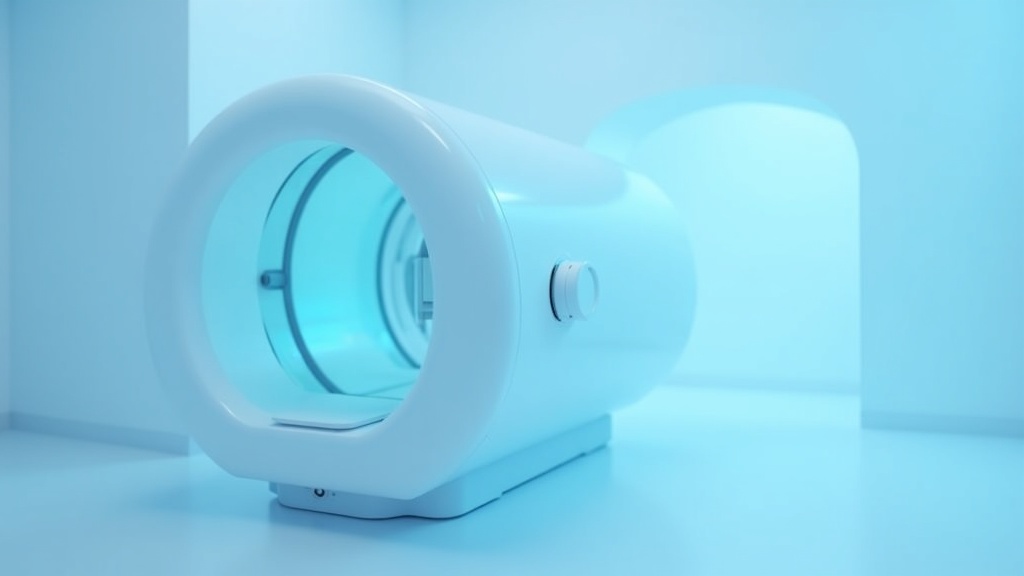
A hyperbaric chamber forces oxygen into your tissues at 10 to 20 times normal concentration by raising atmospheric pressure to 1.4 to 3.0 ATA. The FDA has cleared it for 14 medical conditions. Across 1.5 million tracked treatments, the adverse event rate is 0.68%. It is one of the oldest pressure-based therapies in medicine, and one of the most misunderstood.
Next step: Read our evergreen guide, then find vetted HBOT clinics.
Next step: Read our HBOT treatment guide, then Find vetted HBOT clinics in the Regenerated directory. This article is educational — not medical advice, and not an endorsement of any clinic.
Key Takeaways
- A hyperbaric chamber raises pressure to 1.4 to 3.0 ATA so patients breathe 100% oxygen at 10 to 20 times normal concentration, according to UHMS.
- The FDA has cleared HBOT for 14 medical conditions, covered by Medicare when prescribed by a physician for defined criteria, according to UHMS (14th edition) and CMS.
- Across roughly 1.5 million tracked treatments the adverse event rate was 0.68%, according to Jokinen-Gordon et al. (2017).
- Breathing 100% oxygen at 2.0 ATA raises plasma-dissolved oxygen roughly 20-fold, following Henry’s Law.
- HBOT raised circulating CD34+ stem cells about eightfold over 20 sessions in a controlled human study (Thom et al., 2006).
What Is Hyperbaric Oxygen Therapy?
Hyperbaric oxygen therapy (HBOT) is a medical treatment in which a patient breathes 100% oxygen inside a pressurized chamber, typically at 1.4 to 3.0 ATA. Raising the pressure dissolves far more oxygen directly into blood plasma than normal breathing allows, driving it into tissues where circulation is compromised. The FDA recognizes 14 cleared indications for it.
At sea level, the atmosphere exerts one atmosphere of pressure (1 ATA). Inside a hyperbaric chamber, pressure is raised to between 1.4 and 3.0 ATA depending on the condition being treated. New to the terminology? The HBOT glossary defines the core hyperbaric terms in plain language.
The core mechanism is straightforward: oxygen under pressure dissolves into body fluids, including blood plasma, cerebrospinal fluid, and lymph, at concentrations physiologically impossible through normal breathing. This increases oxygen available to tissues throughout the body, including areas with compromised circulation where normal delivery is inadequate.
HBOT has been used medically since the 1930s, originally for decompression sickness in deep-sea divers. Today it is practiced in hospital wound care centers, standalone hyperbaric clinics, and increasingly in wellness and performance settings. It has even moved into veterinary medicine, where some animal hospitals run a dedicated hyperbaric chamber for dogs and other pets. The Undersea and Hyperbaric Medical Society (UHMS) sets the clinical standards for safe and effective practice. For how pressure levels change results, see mild vs clinical HBOT and HBOT vs regular oxygen therapy.
How Does a Hyperbaric Chamber Work?
A hyperbaric chamber works by applying Henry’s Law: raising the pressure of oxygen forces it to dissolve directly into blood plasma, independent of hemoglobin. At 2.0 ATA on 100% oxygen, plasma-dissolved oxygen rises roughly 20-fold, and that free oxygen diffuses into tissue beyond the reach of red blood cells, including areas where circulation is damaged.
To understand why this matters, consider the two ways oxygen travels in blood. Under normal conditions, most oxygen is bound to hemoglobin in red blood cells. Hemoglobin-bound oxygen is efficient but limited: at sea level breathing room air, hemoglobin is already roughly 97% saturated, so breathing extra oxygen at normal pressure adds very little.
The second route is plasma-dissolved oxygen. Normally only a tiny fraction travels dissolved in plasma, roughly 0.3 mL per 100 mL of blood. When you breathe 100% oxygen at 2.0 ATA, plasma-dissolved oxygen rises to about 6 to 8 mL per 100 mL, a 20-fold increase. This dissolved oxygen reaches tissues without relying on red blood cells (Thom, Plastic and Reconstructive Surgery, 2011).
What Happens at the Cellular Level?
Beyond raw oxygenation, HBOT triggers repair signaling. Elevated then normalized oxygen cycles stimulate new blood vessel growth, mobilize stem cells, drive collagen synthesis, dampen inflammation, and suppress anaerobic bacteria. These downstream effects, not oxygen delivery alone, explain why the therapy helps wounds and tissues that ordinary oxygen cannot reach.
Angiogenesis: Elevated oxygen triggers VEGF release, stimulating growth of new blood vessels into hypoxic tissue. This is particularly significant for diabetic wounds and radiation-damaged areas where vasculature has been destroyed (Thom, 2011).
Stem cell mobilization: HBOT stimulates release of stem cells from bone marrow into circulation. In a controlled human study, circulating CD34+ stem cells doubled after a single 2.0 ATA session and rose about eightfold over 20 treatments (Thom et al., American Journal of Physiology, 2006). These cells home to injury sites and contribute to tissue repair.
Collagen synthesis: Oxygen is a required cofactor for collagen cross-linking. HBOT accelerates wound healing and improves the durability of repaired tissue.
Anti-inflammatory and anti-microbial effects: HBOT inhibits leukocyte adhesion, reducing inflammatory damage, and creates an oxygen-rich environment hostile to anaerobic bacteria.
Mitochondrial effects: Cycles of elevated then returning-to-normal oxygen trigger stress responses at the mitochondrial level, similar in principle to intermittent fasting or exercise. This may explain some effects reported in aging and chronic disease research.
What Types of Hyperbaric Chambers Exist?
Three chamber types dominate: monoplace hard-shell tubes for one patient, multiplace hard-shell rooms that hold several patients plus staff, and soft-shell portable chambers. The two hard-shell types reach 2.0 to 3.0 ATA on 100% oxygen and cover clinical protocols. Soft-shell units operate near 1.3 to 1.5 ATA and are limited to wellness use.
Monoplace Chambers (Hard Shell)
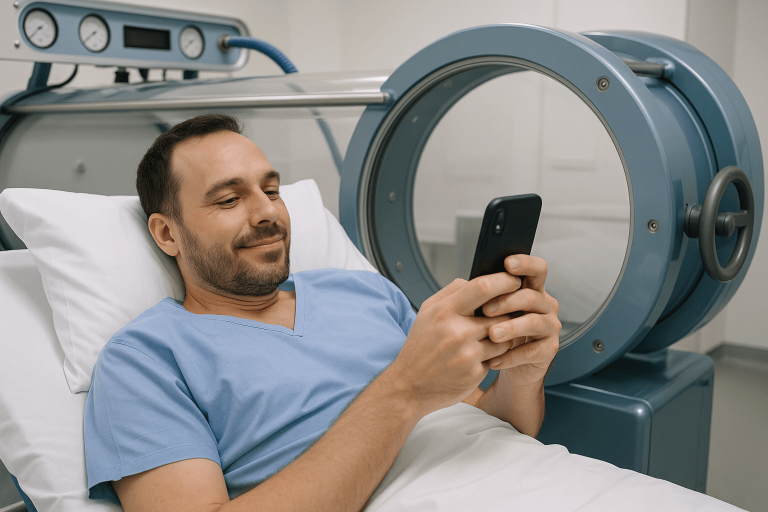
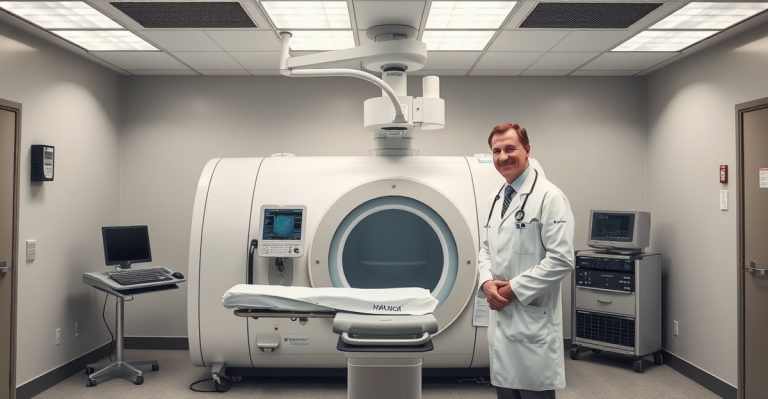
A monoplace chamber is a single-person tube, typically transparent acrylic, roughly 7 to 8 feet long and 2 feet in diameter. The entire chamber is pressurized with 100% oxygen. This is the most common chamber type in US clinical settings. Its enclosed tube shape draws comparison to older breathing devices, though as our iron lung vs hyperbaric chamber guide explains, an iron lung applies negative pressure to help a person breathe, while a hyperbaric chamber raises ambient pressure to drive oxygen into tissue. Monoplace chambers reach 2.0 to 3.0 ATA, covering the full range of clinical protocols for FDA-cleared indications.
Multiplace Chambers (Hard Shell)
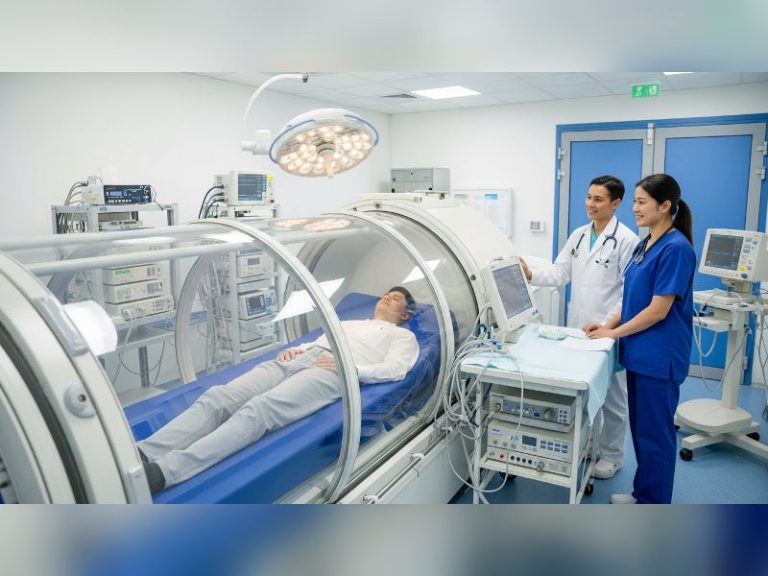
A multiplace chamber is a large pressurized room accommodating multiple patients simultaneously, along with medical staff inside. The chamber is pressurized with compressed air, and patients breathe 100% oxygen via masks or hoods. This allows medical personnel to be physically present with critically ill patients. Multiplace chambers are found primarily in major medical centers, military hospitals, and specialized dive medicine facilities.
Soft-Shell Portable Chambers
Soft-shell chambers are inflatable fabric enclosures operating at roughly 1.3 to 1.5 ATA. They have driven HBOT into wellness, athletic recovery, and home settings. At these low pressures on near-ambient oxygen, the dissolved-oxygen gain is a fraction of what a hard-shell chamber at 2.0 to 2.4 ATA on 100% oxygen produces. Most controlled research supporting HBOT for medical conditions used pressures of 2.0 ATA or higher on 100% oxygen. Only three portable chamber brands hold FDA 510(k) clearance (OxyHealth, Summit to Sea, and Newtowne Hyperbarics), all cleared for altitude sickness only. This home and wellness category also includes niche formats marketed for overnight use, such as the hyperbaric sleep chamber, though the same low-pressure limits apply.
Hyperbaric Chamber Types Compared
| Type | Pressure (ATA) | Oxygen delivery | Typical setting | FDA status |
|---|---|---|---|---|
| Monoplace (hard shell) | 2.0 to 3.0 | Chamber filled with 100% oxygen | Hospital and clinical wound care | Cleared for the 14 UHMS indications |
| Multiplace (hard shell) | 2.0 to 3.0 | Compressed air; 100% oxygen by mask or hood | Major medical centers, military, dive medicine | Cleared for the 14 UHMS indications |
| Soft-shell portable | 1.3 to 1.5 | Near-ambient air, sometimes oxygen-concentrated | Home, wellness, athletic recovery | 510(k) cleared for altitude sickness only |
Sources: UHMS Hyperbaric Oxygen Therapy Indications, 14th Edition; FDA 510(k) Premarket Notification Database.
What Are the 14 FDA-Cleared Indications?
The FDA has cleared HBOT as a primary or adjunctive treatment for 14 medical conditions recognized by UHMS. These are covered by Medicare when prescribed by a physician and when defined criteria are met, such as the Wagner Grade 3 and 30-day standard-care rules for diabetic wounds under CMS coverage policy.
- Air or gas embolism
- Carbon monoxide poisoning
- Clostridial myositis and myonecrosis (gas gangrene)
- Crush injury, compartment syndrome, and acute traumatic ischemia
- Decompression sickness
- Arterial insufficiencies, including diabetic foot ulcers and central retinal artery occlusion
- Severe anemia
- Intracranial abscess
- Necrotizing soft tissue infections
- Osteomyelitis (refractory)
- Delayed radiation injury (soft tissue and bony necrosis)
- Compromised grafts and flaps
- Acute thermal burn injury
- Idiopathic sudden sensorineural hearing loss
The evidence is strongest here. For carbon monoxide poisoning, a double-blind randomized trial by Weaver and colleagues (New England Journal of Medicine, 2002) found HBOT reduced cognitive sequelae at six weeks and 12 months compared with normobaric oxygen. For diabetic foot ulcers, Löndahl and colleagues (Diabetes Care, 2010) showed improved healing, although a later trial by Fedorko and colleagues (Diabetes Care, 2016) found no reduction in amputation, a distinction worth keeping straight.
What Is HBOT Being Studied For Off-Label?
Off-label research is active but far weaker than the cleared indications. The strongest emerging signals are in long COVID cognition and post-stroke recovery, with contested results in traumatic brain injury and early data in PTSD and aging. None of these carries FDA clearance, and the best-designed trials are often smaller or single-center, so treat marketing claims with caution.
Long COVID: A randomized, sham-controlled trial of 73 patients by Zilberman-Itskovich and colleagues (Scientific Reports, 2022) found HBOT improved global cognitive function, attention, and executive function after 40 sessions. It is a single-center study, so replication matters.
Post-stroke recovery: A randomized prospective trial by Efrati and colleagues (PLoS ONE, 2013) reported neurological and quality-of-life gains in chronic stroke patients, correlated with SPECT imaging changes, even months to years after stroke.
Traumatic brain injury and post-concussion syndrome: This is genuinely contested. Boussi-Gross and colleagues (PLoS ONE, 2013) reported cognitive improvement in chronic post-concussion patients, but a large Department of Defense sham-controlled trial by Miller and colleagues (JAMA Internal Medicine, 2015) found no benefit over sham in service members. Much of the early neurological work traces back to Dr. Paul Harch’s HBOT treatment and research, and the debate over trial design continues.
PTSD: A randomized controlled trial of 56 combat veterans by Doenyas-Barak and colleagues (Journal of Clinical Psychiatry, 2024) found significant symptom reductions after 60 sessions at 2.0 ATA, sustained at two-year follow-up in the majority of responders.
Anti-aging: A prospective, uncontrolled trial of 35 adults aged 64 and older by Hachmo and colleagues (Aging, 2020) reported telomere lengthening above 20% and up to a 37% drop in senescent T-helper cells after 60 sessions. The lack of a control group limits how far the finding can be pushed. These areas move quickly, and our hyperbaric oxygen therapy news coverage follows new trials as they publish.
What to Expect During Treatment
A standard HBOT session lasts 60 to 90 minutes at pressure, with total clinic time of about 1.5 to 2 hours. The main sensation is ear pressure during compression, similar to an airplane descent. Most protocols run five days a week: acute injuries average around 15 sessions and chronic conditions around 30, and no recovery time is needed afterward.
Learn equalization techniques (Valsalva maneuver, yawning, swallowing) before your first session and alert staff immediately if you cannot equalize. Session counts come from a review of 1,506 cases by D’Agostino Dias and colleagues (Undersea and Hyperbaric Medicine, 2008). Most patients resume normal activities immediately after each session.
What Are the Side Effects and Risks?
HBOT is among the safest medical treatments in routine use. In a retrospective analysis of roughly 1.5 million treatments, only 0.68% were associated with any adverse event (Jokinen-Gordon et al., 2017). The most common side effect is middle ear barotrauma, usually mild and self-resolving, and the only absolute contraindication is untreated tension pneumothorax.
Middle ear barotrauma is reported in a meaningful minority of patients and is the leading reason for early symptoms during compression (Heyboer et al., Advances in Wound Care, 2017). Other side effects, including sinus discomfort, temporary vision changes, and confinement anxiety, are generally reversible (Camporesi, Undersea and Hyperbaric Medicine, 2014). All contraindications other than untreated tension pneumothorax are relative and require individual physician evaluation.
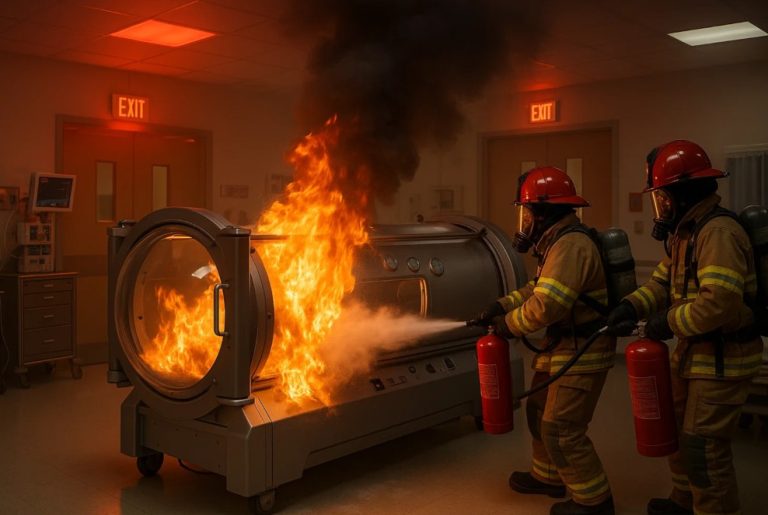
Fire risk in the treatment environment requires strict adherence to prohibited-item protocols: no electronics, no synthetic fabrics, no petroleum-based personal care products. These protocols exist because documented fatal chamber fires occurred in oxygen-enriched environments with prohibited ignition sources present (Sheffield and Desautels, Undersea and Hyperbaric Medicine, 1997).
How Do You Find HBOT?
Clinical HBOT for FDA-cleared indications is available at hospital wound care centers, standalone hyperbaric clinics, and some outpatient facilities. For any use, look for UHMS-accredited facilities with CHT or CHRN-certified staff and a physician on site. Home soft-shell chambers are sold for personal wellness only and cannot match clinical pressures.
If you are curious about the scale of access, we track how many hyperbaric chambers are in the US and how many people receive HBOT per year, which gives a sense of how common treatment really is. The three FDA-cleared portable brands are OxyHealth, Summit to Sea, and Newtowne Hyperbarics. For clinical-grade treatment, soft-shell home chambers cannot replicate the pressures used in studies supporting most FDA-cleared indications.
Explore HBOT by Condition Category
Hyperbaric oxygen therapy addresses a wide range of conditions. The guides below organize the evidence by category, so you can find what is most relevant to your situation.
- Brain and Neurological Conditions: TBI, stroke, Parkinson’s disease, multiple sclerosis, and cognitive decline
- Chronic Conditions: diabetes, autoimmune disease, Long COVID, fibromyalgia, and Lyme disease
- Pain and Inflammation: chronic pain, migraine, arthritis, and inflammatory conditions
- Surgery and Wound Recovery: post-surgical healing, sports injuries, diabetic wounds, and radiation damage
- Cancer Treatment Support: radiation cystitis, radiation necrosis, and adjunct oncology care
- Longevity and Performance: cellular aging, athletic recovery, and cognitive optimization
Sources
- Weaver LK (ed). “Hyperbaric Oxygen Therapy Indications.” 14th Edition. Undersea and Hyperbaric Medical Society. uhms.org
- Jokinen-Gordon H, Barry RC, Watson B, Covington DS. “A Retrospective Analysis of Adverse Events in Hyperbaric Oxygen Therapy (2012-2015): Lessons Learned From 1.5 Million Treatments.” Advances in Skin & Wound Care, 2017;30(3):125-129. PMID: 28198743. pubmed.ncbi.nlm.nih.gov/28198743
- Hadanny A, Meir O, Bechor Y, et al. “The safety of hyperbaric oxygen treatment: retrospective analysis in 2,334 patients.” Undersea and Hyperbaric Medicine, 2016;43(2):113-122. PMID: 27265988. pubmed.ncbi.nlm.nih.gov/27265988
- Thom SR. “Hyperbaric oxygen: its mechanisms and efficacy.” Plastic and Reconstructive Surgery, 2011;127(Suppl 1):131S-141S. PMID: 21200283. doi.org/10.1097/PRS.0b013e3181fbe2bf
- Thom SR, Bhopale VM, Velazquez OC, et al. “Stem cell mobilization by hyperbaric oxygen.” American Journal of Physiology-Heart and Circulatory Physiology, 2006;290(4):H1378-H1386. PMID: 16299259. doi.org/10.1152/ajpheart.00888.2005
- Hachmo Y, Hadanny A, Abu Hamed R, et al. “Hyperbaric oxygen therapy increases telomere length and decreases immunosenescence in isolated blood cells: a prospective trial.” Aging, 2020;12(22):22445-22456. PMC7746357
- Doenyas-Barak K, Catalogna M, Kutz I, et al. “Hyperbaric Oxygen Therapy for Veterans With Combat-Associated Posttraumatic Stress Disorder: A Randomized, Sham-Controlled Clinical Trial.” Journal of Clinical Psychiatry, 2024;85(4). psychiatrist.com
- Zilberman-Itskovich S, Catalogna M, Sasson E, et al. “Hyperbaric oxygen therapy improves neurocognitive functions and symptoms of post-COVID condition: randomized controlled trial.” Scientific Reports, 2022;12:11252. doi.org/10.1038/s41598-022-15565-0
- Efrati S, Fishlev G, Bechor Y, et al. “Hyperbaric Oxygen Induces Late Neuroplasticity in Post Stroke Patients: Randomized, Prospective Trial.” PLoS ONE, 2013;8(1):e53716. doi.org/10.1371/journal.pone.0053716
- Boussi-Gross R, Golan H, Fishlev G, et al. “Hyperbaric Oxygen Therapy Can Improve Post Concussion Syndrome Years after Mild Traumatic Brain Injury: Randomized Prospective Trial.” PLoS ONE, 2013;8(11):e79995. doi.org/10.1371/journal.pone.0079995
- Miller RS, Weaver LK, Bahraini N, et al. “Effects of hyperbaric oxygen on symptoms and quality of life among service members with persistent postconcussion symptoms: a randomized clinical trial.” JAMA Internal Medicine, 2015;175(1):43-52. PMID: 25401463. pubmed.ncbi.nlm.nih.gov/25401463
- Weaver LK, Hopkins RO, Chan KJ, et al. “Hyperbaric Oxygen for Acute Carbon Monoxide Poisoning.” New England Journal of Medicine, 2002;347(14):1057-1067. doi.org/10.1056/NEJMoa013121
- Löndahl M, Katzman P, Nilsson A, Hammarlund C. “Hyperbaric Oxygen Therapy Facilitates Healing of Chronic Foot Ulcers in Patients With Diabetes.” Diabetes Care, 2010;33(5):998-1003. PMID: 20427683. pubmed.ncbi.nlm.nih.gov/20427683
- Fedorko L, Bowen JM, Jones W, et al. “Hyperbaric Oxygen Therapy Does Not Reduce Indications for Amputation in Patients With Diabetes With Nonhealing Ulcers of the Lower Limb: A Prospective, Double-Blind, Randomized Controlled Clinical Trial.” Diabetes Care, 2016;39(3):392-399. doi.org/10.2337/dc15-2001
- Mathieu D, Marroni A, Kot J. “Tenth European Consensus Conference on Hyperbaric Medicine.” Diving and Hyperbaric Medicine, 2017;47(1):24-32. PMC6147755
- Heyboer M, Sharma D, Santiago W, McCulloch N. “Hyperbaric Oxygen Therapy: Side Effects Defined and Quantified.” Advances in Wound Care, 2017;6(6):210-224. doi.org/10.1089/wound.2016.0718
- Camporesi EM. “Side effects of hyperbaric oxygen therapy.” Undersea and Hyperbaric Medicine, 2014;41(3):253-257. PMID: 24984321. pubmed.ncbi.nlm.nih.gov/24984321
- D’Agostino Dias M, Fontes B, Poggetti RS, Birolini D. “Hyperbaric oxygen therapy: types of injury and number of sessions, a review of 1506 cases.” Undersea and Hyperbaric Medicine, 2008;35(1):53-60. PMID: 18351127. pubmed.ncbi.nlm.nih.gov/18351127
- Sheffield PJ, Desautels DA. “Hyperbaric and hypobaric chamber fires: a 73-year analysis.” Undersea and Hyperbaric Medicine, 1997;24(3):153-164. PMID: 9308138. pubmed.ncbi.nlm.nih.gov/9308138
- Centers for Medicare & Medicaid Services. “National Coverage Determination for Hyperbaric Oxygen Therapy (20.29).” cms.gov
- US Food and Drug Administration. “510(k) Premarket Notification Database.” accessdata.fda.gov
- Cleveland Clinic. “Hyperbaric Oxygen Therapy: What It Is, Benefits and Side Effects.” my.clevelandclinic.org


10 Comments