Oxygen Therapy Flow Rate Chart: Devices, FiO2, and Clinical Guide
Explore the clinic directoryIn this article
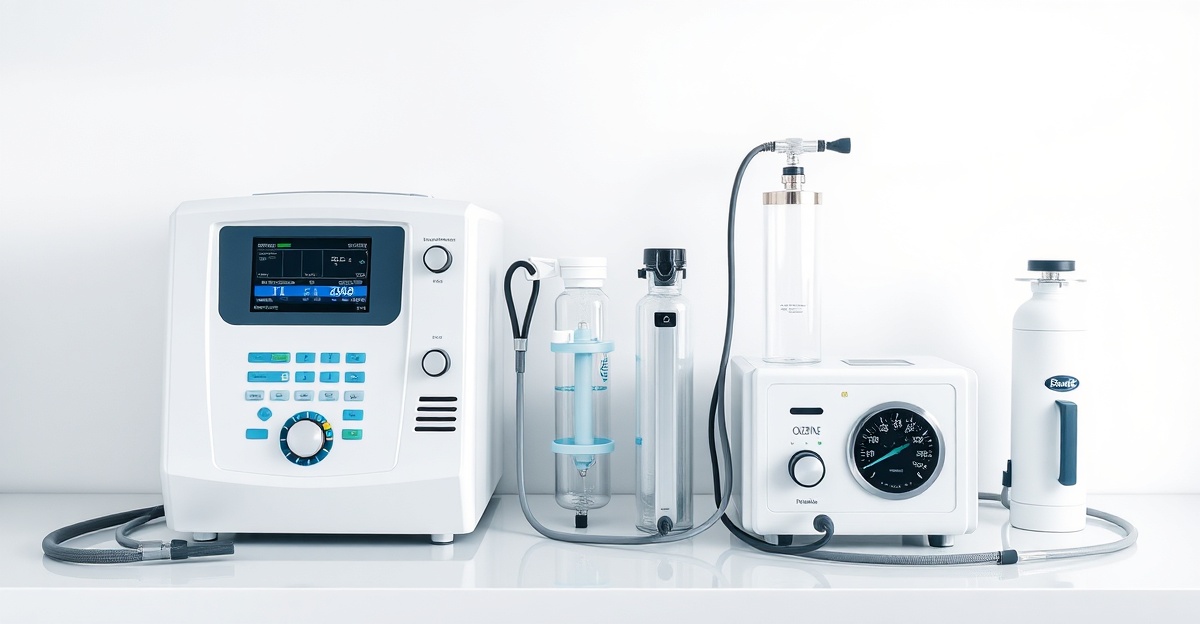
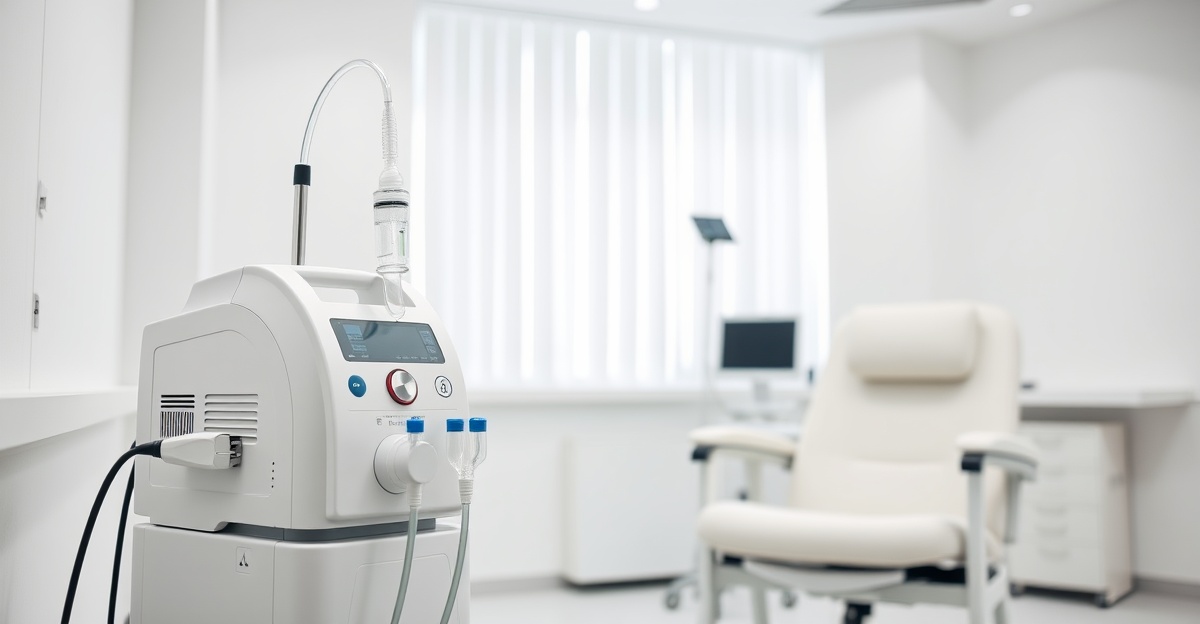
Oxygen therapy flow rates vary by delivery device, and choosing the wrong combination of device and flow rate is one of the most common clinical errors in respiratory care. A nasal cannula at 6 L/min delivers roughly 44% oxygen. A non-rebreather mask at 15 L/min can deliver up to 95%. A high-flow nasal cannula at 60 L/min can match or exceed what a ventilator provides. Understanding which device delivers what concentration at which flow rate is essential for anyone involved in oxygen therapy, from ICU nurses to home care patients to respiratory therapists.
This guide provides a complete visual reference for oxygen flow rates by device, the FiO2 (fraction of inspired oxygen) delivered at each rate, and when to use each device clinically. For the wider picture of how these devices fit into treatment, see our oxygen therapy overview.
Key Takeaways
- Nasal cannula delivers 24-44% FiO2 at flow rates of 1-6 L/min and is the most common low-flow device1
- Simple face masks require a minimum of 5 L/min to prevent CO2 rebreathing and deliver 40-60% FiO22
- Venturi masks provide the most precise FiO2 delivery (24-50%) and are preferred when exact oxygen concentrations matter3
- Non-rebreather masks at 10-15 L/min deliver 60-95% FiO2 and are used for acute hypoxemia before escalation to advanced support
- High-flow nasal cannula (HFNC) at up to 60 L/min can deliver near-100% FiO2 with humidification and is increasingly replacing non-invasive ventilation in many settings4
- Flow rate alone does not determine FiO2. The patient’s minute ventilation, mouth breathing, and mask fit all affect actual oxygen delivery
Oxygen Flow Rate Chart at a Glance
| Device | Flow Range (L/min) | FiO2 Range | Best Clinical Use |
|---|---|---|---|
| Nasal cannula | 1 to 6 | 24 to 44% | Chronic and mild to moderate hypoxemia |
| Simple face mask | 5 to 10 | 40 to 60% | Short-term moderate FiO2 |
| Venturi mask | 4 to 15 (adapter-set) | 24 to 60% (precise) | COPD and hypercapnia risk |
| Partial rebreather | 6 to 10 | 40 to 70% | Moderate to severe hypoxemia |
| Non-rebreather (NRB) | 10 to 15 | 60 to 95% | Acute severe hypoxemia, trauma, CO poisoning |
| High-flow nasal cannula (HFNC) | 10 to 60 | 21 to 100% (adjustable) | Acute hypoxemic respiratory failure |
Approximate FiO2 added per liter per minute through a nasal cannula (a rule of thumb, not exact)
O’Driscoll et al., BTS guideline, Thorax 2017
What is the difference between flow rate and FiO2?
Two terms appear throughout oxygen therapy prescriptions:
- Flow rate (L/min): The volume of oxygen gas delivered per minute, measured in liters. This is what you set on the flowmeter.
- FiO2 (Fraction of Inspired Oxygen): The percentage of oxygen in the air the patient actually breathes. Room air is 21% (FiO2 = 0.21).
The relationship between flow rate and FiO2 is not linear and depends on the device. A nasal cannula roughly adds 4% FiO2 for each liter per minute of flow. A Venturi mask uses jet mixing to deliver precise concentrations regardless of patient breathing patterns. A non-rebreather uses a reservoir bag to minimize room air entrainment.1
Complete Flow Rate Chart by Device
Nasal Cannula
| Flow Rate (L/min) | Approximate FiO2 | Notes |
|---|---|---|
| 1 | 24% | Minimum effective flow |
| 2 | 28% | Common starting rate for mild hypoxemia |
| 3 | 32% | Standard for stable COPD patients |
| 4 | 36% | Moderate supplementation |
| 5 | 40% | Upper comfort limit for most patients |
| 6 | 44% | Maximum recommended; above 6 L/min causes nasal drying and discomfort |
Best for: Chronic oxygen therapy, mild to moderate hypoxemia, ambulatory patients, sleep. The nasal cannula is comfortable, allows eating and speaking, and is the most commonly prescribed home oxygen device.1
Simple Face Mask
| Flow Rate (L/min) | Approximate FiO2 | Notes |
|---|---|---|
| 5 | 40% | Minimum flow to prevent CO2 rebreathing |
| 6 | 44-48% | |
| 8 | 50-55% | Common clinical setting |
| 10 | 55-60% | Maximum recommended flow |
Best for: Short-term use in patients needing moderate FiO2 who cannot tolerate a nasal cannula, or as a bridge device. Never set below 5 L/min due to CO2 rebreathing risk in the mask reservoir space.2
A common oxygen therapy error is using the wrong device for the patient’s needs. A nasal cannula above 6 L/min causes discomfort without a meaningful FiO2 gain, and a simple mask below 5 L/min creates a CO2 rebreathing hazard because exhaled gas pools in the mask before it is flushed out.2
Venturi Mask (Air-Entrainment Mask)
| Venturi Adapter Color | Flow Rate (L/min) | Delivered FiO2 |
|---|---|---|
| Blue | 4 | 24% |
| White | 6 | 28% |
| Orange | 8 | 31% |
| Yellow | 8 | 35% |
| Red | 10 | 40% |
| Green | 15 | 60% |
Best for: COPD patients and other conditions where precise FiO2 control is critical. The Venturi system uses the Bernoulli principle to entrain a fixed ratio of room air, delivering accurate concentrations regardless of the patient’s breathing pattern. This makes it the gold standard for patients at risk of hypercapnia (CO2 retention).3
Partial Rebreather Mask
| Flow Rate (L/min) | Approximate FiO2 | Notes |
|---|---|---|
| 6-10 | 40-70% | Reservoir bag must stay at least 1/3 inflated during inspiration |
Non-Rebreather Mask (NRB)
| Flow Rate (L/min) | Approximate FiO2 | Notes |
|---|---|---|
| 10 | 60-80% | Minimum flow to keep reservoir inflated |
| 12 | 70-85% | |
| 15 | 80-95% | Maximum flow; theoretical 95% with perfect seal |
Best for: Acute hypoxemia, trauma, acute asthma exacerbation, carbon monoxide poisoning, and as a bridge to intubation or HFNC. The one-way valves prevent exhaled air from entering the reservoir bag, maximizing FiO2. In practice, perfect seal is rare, so actual FiO2 is usually 60-80%.2
FiO2 a non-rebreather mask can deliver at 15 L/min with a perfect seal (60 to 80% in real use)
Hess, Respiratory Care, 2013
High-Flow Nasal Cannula (HFNC)
| Flow Rate (L/min) | FiO2 Range | Notes |
|---|---|---|
| 10-20 | 21-100% (adjustable) | Low-range HFNC; provides dead space washout |
| 20-40 | 21-100% (adjustable) | Medium range; provides 2-3 cmH2O PEEP |
| 40-60 | 21-100% (adjustable) | Full HFNC; up to 5-7 cmH2O PEEP with mouth closed |
Best for: Acute hypoxemic respiratory failure, post-extubation support, and increasingly as an alternative to non-invasive ventilation. HFNC is unique because flow rate and FiO2 are independently adjustable. It provides heated, humidified gas that improves comfort and mucociliary function. The FLORALI trial (Frat et al., 330 patients) found no difference in intubation rates but a lower 90-day mortality with HFNC compared to standard oxygen and non-invasive ventilation in acute hypoxemic respiratory failure.4 HFNC is now a first-line option in conditions like ARDS.
Clinical Decision Guide: Which Device to Use
| Clinical Scenario | Recommended Device | Starting Flow Rate | Target SpO2 |
|---|---|---|---|
| Chronic home oxygen (COPD) | Nasal cannula | 1-2 L/min | 88-92% |
| Mild hypoxemia (SpO2 90-94%) | Nasal cannula | 2-4 L/min | 94-98% |
| COPD exacerbation (CO2 retention risk) | Venturi mask | 24-28% adapter | 88-92% |
| Moderate hypoxemia (SpO2 85-90%) | Simple mask or Venturi | 6-10 L/min | 94-98% |
| Severe hypoxemia (SpO2 < 85%) | Non-rebreather mask | 15 L/min | 94-98% |
| Acute respiratory failure | HFNC | 40-60 L/min, FiO2 titrated | 92-96% |
| Post-surgical recovery | Nasal cannula | 2-4 L/min | 94-98% |
Important Safety Notes
- COPD patients: Target SpO2 of 88-92%, not 94-98%. Over-oxygenation can suppress hypoxic drive and worsen hypercapnia, one of the key oxygen therapy contraindications to watch for.5
- Oxygen toxicity: FiO2 above 60% for more than 24-48 hours can cause absorption atelectasis and oxygen toxicity. Minimize duration at high FiO2.6
- Fire safety: Oxygen supports combustion. Keep sources at least 6 feet from open flames, sparks, and heat sources. No smoking within 10 feet of oxygen equipment. Our oxygen therapy safety precautions guide covers storage and handling in full.
- Humidification: Flow rates above 4 L/min through a nasal cannula should include humidification to prevent nasal mucosal drying.
- Reservoir bag check: For partial and non-rebreather masks, ensure the reservoir bag remains at least one-third inflated during inspiration. If it collapses, increase flow rate.
When should you escalate oxygen support?
Escalate to the next level of oxygen support when:
- SpO2 remains below target despite maximum flow rate on current device
- Respiratory rate exceeds 25-30 breaths per minute
- Patient shows signs of respiratory distress (accessory muscle use, paradoxical breathing)
- PaCO2 rises above 45 mmHg on arterial blood gas
- Patient is unable to maintain airway protection
The escalation ladder typically follows: nasal cannula to simple mask to NRB mask to HFNC to non-invasive ventilation (BiPAP/CPAP) to mechanical ventilation.7
Bottom Line
Oxygen therapy flow rates are not interchangeable. Each device has a specific flow range, delivers a predictable FiO2, and is appropriate for specific clinical situations. Using the wrong device or flow rate can result in either inadequate oxygenation or dangerous over-oxygenation. Keep this chart accessible for quick reference, and always titrate to the patient’s target SpO2 rather than a fixed flow rate.
Sources
- O’Driscoll BR, Howard LS, Earis J, Mak V. “BTS guideline for oxygen use in adults in healthcare and emergency settings.” Thorax, 2017;72(Suppl 1):ii1-ii90. DOI: 10.1136/thoraxjnl-2016-209729
- Hess DR. “Noninvasive ventilation for acute respiratory failure.” Respiratory Care, 2013;58(6):950-972. DOI: 10.4187/respcare.02319
- Wagstaff TAJ, Soni N. “Performance of six types of oxygen delivery devices at varying respiratory rates.” Anaesthesia, 2007;62(5):492-503. DOI: 10.1111/j.1365-2044.2007.05026.x
- Frat JP, Thille AW, Mercat A, et al. “High-flow oxygen through nasal cannula in acute hypoxemic respiratory failure.” New England Journal of Medicine, 2015;372(23):2185-2196. DOI: 10.1056/NEJMoa1503326
- Austin MA, Wills KE, Blizzard L, Walters EH, Wood-Baker R. “Effect of high flow oxygen on mortality in chronic obstructive pulmonary disease patients in prehospital setting: randomised controlled trial.” BMJ, 2010;341:c5462. DOI: 10.1136/bmj.c5462
- Kallet RH, Matthay MA. “Hyperoxic acute lung injury.” Respiratory Care, 2013;58(1):123-141. DOI: 10.4187/respcare.01963
- Roca O, Hernandez G, Diaz-Lobato S, et al. “Current evidence for the effectiveness of heated and humidified high flow nasal cannula supportive therapy in adult patients with respiratory failure.” Critical Care, 2016;20(1):109. DOI: 10.1186/s13054-016-1263-z